





The launch of the UK’s deposit return scheme (DRS) will go ahead without the threat of a legal challenge from retailers, according to one of the main protagonists in the unravelling of the previous Scottish plans.
Scottish Grocers’ Federation chief executive Pete Cheema told The Grocer he believed the plans for the scheme “would go through” despite concerns expressed over the levels of compensation to be paid to retailers, announced by administrator Exchange for Change this week.
Cheema, whose organisation announced a legal challenge to the pioneering Scottish DRS plans and subsequently backed a successful judicial review case by convenience retailer Abdul Majid, in 2023, this week urged Exchange for Change to “look again” at the fees it is proposing, with the ACS also warning that thousands of shopkeepers won’t be able to afford the £10,000 a year plus costs.
However, asked if there could be a repeat of the disastrous loss of confidence that helped spell the end of the plans north of the border, The SGF boss said there was a “totally different mentality” being shown by Exchange for Change compared to its predecessor Circularity Scotland.
“It feels completely different and I can see no reason why the scheme shouldn’t happen,” he said.
On Tuesday the not for profit administrator announced stores operating a manual return system would receive a flat rate of 3p per container for taking part in the scheme. Those using a reverse vending machine will receive 5p (Tier 1) per container, for the first 225,000 containers each year, and 1.3p (Tier 2) for each subsequent item.
Afterwards the SGF warned that the fees would be insufficient to account for the full costs of staffing, cleaning, servicing, and loss of premium floor space for all the retailers taking part in the scheme.
However, Cheema told The Grocer that while it would continue to push for the scheme to be “cost neutral” the situation was “vastly different” to that it had encountered under Circularity Scotland and the Scottish government, which he decrtibed as “as example of how not to roll out DRS”.
“I’m really pleased with the engagement we’ve had. We’ve had proper dialogue, they have done things in conjunction with us and other retailers. When we’ve asked a question they have come back to us. They are clearly thinking about the impact of DRS on smaller retailers.
“Above all, they’ve taken the lessons from Scotland and where it went wrong.”
Rather than the prospect of another challenge, Cheema said the SGF was getting behind the launch of DRS to make it a success, adding: ”Whilst there are retailers who may still be sitting on the fence I think we’ve got a job to do with the DMO to help get them on board.”
As well as announcing the tiered structure, Exchange for Change stressed it has spent six months consulting with the retail and beverage industries, including data requests, methodology discussions, workshops and discussion on fee levels and structures. It is also promising to review the proposed fees early next year before DRS goes live.
The body is also considering proposals for a targeted grant scheme to support implementation, which if approved would see grants targeted at small, independent retailers where an RVM is the most appropriate solution based on expected return volumes.
Under such a scheme funding would be provided in addition to the handling fee with grants of £6,000 per site, paid over three years, being discussed.
It is against that background that the administrator appears to have killed the threat of a retailer rebellion derailing the scheme, although other circumstances still could.
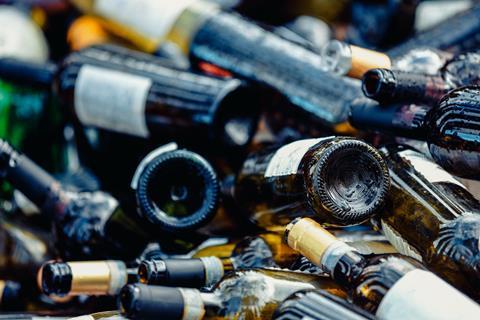
Exchange for Change is still locked in a battle to persuade the Welsh government to drop plans to include glass in its scheme, which have raised the prospect of it not being included in next year’s planned UK-wide launch. Its plan to include glass also lay at the heart of controversy over Holyrood’s previous scheme.
“Dropping glass would have removed half of the problems we faced in Scotland,” said Cheema.
The SGF boss admitted that there were still huge challenges facing the scheme, including the economic uncertainty and inflationary pressures caused by the war in Iran and what he said was an ill-advised bombardment of the industry with government regulation and employment costs.
“I’ve been dealing with the DRS scheme since 2016 and have travelled the length and breadth of Europe to see how it works and engage with the people who will be running the system,” he added.
“I am greatly encouraged and hopeful of what I am seeing about the way it is being rolled out.”







No comments yet