






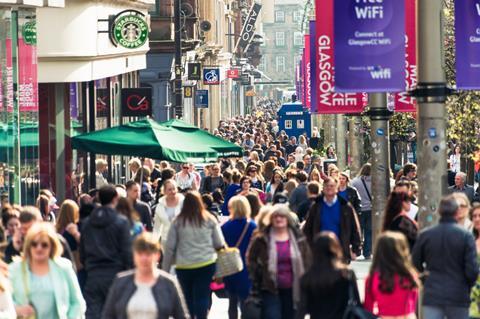
Scottish retailers have been short-changed compared with their English counterparts by business rates reforms, according to the Scottish Retail Consortium.
Scottish finance minister Shona Robison used her budget speech yesterday to announce 15% non-domestic rates relief in 2026-27, which she said would be worth £138m over three years for retail, hospitality and leisure [RHL] premises, capped at £110,000 a year per business. At the same time, the basic rate of the tax is dropping from 49.8p to 48.p.
SRC director David Lonsdale said it fell short of reforms for smaller retailers in England, who are getting a permanent 5p reduction in the tax rate to offset Covid-era relief ending.
“Scottish ministers seem to have their heart in the right place by providing a limited business rate discount for retail and hospitality businesses, but we fear they have significantly stumbled on the detail,” said Lonsdale.
“At first glance, the cap on the relief that can be claimed means it falls well short of the permanent business rate discount on offer to retailers in England.
“Medium-sized and larger retailers underpin the vitality of our high streets and town and city centres. Those businesses drive footfall and account for a large share of retail employment. By fumbling the chance to adequately match England’s more competitive rates regime we risk becoming materially less attractive as a location for investment.
“We fear this will have unwelcome consequences for retailers’ investment plans and the health of Scotland’s retail destinations.”
Read more: Budget 2025: how Rachel Reeves compromised on business rates
Property consultancy Colliers called the changes “underwhelming”, and also said it left RHL businesses in Scotland worse off than their English counterparts.
“Whilst we welcome the expansion of RHL relief, we note the reduced rate and cap which may limit support for larger operators in the sector, particularly compared to England’s system,” said Louise Daly, Colliers head of business rates for Scotland.
“We are underwhelmed and urge our clients to take a proper review on what their new rates bills will be and how these changes impact their portfolios.”
The Scottish government is also renewing £3m in funding for the Retail Crime Taskforce, aimed at reducing the impact of crime on shops.
Lonsdale said ministers had “clearly listened to our representations” on retail crime, which remained “a blight on communities across Scotland”.
“This investment can help Police Scotland build on the positive start this year,” he said.
Scottish Grocers’ Federation chief Pete Cheema said more funding was needed. “Police Scotland’s Retail Crime Taskforce has done remarkable work in its first year, with a very limited budget,” said Cheema. “Now that resource needs to be expanded so that it can deliver a genuine and meaningful long-term change.”









No comments yet