





After 10 turbulent years, outgoing NFU director general Terry Jones reflects on the battles he’s faced down in farming’s most explosive era
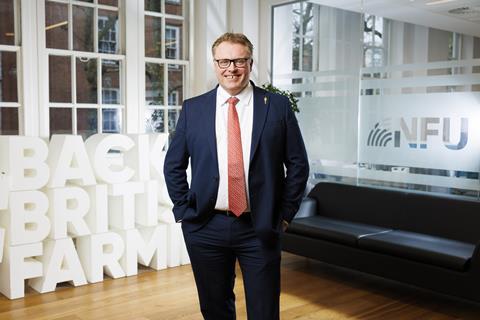
Outgoing NFU director general Terry Jones has seen it all. Dealing with countless crises on behalf of its 50,000-odd members – including Brexit, the pandemic, the Ukraine war, the Inheritance Tax row and, of course, the vagaries of the British weather, Jones has coaxed and coerced 10 Defra secretaries, six prime ministers, three NFU presidents and “numerous” AHDB CEOs. “It’s been a hell of a 10 years,” he reflects in a rare interview, “and a fabulous privilege”.
So as the Welshman prepares to hang up his muddy boots this May, and with his 10th and final NFU Conference as DG this week now done and dusted, what’s it been like, what have been the highs and lows, his proudest achievements, his biggest disappointments? And what does the future look like?
The role of the NFU DG differs from other trade associations in that Jones is not the public face. That’s been the job of his three presidents – Meurig Raymond, Minette Batters and Tom Bradshaw – but Jones is the power behind the throne and while the self-effacing Welshman laughs at the suggestion, his work behind the scenes has been crucial.
Both the most recent presidents are effusive in their praise. Batters says he “led from the front [and] took the rough with the smooth,” adding that Jones “left his heart and soul on the NFU pitch”. Meanwhile, Bradshaw has hailed his “wise counsel” and skill in transforming the NFU into “a modern, increasingly resilient organisation, delivering better for our members and being able to attract and retain some of the best staff in the business”.
And reflecting on his contribution Jones believes his role in professionalising the NFU, “dragging it into the 21st century” through the use of the Engaging Networks platform, has been among his proudest achievements, enabling the NFU “to rustle up to one million people” to support farmers in their various causes, including petitioning the government to maintain standards ahead of the Australia and New Zealand trade deals, or to help in the fight against the Inheritance Tax fiasco.
Combined with “formidable campaigners like Minette and Tom” his team at the NFU has “ensured that farming, a small part of the economy, punches well above its weight”.
Of course, many of these victories have been bittersweet, seizing compromises against the odds from “all-powerful governments doing all powerful things, even when they have sworn blind they would support us through thick and thin”.
The most recent battle has been among the hardest Jones has had to fight. The government’s bombshell changes to Inheritance Tax policy for farming businesses – dubbed the ‘Family Farm Tax’ by the NFU – involved months of often emotional campaigning. The subsequent partial u-turn announced just before Christmas, increasing the threshold from £1m to £2.5m, is a “career highlight” for Jones. However, the 14-month period before the rules changed was “the toughest time for the organisation”, he stresses.
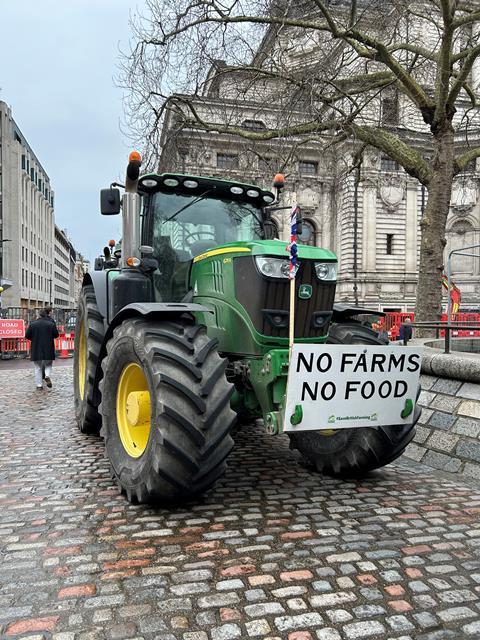
“If you mess with people’s livelihoods, if you mess with their families, they understandably get really cross, and sometimes that anger manifested itself in a pretty ugly way,” he reflects.
His “frustration” was exacerbated by seeing the Chancellor meeting banking and finance chiefs but “refusing to talk to the leader of British farming when our industry kept the country fed during Covid”.
The emotion is clearly still raw. And among his regrets, Jones laments that the Treasury didn’t come to the NFU in “peacetime”, as they could have “designed a much better policy” and shielded farmers from months of anguish.
Still, the policy shift is proof of just how powerful the NFU – and Jones – can be. He attributes the outcome to the focus on solutions that accompanied the protests, and the “unique partnership” between the top team and well-briefed members, which made for “really clear arguments that brought to life the unfairness of the policy”.
Success was also aided by decades-long relationships Jones has fostered with civil servants at Defra – a department he believes should be taken more seriously within government. The relationships work both ways as “they know they can trust us and that they can throw around some ideas”, he says.
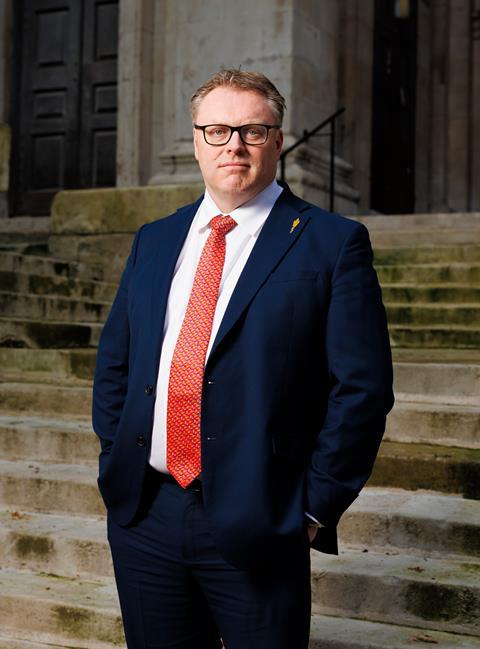
Name: Terence John Jones
Age: 51
Place of birth: Abergavenny, Monmouthshire
Marital status: Married to dairy farmer Emma, two teenage daughters
Potted CV: Agri-food supply chain, public affairs, chief exec roles at Cargill, potato trade, NFU, food trade bodies, NFU
Best career decision: Leaving NFU the first time
Best piece of advice received: Never drink in a pub with a flat roof.
Business mantra: Trust your gut
Hobbies/interests: Cycling, shooting, gardening, watching the kids play sport
How do you relax?: With family on Anglesey. Quite enjoy milking cows on the odd weekend
Favourite meal: Wild venison wellington with roasted veg, mash potato
What book are you reading? Robert Galbraith – The Hallmarked Man
Farming Today or lie-in?: Farming Today so I don’t miss the Today Programme.
Confidence boost
Looking to the “post-IHT world”, Jones is clear on the priorities ahead. Low profitability has sent farmer confidence to all-time lows – a decline he is keen to reverse, along with falling domestic production.
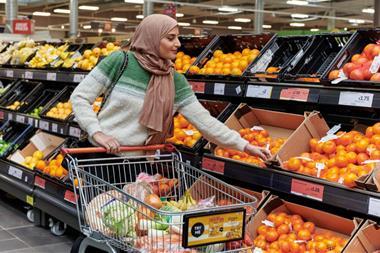
Supermarkets have come under fire for fuelling profitability challenges with cheap fruit and veg offers. But for Jones, they are behaving better than “other buyers of food, particularly out of home and wholesale”. And ultimately, he believes wider issues are at play.
“I think we’ve got to keep everything in perspective, and there are other, much bigger issues than the behaviour of some of the retailers these days.
“Farmers need confidence. They need confidence from policymakers,” he stresses. “They need confidence and certainty from regulators. They need confidence and certainty from the market.”
That confidence can only come from a government that backs the farming sector, Jones stresses. Although he believes the government is “committed to trying to do something about low levels of profitability in agriculture”, he is concerned by mixed messages.
“Farmers need confidence and certainty from policymakers, regulators and the market”
On the plus side, Labour pledged to ensure 50% of public sector food and drink is local and/or sustainable in its manifesto. Yet there is plenty of work to do on that front. With the government pushing for higher animal welfare and environmental goals in the UK, sourcing food from systems with lower standards overseas is “the height of hypocrisy”, says Jones, particularly in public procurement.
If farming is to “earn its rewards and its returns from the market, we need to make sure the market wants to be here and wants to buy British”, Jones insists.
He points to the UK government’s deal with the US, which gave tariff-free access to its ethanol producers, as another example of British farming being “stiffed”. The British combinable crop industry, which is used to make ethanol, is now enduring a “steady decline” despite being one of the “most strategically important sectors in the economy”, Jones says.
With a “jigsaw” of food policies facing the farming sector from the National Food Strategy, and responses needed to the new Food & Farming Partnership Board (FFPB) and Farming Profitability Review (developed by former NFU president Batters), Jones has some misgivings over the direction of travel. “We’re facing into the issues of 2026 with policies that have their foundations in 2017,” he argues. However, Jones rates Defra secretary Emma Reynolds. She “gets the need to and is excited by opportunities to grow”, which is more than he can say for some of her predecessors.
Success depends on whether these policy changes “coherently line up”. But ultimately “if you can meet consumer demand, and you can do it profitably, then the other demands will be easier to realise”.






No comments yet