




Tony’s Chocolonely has outmanoeuvred a challenging chocolate market to register growth of 20% in 2025, with volumes bucking wider category trends to rise 4%.
Revenues at the ethical chocolatier rose to €240.2m (£207.1m) worldwide in the year to 30 September 2025.
Tony’s gains came in part from rapid growth in the US, where sales leapt 50.6% to $83m to overtake the Netherlands as its largest market.
Growth was also strong in the UK and Ireland (where it has a market share of about 3%), with the company taking 14% more in sales to achieve a top line of €51.2m in the year.
UK growth was driven by NPD, with the brand’s Milk Chocolate Rice Crispy Caramel bar taking honours as its largest-ever online launch and reaching 3.2 million people on social media. Tony’s new range of 90g bars was likewise launched in Sainsbury’s in the year, designed to tempt shoppers with individual portions.
Despite record cocoa prices, EBITDA at the group jumped to €4.7m (£4.1m), up from €1.2m in 2024, and EBIT moved from a €2.9m loss to €200k profit.
However, the group remained lossmaking after interest costs and income taxes, with a net loss of €4.4m, compared with €6.8m in the prior year.
“It’s been a challenging year, but we’ve shown how resilient and effective our model is with strong growth in revenue, volume, profitability and, most importantly, impact on the ground for cocoa-farming families,” CEO Douglas Lamont said.
“We are immensely proud to take yet another step forward in proving the case for a more holistic impact model for the cocoa industry. As an industry, we need to learn the lessons of this recent crisis and make a collective long-term commitment to paying cocoa farmers a higher price.
“More industry players are already joining Tony’s Open Chain each year, and together we’re committed to ending exploitation in the cocoa industry to create a fairer, more sustainable future for farmers and chocolate lovers alike.”
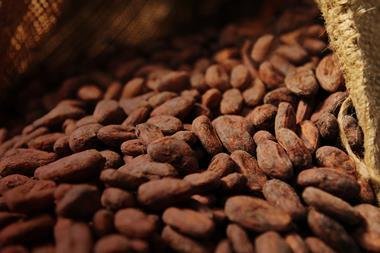
The Verlinvest-owned brand also saw strong performance in its Tony’s Open Chain sourcing model, which sourced nearly 27,000 tonnes of cocoa beans, a 50% increase in the year.
Long-term partner co-operatives report a child labour prevalence rate of below 5%, compared to an industry average of 46.7%, and all cocoa sourced via the scheme is verified as deforestation-free. Subscribers to the scheme include Waitrose, Aldi for certain chocolate bars, Ben & Jerry’s and Pip & Nut.
As cocoa prices fall from two years of massive inflation, the chocolate industry is at an inflection point, according to Lamont.
“With higher pricing now passed through on shelf to consumers, and as the market pricing for cocoa begins to fall, the industry must collectively consider how we can work together to invest in becoming more resilient to future climate shocks and yield crises,” he said.
“Investing in cocoa farmers by committing to pay a higher price for the long term allows them to invest in the sustainability of their crops. This reduces dramatic yield declines in years of climate stress and at the same time actively reduces the worst forms of exploitation, not least child labour.
“This approach will drive benefits in a more holistic way to all the players in the cocoa value chain, the chocolate companies, the cocoa industry and the cocoa farmers and their families.”





No comments yet