




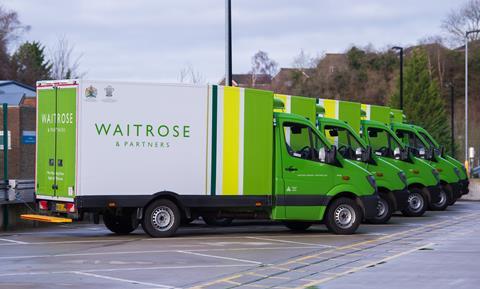
The John Lewis Partnership said it is not expecting any short-term impact from the conflict in the Middle East, while Waitrose is not yet seeing suppliers requesting increased prices on the back of the conflict.
Speaking at today’s full-year results announcement, JLP chief financial officer Andy Mounsey said the business was well-placed to deal with recent fluctuations in energy and fuel prices caused by the crisis.
“We’ve got a pretty strong hedging position in place across the business around foreign exchange, oil, gas, energy, utilities, which sees us well covered for the year ahead in terms of exposure around those areas,” he said. “The other thing I’d probably say is that we’re not seeing any direct exposure on the business at the moment.”
Mounsey added: “Like all businesses, we’re continuing to monitor the situation day by day, but nothing to report at the moment.”
Meanwhile, new Waitrose MD Tom Denyard confirmed that as yet suppliers were not asking for price increases or trying to renegotiate contracts.
The comments came as JLP reported total sales up 5% to £13.4bn in the 53 weeks to 31 January 2026, while pre-tax profits before the staff bonus and exceptional costs increased 6% to £134m.
However, the group’s bottom line was held back by a £53m hit from new taxes, including £13m from the extended producer responsibility packaging levy and £40m from higher National Insurance contributions.
JLP also swallowed exceptional costs of £120m during the year as it modernised technology and wrote down the value of legacy systems. It meant the group posted a pre-tax loss for the year of £21m, compared with a profit of £97m in FY25.
Waitrose recorded growth of 7% in the year as sales reached £8.5bn on the back of a 3% rise in volumes after it attracted 5% more shoppers through its doors than two years ago. During the year the supermarket hit a record level of 97% on availability, which Denyard said was done to the efforts of partners in investment in systems,
“While we’ve invested significantly in upgrading our technology, particularly from a forecasting perspective, we’ve worked really hard to get the right partner hours into the right place to support the replenishment operation in stores and we’ve seen real dividends from that.
“That’s part of an ongoing programme, which should see availability continuing to improve. We’ve got further investments in our technology underpinning this year. We’ve also got a significant investment in our physical distribution infrastructure with the opening of a south west depot in the pipeline for the beginning of 2027, which will give us much more flexibility in how we flow our stock through the network to meet the needs of customers across the business.”
Waitrose said it was also currently investing £50m in technology that included the rollout of electronic shelf-edge labels. Denyard said the rollout had now hit “north of 60 stores”.
“We’re seeing a really positive response, importantly from customers, which is always a key consideration, but also from partners who are spending significantly less time having to replenish labels and worry about paper ticketing,” he said. “They can flow all of that energy and effort into offering the unique and differentiated service partners give to customers day in, day out. So really pleased with the progress we’ll continue to roll it out through this year.”







No comments yet