



David Potts knows a thing or two about supermarket turnarounds. Which is fortunate, because he has quite the job on his hands.
News of Asda’s new CEO has people talking and the consensus is that there’s a lot to like. After almost 40 years at Tesco, then leading Morrisons’ turnaround, he is the first big grocery name to have held a senior executive role at three of the ‘big four’. Few people have a better understanding of how British supermarkets work or of how vital it is to get the basics right.
🔔 Get industry insight direct to WhatsApp
But British supermarkets don’t work quite like they used to and the grocery market Potts is returning to looks very different from the one in which he turned things around at Morrisons.
Just look at M&S, whose food business has grown by almost 25% in two years. No longer simply the home of a £12 dine-in deal, Percy Pigs and the all-important picky bits, M&S is now making a considered march on UK grocery market share. Tesco and Sainsbury’s have raised their game too, while the discounters have become the real battleground for value.
All of which makes Asda’s predicament even more acute. Its share of the UK grocery market has fallen to 11.5%, while almost £1.6bn of losses over the past two years and £4bn of debt have piled on the pressure. Brutal cost-cutting in the wake of its disastrous $1bn IT overhaul has included multiple rounds of redundancies, so it’s no surprise store standards have suffered.
Getting those standards, availability and the overall shopping experience back up will be key to winning customers back. Value will always matter at Asda, but there’s only so much another round of price cuts can achieve if the basics aren’t right.
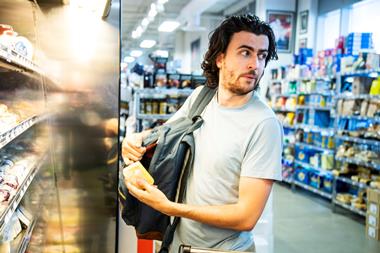
Potts’ operational expertise and decades of hands-on experience are a good start. He’s already been touring shops incognito, with more visits to stores and depots promised in the run-up to Christmas.
When he was appointed, he told staff they would “win or lose” on stores and promised “week by week” improvements. It might not be glamorous, but it is exactly what Asda needs right now.
My picks this week:
- It might have been overshadowed by higher-profile headlines in the latter part of the week, but one of the biggest news stories of recent days was the shocking revelation – broken by fmcg reporter Sunneva Moore – that Rice Krispies and Coco Pops no longer contain rice. It’s been excellent fodder for water cooler chat across the UK, as consumers ask why? What are they made of instead? And what does this mean for the famous Snap, Crackle and Pop? For food and drink the crucial takeaway is that the new formulation means they are no longer suitable for shoppers with wheat allergies or coeliac disease. Most own–label alternatives, though, are still made with whole grains of rice and do not contain wheat. Is this an avoidable own-goal from Kellogg’s?
- For the 40th consecutive year, The OC&C Top 150 suppliers list has been published in partnership with The Grocer, showcasing the changing fortunes of Britain’s largest suppliers and ranking the UK’s 150 largest food and drink suppliers. finance reporter Dominic Bernard spent hours digging into to the data to produce the report, which revealed that – among other things – during the current relative stability, the industry has decided to invest behind powerful consumer trends, including health, to grab growth where it can.
- Some breaking news from resident convenience expert Alice Leader this week, as the CMA gave Co-op Group and Southern Co-op the green light to join forces. We knew the historic landmark deal was coming, but the much-anticipated merger will be the start of an ”exciting chapter” for the group. It will combine Southern Co-op’s 173 food stores, 69 funeral homes and 330,000 members, with Co-op Group’s 2,300 food stores, 800 funeral homes and 7.5 million members, creating a society with “greater scale to serve communities across the UK”.
- Another week, another government bailout of a policy that hasn’t gone to plan. This time, the government is preparing to launch a bailout of its troubled packaging tax, as ministers’ fury continues to grow over local job losses and factory closures. With experts describing the current scheme as “a poorly designed policy”, which has been ”poorly implemented, and will cost the economy dearly”, chief reporter Ian Quinn asked if the ‘vote losing’ system can be saved without starting over.
- Elsewhere, the world’s biggest meat company, JBS, just can’t shake off its links to deforestation in the Amazon. This week saw Kevin White reporting on news that the Brazilian protein giant has been slapped with 14 co-ordinated legal complaints across four European jurisdictions, including the UK, under anti-money laundering regulations. Campaigners allege JBS, by sourcingbeef from deforested areas, is effectively dealing in stolen property. “Illegal deforestation of the Amazon is a crime, not a business model,” said TLC co-ordinator Bláithín Quigley. Well, quite.
Thanks for reading. We’re always keen to hear your thoughts, so please do email with any questions, comments or feedback on jacqui.parr@thegrocer.co.uk.






No comments yet