







M&S has been making huge waves on social media in recent years, endearing itself to a new generation of shoppers with what its head of marketing calls “a tone of voice that balances authority with personality”.
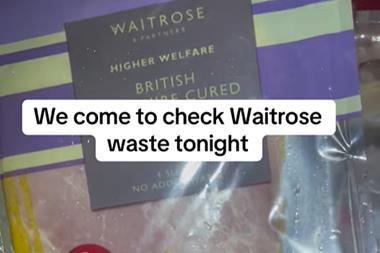
But despite amassing an enviable legion of followers on Instagram, the platform has proved a double-edged sword for the retailer this week, after anonymous, vigilante bin-dipping west London man – known only as Food_waste_inspector_ – shone his torch on the mountain of perfectly edible, in-date food his local store was chucking out on the regular.
M&S Team Romford isn’t going to be able to sing the supermarket out of this one.
The retailer has responded to the exposé after prompting by The Grocer. It said: “It’s clear that at these stores something has gone wrong and we’re investigating that right now.”
Which seems perfectly reasonable. Except previous posts by the vigilante indicate other M&S stores he’s exposed have responded by putting locks on their wheelie bins. That feels less like pangs of contrition and more like a cover-up.
The channel of the response also matters. Why not acknowledge the scandal on the same platform it was first broadcast? Social media provides a unique opportunity to reply directly to those outraged by the wanton waste – a chance to prove M&S is listening and taking action.
According to YouGov research on brand behaviours late last year, 62% of Gen Z respondents say honesty is “very important”, followed by trustworthiness at 61%, and consistency between what brands say and do at 56%.
By not responding to the footage on the platform where most will have seen it first, and where most of the younger audience it hopes to win over consume their media, M&S stands to lose all the goodwill it has built up in recent years.
How to handle social media criticism
Just a few days prior Co-op showed how an online pasting – this time on LinkedIn – can be turned into a positive PR opportunity. The convenience retailer was skewered by entrepreneur influencer Simon Squibb (best known for encouraging members of the public to follow their dream) who expressed his outrage after seeing a ‘two for £10’ promotion on Lost Mary vape devices displayed alongside a PoS card reader in a Co-op store.
“I used to like Co-op. I loved their commitment to building a community. But this tells us they don’t really care at all,” Squibb posted. “Trying to influence their own customers, their own community, to consume poison is beyond disgusting.”
Did Co-op ignore the post completely? Quietly take down the ads and hope it all blows over?
Nope. The retailer took it on the chin, replying to Squibb’s original post with: “Do you know what – you’re right.”
An admission of doing wrong, followed by the action it was now taking (“it’s being removed from all of our stores”). And above all, some sincerity. “We are sorry. Learnings have been made,” it continued. “Thank you for caring about Co-op enough to hold us to account.”
As one commenter put it: “Fair play! Huge respect for owning up and taking action on your part!”
Social media is rightfully holding supermarkets to account on important issues. The work of Food_waste_inspector_ and others like him is being seen and heard, and can’t simply be brushed under the carpet.
As another of Squibb’s followers said of Co-op’s response: “This is the difference. Anyone can make a mistake. It’s how you respond that shows your values.”






No comments yet