



UK supermarkets have become increasingly adept at responding to Britain’s changing demographics. A visit to Tesco, Sainsbury’s, Asda or Morrisons demonstrates how significantly world food ranges have expanded in recent years. Retailers are investing in specialist lines, marking key cultural moments such as Ramadan and Diwali both in store and online, and tailoring ranges to reflect the communities around individual branches.
Yet despite this progress, halal remains under-represented relative to the size and spending power of the UK’s Muslim population. There are now close to four million Muslims living in Britain, with projections suggesting this will rise to 5.5 million by 2030. By contrast, the latest census data indicates there are around 750,000 Polish nationals in the UK – yet Polish food typically enjoys roughly double the distribution of halal across major multiples.
Similarly, Britain’s estimated 2.3 million vegans benefit from a depth and breadth of plant-based options that far outstrips the availability of halal lines.
Halal’s postcode lottery
This disparity is not necessarily due to a lack of products. In fact, choice within halal has improved markedly in recent years. Brands such as Najma and Jaldee Eats are bringing contemporary halal formats to first, second, and third-generation Muslim shoppers. The market has seen growth in convenience, ready to heat and food to go, alongside products that mirror mainstream British formats – from sandwich fillers and sliced cooked meats to ready meals and sharing platters. Several major retailers are also developing own-label halal propositions. The supply is there and innovation is happening.
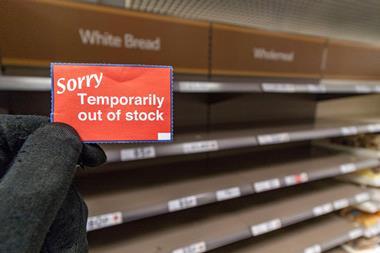
The real issue is distribution and, critically, regional inconsistency. Independent research conducted by Golden Acre in July 2025 among 500 UK Muslims found that half struggle to find trusted halal food in their local supermarket. In Scotland, nine in 10 Muslim adults reported difficulty sourcing suitable products. Shoppers in the northwest, Yorkshire and Humberside, and Wales also cited limited availability. While some stores deliver strong ranging, others fall significantly short, creating a postcode lottery that suppresses category growth.
Space allocation is also a significant constraint. Chilled fixtures in particular are tightly managed, and macro space decisions are complex and slow to shift. In many cases, ranging strategies still reflect 2011 census data, which showed ethnic minority populations concentrated in a relatively small number of urban centres. Fifteen years on, second and third-generation Muslim families are more geographically dispersed. Store layouts and planograms have not always kept pace with this demographic evolution.
A recent visit to a Tesco Extra in Watford illustrates the imbalance. The ambient world foods offer was extensive, yet chilled world foods (where halal typically sits) was notably limited. This pattern is repeated in many stores nationwide. Even retailers with credible world food credentials are often under-ranging halal in chilled, constraining both shopper satisfaction and category value.
Innovation and investment
The commercial opportunity is significant. When shoppers cannot find trusted halal lines, they are more likely to divert spend to specialist independents or discounters. Improving depth of distribution would not only unlock incremental sales within halal, but also drive footfall and basket spend across the wider store.
Two priorities stand out. Firstly, retailers must align ranging decisions with the most up-to-date census and local demographic data to ensure space reflects current reality rather than historic assumptions. Precision ranging at store level, particularly in chilled, is key.
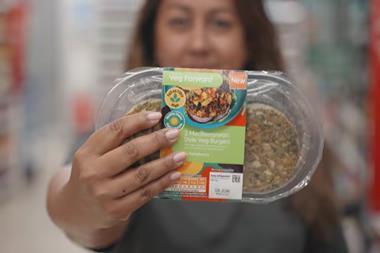
Secondly, the category needs continued innovation and stronger brand investment. The success of plant-based demonstrates how bold branding, clear communication and meaningful NPD can transform perceptions and drive trial. Halal must follow suit.
By developing products that fit seamlessly into British eating habits – such as halal sliced chicken for sandwiches – supported by confident packaging and marketing, the category can broaden its appeal and normalise halal within the mainstream fixture.
The products exist. The consumer demand is there. The challenge – and the opportunity – lies in translating demographic insight into smarter ranging and stronger execution on shelf.
Karama Khudairi is senior product brand manager at halal cooked meat specialist Golden Acre



1 Readers' comment