







A few years back, while researching for an old column on health misinformation, I had a particularly awkward meeting with some people from a large drinks company. They sold a range of products with a strong health halo, and the marketing manager was running through some of the brand values, one of which was that all their products were made only using natural ingredients. Surprised, I asked how they had achieved the required vitamin levels in their new functional drinks range. From other work I was aware that the only possible route would have been to supplement with chemically modified ingredients not classed as natural.
The brand manager looked confused and proudly repeated the all-natural claim. Meanwhile, the product developer in the room shifted awkwardly in their seat. It was clear there had been a lack of communication on the issue – and a lack of understanding of exactly how easy it is to make vitamin claims entirely from naturally sourced ingredients. The big functional product launch had broken the brand’s all-natural rule, and the marketing manager wasn’t even aware of it.
More recently, I have been working to develop ingredients toolkits that support the creation of more nutrient-dense products. Although the focus is largely on protein and fibre, it is fairly clear that anything claiming to be nutrient dense should probably carry some sort of micronutrient claim – and preferably several. But in the new UPF-conscious consumer landscape, creating all-natural toolkits to achieve this is something of a challenge.
The benefits of micronutrient fortification
The frustrating thing is that there is nothing wrong with micronutrient fortification, even when it comes from non-natural sources. In fact, the opposite is true. A recent report on global fortification initiatives estimated that fortification currently prevents seven billion cases of nutrient deficiency each year at an average cost of less than 20 cents – all without any negative impact on the taste or liking of the foods involved. There are few more cost-effective and low-risk health interventions available.
In the UK, fortification also has a potentially important role to play. Millions of young people are known to be deficient in several vitamins and minerals. Some 50% of women have inadequate selenium and 25% are deficient in iron. Twenty per cent of under-20s have inadequate magnesium intake. And in a food landscape set to be dominated by Mounjaro-reduced appetites and smaller portion sizes, these issues could easily worsen if swift action is not taken.
Fortification programmes could address much of this – although the dietary landscape is changing rapidly, making it difficult to know exactly which foods to target. Many previous staples such as bread, milk and breakfast cereals have far lower rates of cut-through these days, especially among younger consumers.
UPF and natural-is-better food narratives are likely to hinder such efforts even further. Although there are some natural routes to boosting micronutrients through standardised extracts and powders, these are expensive, limited and do not create the sort of broad-spectrum nutrition that regular fortification delivers.
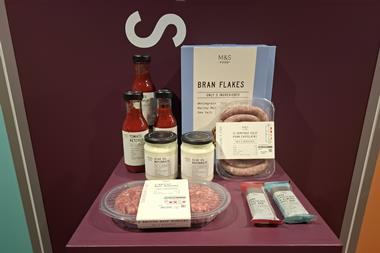
The assumption that natural equals healthier is not the worst heuristic for consumers – but in some cases it can be dangerously misleading, as the M&S one-ingredient cornflake debacle illustrated last year. Pressure not to fortify arguably makes good food more expensive, less healthy and less accessible for the people who need it the most. That’s surely not what anyone really wants.
Anthony Warner is a development chef at New Food Innovation









No comments yet