



Danish brewer Carlsberg has started the year in solid fashion, beating forecasts for both volume and revenue growth while shrugging off the possibility of disruption arising from the conflict in the Middle East.
In a trading update covering the first three months of 2026, the Tuborg brewer said it had seen “no significant impact from the conflict in the Middle East at this time”, adding it had “considerable experience” in successfully mitigating macroeconomic volatility including Covid-19 and the war in Ukraine.
Reaffirming its full-year guidance for organic operating profit growth of 2%-6%, Carlsberg said it would continue to monitor the impact of the conflict, focusing on any changes to consumer behaviour, commodity prices and supply chain.
Carlsberg reported organic volume growth of 2.8% and organic revenue growth of 3.6% in the first quarter of 2026, ahead of analyst forecasts of 1.4% and 2.8% respectively.
“Performance broadly met expectations at group level, with regional delivery mixed but directionally encouraging,” Barclays analyst Laurence Whyatt said in a note to clients.
Revenue growth was delivered by Carlsberg’s major growth categories of premium beer (+3%), soft drinks (+10%), and alcohol-free brews (+7%).
Volumes, meanwhile, were driven by positive showings in Central & Eastern Europe and India & Asia (+3.4%), although Western Europe also climbed 1.2%, driven by the Nordics and the UK.
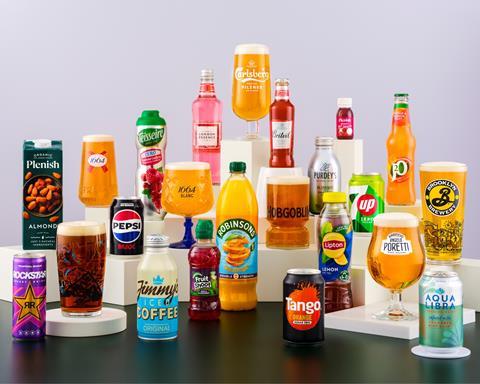
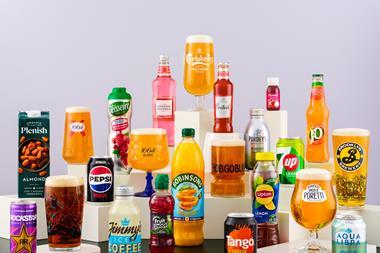
The UK delivered “strong growth ahead of the market in both soft drinks and beer” with mid single-digit volume growth in soft drinks supported by the Pepsi portfolio, Carlsberg said.
“We delivered a good start to 2026 with organic volume and revenue growth in all three regions, strong results for our strategic category growth drivers – premium beer, soft drinks and alcohol-free brews – and a return to solid growth in our Asia region,” said Carlsberg Group CEO Jacob Aarup-Andersen.
Carlsberg recently announced an expanded bottling partnership, becoming a PepsiCo bottler in Denmark, Finland and the Baltics from January 2029.
“The growth prospects and value creation opportunities from a business model that combines the Carlsberg and PepsiCo beverage portfolios are truly significant,” Aarup-Andersen added.






No comments yet