





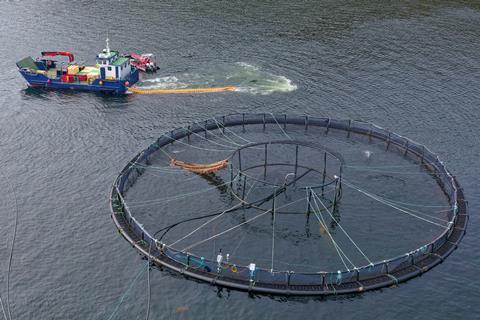
Scottish salmon exports to China boomed in 2025 thanks to a growing Chinese middle class.
According to HMRC data released on 12 February, Scottish salmon retained its crown as the UK’s top food export, recording international sales of £838m, with growth in China and the US particularly profound.
The US was the second biggest importer of Scottish salmon, behind only France, but whilst exports to the European country have plunged, those to the States have increased both in value and volume by 34% and 44% respectively – to £300.6m or 35,243 tonnes.
Despite the performance across the Atlantic, it is Asian markets that have been touted as the chief source of excitement, with Scotland office minister Kirsty McNeill calling the 18% average growth across them “fantastic”.
Salmon Scotland said China has emerged as an increasingly important market for Scottish salmon, with exports surging in value and volume by 28% and 55% respectively, increasing to £97m and 12,711 tonnes.
A spokesperson for the organisation said the growth was largely due to the perceived quality of Scottish salmon, marked by its traceability and the “growing appetite for top-tier products among China’s middle class”.
“Demand is being driven by consumers looking for premium, high-quality seafood they can trust, with Scottish salmon particularly valued in high-end dining and sashimi markets for its quality, provenance, and consistency,” added the spokesperson.
Read more:
-
Call for action over illegal ‘slave caught’ seafood imports
-
Sustainable seafood sales boomed in 2025, MSC report finds
Bakkafrost CEO Regin Jacobsen agreed, and told The Grocer the increased demand was not just due to holidays like Chinese New Year.
“This is normally a product of high demand and, especially this year, it’s been extremely strong, both from Norway and other regions,” he added.
According to Jacobsen, Norwegian sales have also increased in China, but this has been in no small part due to a broader west-east shift in response to the Trump administration’s tariffs in the US.
Jacobsen added that the growth in the Chinese salmon market has led to an improvement in logistics in the country, helping to boost availability and bring down cost.
In its fourth quarter results, Mowi said Atlantic salmon consumption in China and Hong Kong increased by a significant 55% in 2025, as part of a broader 31% rise throughout Asia.
The development, the multinational said, has been “driven by higher availability of salmon and a continued shift towards home consumption”.
Echoing Jacobsen’s insights, the Norway-based seafood giant added, “retail, e-commerce and hybrid store formats gained further traction, supported by improved logistics and broader distribution into lower-tier cities”.
It fits into a broader picture for the Chinese market as data first reported on by Undercurrent News revealed the nation had imported more than $20bn worth of seafood in 2025.
It comes as PwC’s Voice of the Consumer 2025 Global Survey – China Report found Chinese consumers “place a significantly higher value on products that offer nutritional benefits, meet specific dietary needs, and feature sustainable packing, while also remaining receptive to quality imported goods”.
The report affirmed that, in the next decade, growth in the Chinese food market will be “defined by higher-quality, needs-based consumption”.









No comments yet