






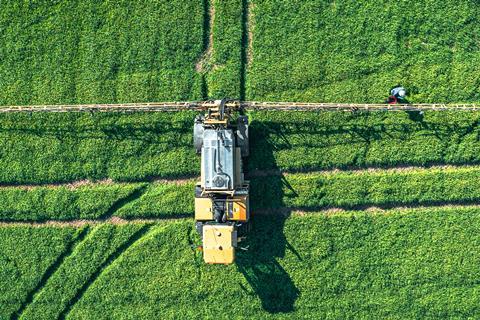
The UK’s first-ever forever chemicals plan is “completely lacking” for its failure to deal with farming and the use of pesticides, farming groups have warned.
On Monday, environment minister Emma Hardy announced the government’s PFAS (per- and poly-fluoroalkyl substances) Plan. It is designed to understand where these chemicals are coming from, how they spread and how to reduce public and environmental exposure.
This in turn would help reduce their harmful effects and transition to safer alternatives, the government outlined.
While Hardy said that the government would “work in partnership” with the industry and core stakeholders, the Soil Association has said the current plan ignores farming and synthetic pesticides.
“The government’s plan to tackle forever chemicals is completely lacking,” the charity’s head of food policy, Rob Percival, said. “While their consultation on improving sewage sludge usage in agriculture, a major source of chemical pollution, is welcome, the plan otherwise ignores farming and falls far short of what’s needed.
“It’s especially concerning that there is no mention of a timetable for ending avoidable everyday uses and no binding commitment to a wider phase-out.”
The Soil Association has urged the government to take “more urgent and regulatory action” as synthetic pesticides are “a concern for both human health and for the environment”.
Percival continued: “That is why action to accelerate a transition to agroecological farming like organic, where synthetic pesticides are banned, is vital, bringing benefits for both public and planetary health.”
Read more:
-
Farmers criticise lack of food prioritisation in Defra plan
-
Grapes and grapefruits contain most pesticides, latest data shows
-
Food system change momentum is building but risks remain, report finds
Pesticide Action Network UK, which identified 25 pesticide active substances that can be classified as PFAS chemicals in its 2024 report, equally condemned the “glaring omission” of PFAs pesticides.
In December, the group said its analysis of government testing data revealed a quarter of vegetables and three quarters of fruit contained multiple pesticides.
“PFAS pesticides are a source of both environmental and dietary exposure to these harmful chemicals,” said Nick Mole, UK policy manager at PAN UK. “Leaving them out of the PFAS plan is a huge misstep that we hope will be rectified in due course to ensure that the plan is as comprehensive as possible in terms of protecting the environment and the public from the potential harms these chemicals present.”
NFU president Tom Bradshaw said the consultation on reform to sludge rules was “important” but warned that it should not come at cost to farmers.
“Farmers and growers are committed to caring for the environment, but regulatory change must not place additional cost burdens on farm businesses, many of which are struggling to be profitable,” Bradshaw said.








No comments yet