





Fishing for scampi in the North Sea may carry a hidden climate cost, as new research shows bottom trawling can disturb carbon buried in ancient seabeds.
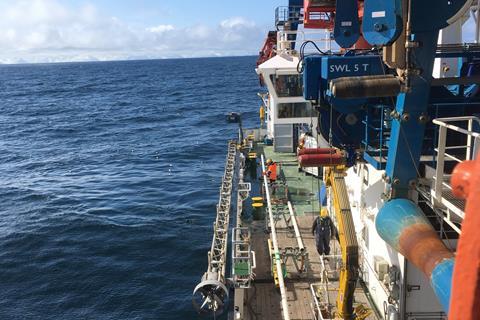
Researchers from the University of Exeter, working with the Convex Seascape Survey, examined seabed carbon in the Fladen Ground, where crustaceans, such as Norwegian lobster, are caught by bottom trawling.
The large muddy seabed, located to the east of Scotland on a continental shelf where muds are important long-term carbon stores, is one of the North Sea’s most commercially important fishing grounds.
The study, published in the journal of Marine Geology, found the area builds up new carbon very slowly, and with most of the area’s ground and mud deposited after the last ice age, its carbon levels cannot replenish fast enough after bottom trawling churns up sediment.
“Many people don’t realise that Norway lobsters live in mud, or that catching them involves towing nets directly across the seabed,” said the study’s lead author Dr Zoe Roseby. “That makes the environmental cost of scampi largely invisible to consumers.”
The findings are the latest headache for a nephrops fishery that has repeatedly come under fire due to the environmental impact of bottom trawling.
According to Roseby, Fladen Ground is a “low-accumulation environment” whilst other areas of the seabed are “still actively accumulating sediment and carbon today”.
This, Roseby explained, meant that “not all seabeds carry the same climate risk”.
The study revealed that bottom trawling in other muddy areas, which build up fresh carbon faster, could have a more significant impact, as more carbon could be released into the ocean-air system.
“As it accumulates carbon so slowly and contains relatively refractory material, disturbing it may mobilise less reactive carbon than in other areas with carbon-rich muds,” she added.
Read more: Scampi fishery furthers improvement plans with Seafish
The research recommended that effective marine management should consider how quickly it is being buried and how vulnerable it is to being released, as well as how much carbon is stored in seabed sediments.
Last year, the UK Nephrops Fishery Improvement Project was launched to improve fishing practices and management across fisheries in the North Sea, Irish Sea and the west of Scotland.
“For fisheries to be genuinely sustainable, we have to consider where fishing takes place and how different seabed habitats function in the carbon cycle,” said Professor Callum Roberts. “This isn’t an argument against eating scampi or against fishing itself.
“If seafood is to be climate-smart, we need to think not just about what we catch, but how and where we catch it, and use smarter spatial management to avoid disturbing seabeds that are actively accumulating and efficiently burying more vulnerable carbon.”






No comments yet