




A coalition of more than 50 UK food and drink businesses has increased pressure on global traders who pulled out of the Amazon Soy Moratorium by calling for “urgent action and immediate dialogue to protect Amazon forests”.
The January withdrawal of soy trade association Abiove and its membership of global soy traders such as Cargill, Bunge, ADM, Louis Dreyfus and Cofco had “major implications for the future” of the voluntary pact, and threatened an increase in deforestation, warned the UK Soy Manifesto (UKSM) this week.
It is calling for “all actors” within the soy supply chain, including governments, financial institutions, farmer representatives, buyers of soy and civil society “to commit to a new constructive dialogue, to ensure the achievements of the ASM are not lost and Brazil’s hard-won reputation for the production and export of deforestation-free soy is maintained”.
The ASM, established in 2006 and in force since 2008, had restricted the sale of soy from deforested areas of the Amazon, and “long served as a clear, transparent, and credible reference framework for responsible soy sourcing”, said the UKSM – which represents businesses responsible for more than 60% of the UK’s demand for soy.
The pact “helped to protect the forests of the Amazon biome in Brazil while supporting the Brazilian soy sector to grow and remain competitive in global markets”, added the group, whose membership includes Arla, Cranswick, Hilton Foods, Greencore and 2 Sisters, plus Tesco, Sainsbury’s, Morrisons, Aldi, Lidl and many more.
However, new legislation in Brazil’s Mato Grosso state in January removed tax subsidies for companies participating in voluntary agreements such as the moratorium, which go beyond national environmental laws.
As a result, Abiove and its members exited the pact at the turn of the year, saying the ASM had “fulfilled its historical role”, with individual businesses now expected to comply with a new regulatory framework driven by the Brazilian government.
Read more: Meat and dairy industries are ‘derailing’ climate progress, report finds
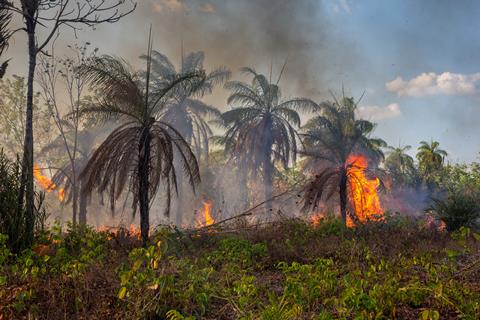
The effective killing off of the moratorium – which is estimated to have saved an area the size of Wales from deforestation in its first decade of implementation alone – “left more forests at risk, directly and indirectly, from deforestation”, said the UKSM.
“Climate change is already impacting on the Amazon and Cerrado with extreme weather events and reduced rainfall,” it added. “The protection of forests and savannah vegetation in these biomes is critical to maintaining the necessary growing conditions that support long-term sustainable soy production and farmer livelihoods in Brazil, as well as being a significant contributor to global efforts to mitigate climate change.”
The UKSM is urging global soy shippers “to maintain their commitment to the 2008 cut-off date for all soy purchases – direct and indirect – in the Amazon biome and put in place measures to comply with the criteria of the moratorium on an individual company basis until a longer-term solution is secured”.
“We are ready to support dialogue and to work collaboratively towards a solution that both protects forests and supports and strengthens future soy production in Brazil, for the benefit of soy farmers, international food security and the global climate change crisis,” said its secretariat Jonathan Gorman.
The UKSM’s intervention follows warnings by UK supermarkets in the Retail Soy Group (RSG) last month that soy traders had until mid-February to guarantee they would continue to “supply soy from the biome free from deforestation” and independently rejoin the ASM – or face the potential that ties with the businesses could be cut.
It is not yet clear whether the traders have met these demands, with the RSG yet to respond to requests for an update on the situation by The Grocer.
It comes as research published this week by campaign group Mighty Earth revealed “major gaps between the deforestation and conversion-free (DCF) policies of meatpackers, soy traders and retailers in Brazil and their actions to end deforestation and land conversion of native vegetation in supply chains”.
Fourteen companies were assessed and scored out of 150, with seven companies scoring less than 75 on key sustainability criteria.
JBS was the lowest ranked beef company with a score of 51, while ALZ and Grupo Mateus were the lowest scoring soy trader and retailer with scores of 17 and 0, respectively. Cargill, the world’s largest soy trader, had “rolled back its commitments by weakening or obscuring deforestation cut-off dates and reference years”, Mighty Earth said, reflected in its score of 63.
“The failings of most of the companies we surveyed come at a time when the Amazon Soy Moratorium is undermined, meaning DCF commitments have become more significant,” said Mighty Earth senior advisor Mariana Gameiro. “Companies must maintain the sectoral approach of the mechanism and act on their DCF promises.”






No comments yet