






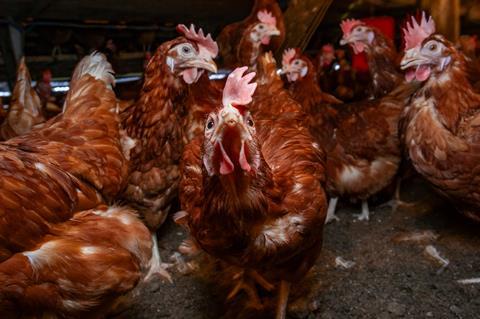
Planning reform is needed to meet the soaring demand for chicken, according to the British poultry sector.
The warning comes as more than 100 poultry-related planning applications have been left in limbo, “with absolutely nothing coming through”, according to British Poultry Council chief executive Richard Griffiths.
This was despite the NFU reporting an estimated 1,000 new poultry sheds would be required as its 2025 survey showed the average age of a broiler house in the UK was more than 30 years old.
Without changes to the planning system, Griffiths said the British poultry sector would “carry on losing market share to imports”, often produced to lower standards.
“We are seeing good increase in demand for chicken of 4.5% to 5% over the last year, but the problem is that the majority of that is being met by imports rather than domestic production,” he said. “We are trying to balance the reduction in stocking density but the long-term solution rests on more farm space and infrastructure.”
HMRC data obtained by Co-op revealed £5bn of meat was imported into the UK in 2025, a rise of 15% year on year, with poultry the most imported protein.
“Essentially we are slowly sending not just our capacity but our standards, environmental impact, jobs, and food security overseas,” he added. “Given the uncertainty in the world and all the geopolitical shocks happening, this is not good news for access to affordable food for the UK.”
These concerns were echoed by a source from pig and poultry giant Cranswick, which has seen its revenues soar on the back of the surging appetite for chicken. They said some of its suppliers were having their planning applications blocked, largely due to the hostility of local authorities.
It comes following Cranswick’s so-called ‘megafarm’ application was rejected by Kings Lynn and West Norfolk Borough Council after the proposal attracted more than 12,000 objections.
The source also alleged many planning officers and councillors did not fully understand the applications being presented to them, asserting many did not read important documents.
Cranswick is working with the authorities and planning officers to bring “clarity and a smoothing out of the process”, they added.
NFU Poultry Board chair Will Raw said that current delay to planning “stymies growth and directly harms on-farm innovation and efficiency”. Instead he called for an overhaul that incentivised farmers to invest in new buildings and technologies, deliver higher welfare and lower their environmental impacts.
“Producers are eager to invest, modernise and future-proof their businesses to help feed the nation,” Raw added. “But they are trapped.”
One solution, posited by Griffiths, was a more “centralised approach to food production” from the government.
”The government is rolling out lots of schemes aimed at helping food and farming production, but planning is the gateway to productivity and without it there will be no progress on anything else,” he added .
He warned that without planning permissions the sector was missing out on £450m of potential investment into farms and infrastructure.
This comes following the unveiling of the draft National Planning Policy Framework in December, which promised to remove “red tape” for farmers. As reported by The Grocer, it said there would be changes to the principle of development, with local planning authorities expected to give a default ‘yes’ to agricultural developments in rural areas – unless there were exceptional circumstances.
“We are working closely across government to deliver planning reforms to improve outcomes for nature whilst enabling farmers and rural businesses to build the infrastructure they need,” a government spokesperson said. “We will be taking all responses to the NPPF consultation into account before finalising the new framework.”
It comes as the NFU launched its #LoveBritishChicken campaign this week to encourage more people to eat chicken and invest in more planning.
The campaign was condemned by The Humane League which said farming expansion would increase animal suffering, manure pollution, antibiotic use and climate emissions at a time when the poultry industry should be moving away from so-called ‘Frankenchicken’ breeds.
But in response, the farming union said: “As proud British poultry producers, we fundamentally disagree and do not recognise the term factory farming – nor does it have any scientific basis.
“British poultry producers work extremely hard to care for their birds and are well versed in dealing with fluctuations in temperature.”








No comments yet