





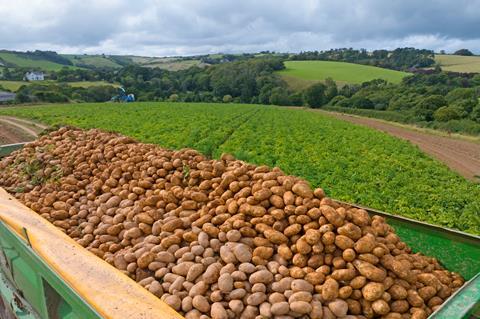
The summer drought is expected to knock around 3.5 million tonnes off potato harvests in the UK and Europe this year.
New research from the Energy and Climate Intelligence Unit has shown that drought and heatwaves will impact potato harvests to the equivalent of between €498m (£423m) and €818m (£701m) across Germany, Belgium, France, the Netherlands and the UK.
British potato farmers are facing losses of between £80m and £169m.
“As we move into autumn the impact of the record-breaking summer heat and drought on food and farming becomes clear,” said Tom Lancaster, food and farming analyst at the ECIU. “As one of Europe’s thirstiest crops, it was inevitable that the potato harvest would be hit hard, and we are starting to see that now in industry yield estimates, down 20% in some cases.
“For potato growers on the frontline of climate change, the chips are well and truly down.”
The estimates of lost production are based on comparisons with the five-year average, with yields 13% lower in France, 21% in Belgium, 10% in Germany and 7% in the Netherlands, the ECIU said.
These drought and heat-related losses come on top of a significantly reduced potato area after a glut in crop last year. Based on yields at the five-year average, this lower area equates to a further loss of 3.6 million tonnes, the group added.
Additionally, as previously reported by The Grocer, potatoes are expected to be smaller this year due to the heat conditions, which the ECIU said was likely to have an impact on the market and prices. In Britain, processors are paying more than £300 per tonne to secure supply compared to £180 in February.
“Impacts like this only increase the urgency of bringing our climate back into balance by reaching net zero emissions,” said Lancaster. “Farmers need a stable climate in order to keep growing this staple of the European diet, without the unsustainable losses that increasingly extreme weather will bring.”





No comments yet