



Rising costs, new levies, geopolitical shocks and shifting supply chains are forcing ambitious food and drink SMEs to rethink how they protect margin, fund growth and build resilience. So how can innovation help?
Founders and senior figures from the industry joined a roundtable with eCapital to talk honestly about what it takes to keep growing in the current climate.
Among those sharing their experiences were George Hughes-Davies, founder of Daily Dose, the cold-pressed juice brand now stocked in Waitrose and a growing number of major retailers, alongside chief financial officer Phil Hurst. Joining them was Robert Young, co-founder of Atkins & Potts, the premium condiments, sauces and relishes brand, and Liam White, co-founder of Dr Will’s, the natural condiments brand.
Protecting profitability against cost pressures
The inflationary spike that hit food manufacturers from 2021 onwards needs little introduction. For Atkins & Potts, input costs surged close to 60% over an 18-month period. Eggs rocketed in price as avian flu outbreaks affected flocks across Europe, and energy and feed cost pressures triggered by the war in Ukraine fed through the supply chain. Plastic packaging went up year after year.
“We changed a lot of our supply base, especially the glass supply,” Young says. “We realised we were being overcharged. We changed payment terms, moved suppliers and in some cases found we could source a commodity ourselves at a fraction of what the previous UK ingredient supplier was charging us.”
Packaging costs have been one of the most complex fronts to manage. The UK’s Plastic Packaging Tax, applied per tonne to components containing less than 30% recycled plastic content, was designed to encourage the use of recycled materials. In practice, critics say it can work against efforts to move towards more sustainable formats.
Forward planning has become equally important. Hurst describes building layered assumptions into the business’ financial model, covering wage increases, national insurance changes and energy costs, then stress-testing against different scenarios. “You can’t wait to see exactly what’s coming,” he says. “You have to put assumptions in and plan around them.”
“Invoice finance has been a critical part of how we have been able to scale,” White adds. “When you are growing into major retailers, the gap between production costs and payment terms could otherwise be a real constraint. Having that working capital facility in place means we can take on contracts with confidence and invest in the business at the same time.”
“The best time to put a funding facility in place is before you need it,” Iain Hendry, regional director at eCapital, says. “The businesses that do that are the ones that can act on opportunity rather than just react to pressure.”
“In some cases we could source a commodity ourselves at a fraction of what the previous supplier was charging us.”
Navigating ongoing disruption
The pandemic tested supply chains in ways few businesses had prepared for. For Young, what followed was a period of deliberate reassessment. Glass packaging now comes from Europe and further east. Ingredients once sourced entirely within the UK are now procured from a wider base.
“It’s quite sad in some ways,” he says, “but where [materials] come from is far more global now.” The upside is resilience. A single supplier failing, or a domestic commodity spiking, no longer carries the same risk it once did.
“Diversifying a supply chain takes confidence and capital,” Hendry says. “It is not a decision businesses can make when they are already stretched. The ones doing it well have the financial headroom to act before they are under pressure.”
Hughes-Davies describes a parallel shift towards locking in supply agreements directly with growers for key ingredients. “The key is to contract supply as early as you can,” he says, “so you capture it before you end up competing with everyone else and the price moves against you.”

Where are the biggest vulnerabilities in the system?
Trade friction emerged as the most pointed vulnerability. Young has recently restarted exports to Ireland, but the compliance and paperwork burden means only large, uniform shipments make commercial sense. “Only a full wagon of the same product makes the paperwork worthwhile,” he says.
Energy is another structural pressure the data makes hard to ignore. The UK had the highest industrial electricity prices of any International Energy Agency member country in 2024. “The grid can’t support the green transition we’re all supposed to be making,” Hughes-Davies says. Investment in energy infrastructure, he argues, is the policy change that would make a meaningful difference to the sector.
Innovating through automation
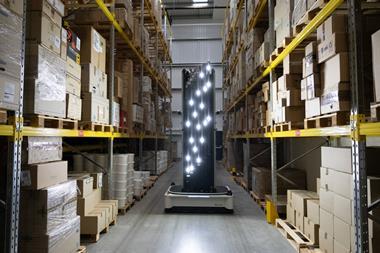
Alongside supply chain strategy, Daily Dose is investing in automation to stay ahead. Hughes-Davies describes implementing AI-powered order processing software and using AI tools to surface management information from accounting systems.
“It picks up seasonality you didn’t even know was there,” Hurst says. On the factory floor, Daily Dose is also exploring robotics for repetitive handling tasks, looking to redeploy people into areas where human skill and judgement matter most.
Young shares the direction of travel, though with a note of caution. “A wise man can use AI, a fool can’t. You need to understand the subject matter first, or the output is dangerous.”
The consensus was that certain things will always need a human: tasting, quality checking, recipe development. “We’d still have cooks even if we automated everything else,” Young says. “That’s our USP.”
’Proactive and deliberate’ success
“We wanted to have this conversation because the pressures facing food and drink businesses are more intense than they were even a few years ago, and they are not going away,” says Sharon Simpson, regional director at eCapital.
“The businesses finding a way through are having to be far more proactive and deliberate – about their supply chains, their costs and how they fund growth before the pressure arrives.”
This roundtable was hosted by eCapital, which provides invoice finance, asset-based lending and working capital solutions to SMEs across a range of sectors. With deep expertise in food and drink, manufacturing, recruitment and transport, eCapital’s regional relationship managers work closely with businesses to build funding structures that support long-term growth.
To find out more visit www.ecapital.com