




Mastering your e-commerce strategy can turn more swipes into sales and send growth soaring. Here’s how General Mills made it happen – by flexing its strategy, using creative content and making the most of next-day delivery.
With origins that trace back to the 1860s, General Mills has spent much of the last century honing its skills in bricks-and-mortar retail.
But in more recent years, as a volatile, inflationary climate has continued to stymie volume growth on supermarket shelves, the fmcg heavyweight – which now owns some 100+ brands in more than 100 countries – has turned its attention more keenly to opportunities online.
This hasn’t been about rushing into a hastily thought-through strategy to satisfy shareholders, insists Jane Robinson, the brand business account manager at General Mills, but looking at e-commerce as an area for long-term development.
“For us, it is about unlocking the right growth,” she says. “In the current climate, with continued cost pressures across the business, the focus has to be on sustainable, profitable growth rather than growth at any cost. That means being deliberate about where we invest, which products we back, and how we build the online offer, so it works for both the customers and the retailer.”
And with two years of consecutive double-digit growth on Amazon under its belt, the company is already reaping the rewards of that decision.
Getting the fundamentals right
So, how did the company reach this point in its e-commerce story?
Robinson, who spent several years prior to joining General Mills optimising toy sales on online stores like Amazon, began with getting the fundamentals right.
To start, she ensured the company drew a clear line between its online and offline strategies - an approach it hadn’t always taken previously. “[E-commerce] has different economics, different shopper behaviours and different execution requirements, from content and search through to fulfilment speed and assortment architecture,” she says. “For us, online growth needs to be planned specifically for the channel, not just adapted from elsewhere.”
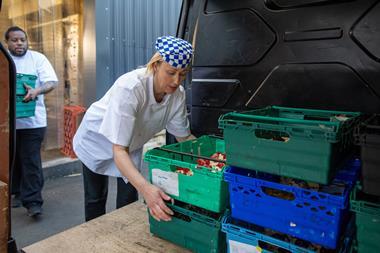
Planning also involved readying supply operations to ensure General Mills could keep up with the pace demanded by online stores like Amazon, she adds. “You’ve got to make sure your forecasting is where it needs to be because things can change so quickly. If we can’t deliver, then we’ve lost the shopper already. So, it is important to get our operational and supply ready to go at speed.”
The third preparatory step involved optimising online assets to ensure they were “attractive and engaging” while delivering everything a shopper needed to know, taking advantage of the fact that there are typically far more touchpoints online than offline. That included using Amazon’s A+ content to upgrade from standard product descriptions, embedding hi-res imagery and rich text, and spending time optimising each dedicated Brand Store landing page too. “It’s about dressing it up and drawing in that attention,” she explains.

From bundle to bulk buys
With these fundamentals in place, Robinson set about spearheading a strategy for further growth tailored to General Mills’ diverse brand portfolio.
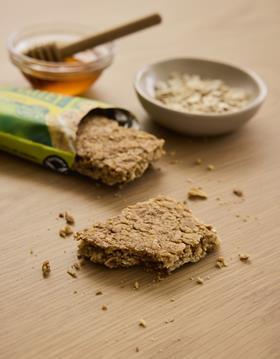
For example, with Nature Valley – its star performer on the platform – the story has been about amplifying health, certainly, but also convenience and value. One 2025 survey by Mintel found that over 25% of Brits who shop online for food and drink do so in order to bulk-buy items and have them delivered, rather than lug them home. Recognising this, General Mills was able to prioritise availability of its large multi-pack formats for the snack bar, with even 40-bar packs quickly flying off Amazon’s virtual shelves . The brand has also benefited from Amazon’s Subscribe and Save option, which allows brands to offer repeat buyers a discount by signing up to regular orders.
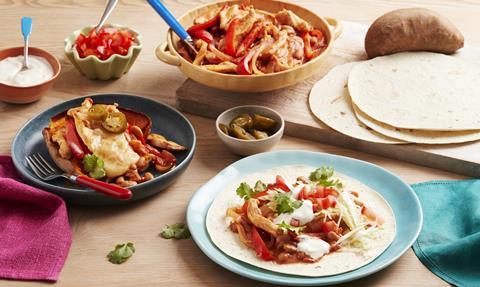
For Mexican range Old El Paso, by contrast, it has been less about bulk buys and more about meal inspiration, explains Robinson. With one of the reasons consumers turn to Amazon being to look for a specific item or product, Old El Paso needs to drive visibility of its range and offer compelling and convenient solutions to get added to the basket. Therefore, the team is exploring how they can offer ‘party packs’ that combine nachos and salsa and other mission-based bundles to provide quick and easy snacking and meal solutions. Old El Paso’s dedicated Brand Store also now features plenty of lifestyle imagery, for example, educating consumers on how to navigate the range and build a delicious Mexican meal to ‘Mex it easy this Fajita Friday’.
As for other household names in its portfolio, such as Häagen-Dazs, Green Giant and Betty Crocker, Robinson sees plenty of opportunity in the recent announcement by Amazon that fresh and frozen items can now be added to same-day orders in selected London postcodes. “You’re going to be able to buy your iPhone charger, a t-shirt, some skincare and, say, a pint of Häagen Dazs.”
Integrating fresh and frozen into everyday essentials
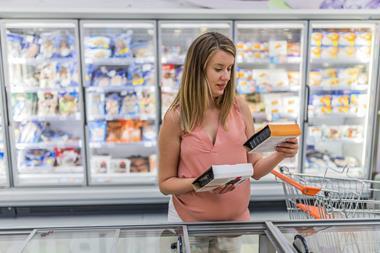
In June, Amazon announced that perishable grocery items would be made available for same-day delivery in selected London postcodes, alongside millions of popular brands and everyday essentials already available for same-day delivery.
For food and drink brands, it’s a chance to remove any friction and get their products into mixed online baskets moving forward, says Peter Masters, director of EU grocery & everyday essentials at Amazon.
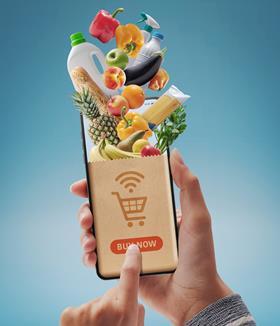
“Customers can now add fresh, perishable groceries – from ice cream to fresh fruit and veg – to the same basket as millions of other items already available and have it all delivered in hours,” he explains. “For customers, we’ve built a new shopping experience with new ways to browse fresh groceries, removing the friction of a separate shop; for suppliers, it puts their brand and products in front of millions of customers, building the kind of mixed basket that mirrors how people shop in physical stores.”
Data-driven decision-making
Crucially, despite Robinson’s years of experience in e-commerce, none of the changes made to online sales across its portfolio has been based on gut instinct. Instead, it has been about using and learning from Amazon’s vast bank of data analytics and insights available in self-service tools including Vendor Central.
Its most impactful results with Amazon Ads, for example, have made use of learnings from Amazon’s Marketing Cloud. “More broadly, we are using insight to make better decisions on what to activate, how to prioritise ASINs (Amazon Standard Identification Numbers) and how shoppers move through the digital shelf.”
The company is also in the process of onboarding NIQ to further delve into the data and create platform-specific insights it can use. “We’ll be able to really get some easy wins,” believes Robinson. “We’ll be able to see the opportunities that come out of that, whether it’s because we’re losing the purchase to a third party or something’s wrong with that product set-up. Those insights are also going to tell us if our imagery and key bullet points are up to standard. Plus, it will help us understand the shopper and understand our share. So, this stuff will be crucial for that next step.”
It’s all part of crafting a far more agile, responsive strategy for online, taking advantage of the real-time data and feedback, and potential for rapid decision-making.
“We’re in control of our own destiny,” says Robinson. “We can change our product detail; we can change the images. If we feel that the stock weight is light and we need some more, we can look to place a manual buy . And because Amazon’s model allows for more flexible ranging timelines, we could look to put in a promotion next month if we feel that’s the right thing to do.”
Unlocking the power of data to identify demand and ‘signals’ online
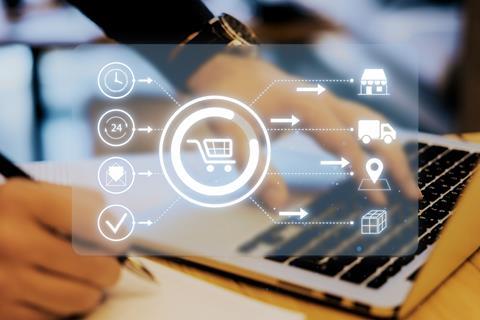
“As a business, we’ve used AI and machine-learning to help forecast stock needs”
- Peter Masters, director of EU grocery & everyday essentials, Amazon
Data is one of the most powerful tools available to food and drink brands in e-commerce, says Peter Masters, Amazon’s director of EU grocery & everyday essentials. At Amazon, for example, “technology and data really sit at the heart of our approach and how we operate. And we want to share as much of that knowledge as we can with our suppliers.”
That includes access to real-time analytics to understand purchase patterns and shopper preferences, as well as what they’re putting into their basket. It can also identify signals for emerging trends or products before they hit the mainstream, allowing suppliers to shape upcoming product pipelines.
“As a business, we’ve also used AI and machine-learning to help forecast stock needs and ensure that inventory is in the right place at the right time,” says Masters. “Grocery suppliers can tap into this intelligence to make faster, more informed decisions about their range, marketing and promotions.”
Delivering consecutive double-digit growth
Though still in the process of optimising its online strategy, General Mills has already seen some impressive results off the back of the changes, with two consecutive years of 40% incremental growth on the platform. “And that’s just based on getting the basics right: engaging with Amazon, shifting where promotions haven’t worked well and course-correcting very quickly to safeguard future growth,” points out Robinson.
The next phase is about becoming even more intentional in how we grow the channel on Amazon.co.uk
Jane Robinson, Amazon business account manager
Looking ahead, the brand owner is also considering the role Amazon could play in its future NPD pipeline, and how e-commerce can create opportunities for brands to deliver their messaging in creative ways.
“The next phase is about becoming even more intentional in how we grow the channel, including frozen on Amazon.co.uk,” she adds. “That includes stronger alignment with Everyday Essentials, our brand plans and Amazon media, more proactive content management, and closer use of insight partners such as NIQ and our category experts to support sharper planning around Amazon’s key events and shopper objectives.
“We are also continuing to think about how the assortment should evolve for Amazon specifically, whether that is through differentiated formats, stronger premium propositions, or more selective investment behind the products and activations that can deliver the best long-term value.”
To find out more about how Amazon can work for you click here.