





As cost-cutting measures become an area of diminishing returns, leading grocery businesses are taking on new strategies to protect margins and core proposition. And some are finding that the way to retaining a competitive edge lies in how they handle savings across their operations.
The strategy used by UK supermarkets, brands and suppliers to strip out cost is starting to reach the point of diminishing returns.
In the last five years, the industry has reduced headcount, stripped back supply chains, renegotiated contracts and paused capital projects, all in a bid to protect margins. Cost reduction is no longer a periodic efficiency exercise; it is a permanent condition of competing.
However, not only are there few areas left to cut, but the way in which these decisions have been made has led to unintended consequences, shifting cost elsewhere in the business or eroding its core commercial proposition.
“Not all savings are equally valuable,” says Richard Potter, partner for strategy and value creation at KPMG UK. “The challenge isn’t to remove cost, it’s to understand which costs matter.”
“It’s why leading businesses are now changing tack,” he adds. “Rather than choose between cost and growth, they’re using cost transformation to accelerate the differentiators that can drive success in a low-growth environment.”
In short, they’re completely overhauling how they think about and implement cost-cutting, turning it from commercial liability into a source of competitive advantage.
Unintended consequences
One of the major drawbacks of standard cost reduction programmes is that decisions may be made without a full understanding of broader organisational context – they fail to see where the consequences land, explains Potter.
If each function head, be it a chief people officer or chief technology officer, has their own budgetary KPI and makes decisions without understanding the ripple effects across the rest of the business, that inevitably creates a situation in which some cost savings are nothing of the sort.
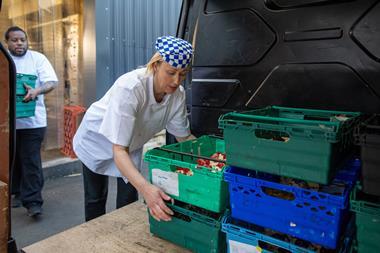
For example, a chief operations officer might optimise the supply chain for larger, simpler pallet configurations that reduce warehouse handling costs. But this can have the unintended consequence of creating extra work (and cost) in-store through unpacking, storage and shelf replenishment. Customers do not see the productivity improvement; they see a gap where the product they wanted should be.

“There needs to be much more of a holistic analysis of any cost reduction endeavour to see how it impacts all four major stakeholders: retailer, brand, shopper and colleague.”
– Bryan Roberts, retail futures senior partner, IGD
Avoiding these unintended consequences requires a different discipline – testing choices against the whole system. To use cost reduction as a strategic engine for growth, senior teams at both retailers and suppliers need to work more collaboratively, using recent advancements in tech, data and operating discipline to better get to grips with the full end-to-end impact of each cost-saving choice.
“There needs to be a broader impact analysis of each decision,” agrees Bryan Roberts, retail futures senior partner at IGD. “Killing off night shifts to move to twilights or earlies makes great sense if you only look at spreadsheets. But it’s horrendous for shoppers.”
“Likewise, moving to pallets for merchandising is a lovely efficiency for retailers, but brands hate it. There needs to be much more of a holistic analysis of any cost reduction endeavour to see how it impacts all four major stakeholders: retailer, brand, shopper and colleague,” he adds.
Making end-to-end cost decisions
Some leading retailers and suppliers have already migrated towards a more data-led end-to-end strategy – with a clear uplift in their commercial performance. Roberts flags Tesco as an example of a retailer that has “handled propositional change in the most elegant way.”
The grocer’s ‘Save to Invest’ programme is on track to reach a £500m target for 2025/26 to offset the latest round of cost inflation, but it has done so with a constant eye on growth, market share and protecting the brand. ‘Save to Invest’ has delivered over £2.2bn of savings over four years, funding lower prices and higher colleague pay, including its recent 5.1% increase in UK hourly pay, according to the retailer’s 2025/26 preliminary results. The point is not simply that Tesco has reduced cost, but that its savings have been explicitly connected to the customer and colleague proposition.
The way in which Tesco has achieved significant cost savings while moving to “the best position they’ve been in for the last two to three years…should be applauded,” says Richard Lim, CEO of Retail Economics.
At Sainsbury’s the ‘Next Level Sainsbury’s’ strategy includes £1bn of cost savings over three years, alongside commitments to food volume growth, customer satisfaction, colleague engagement, technology and infrastructure investment.
So, the strongest examples are not pure cost programmes; they are re-investment models.
“With end-to-end analysis you see the true cost and true trade-off. This helps you understand where value is leaking across the system.”
– Richard Potter, partner for strategy and value creation, KPMG UK
It isn’t only retailers either, with leading FMCG suppliers increasingly approaching cost and growth in parallel. At Unilever, for example, the transformation of its Home Care supply chain is focused simultaneously on “driving efficiencies and unlocking growth,” says the company. It has co-located distribution centres with factories to enable faster deliveries to its retail customers – all while increasing gross margin by 20 basis points (bps) to 46.9% in 2025, driven in part by savings accrued from its supply chain.
“With end-to-end analysis you see the true cost and true trade-off,” notes Potter. “This helps you understand where value is leaking across the system. The best businesses actively understand the architecture of their trade-offs.”
A new framework for cost reduction

“To use cost reduction as an enabler for growth, companies first need to clarify their core proposition,” says Potter. What is it that customers know them for? What do they excel at? What sets them apart from competitors?
“Make this proposition explicit and shared across the organisation,” he suggests. Cuts may be unavoidable, but the sacrifice has to be understood, proportionate and justified by something more valuable elsewhere. If the proposition is consumer experience, “you might well choose to have greater complexity in warehousing to make it easier for the retail colleagues to give a leading shelf-edge experience,” says Potter. If it’s primarily price, then the focus should be limiting complexity, the quality of private label and retaining purchasing power. Or if the proposition is convenience, then there need to be boundaries around anything that includes local availability, inventory accuracy and rapid replenishment.
Next, understand the trade-offs at the outset, rather than allowing them to catch the business off-guard. Retailers now have the tools previous generations lacked; data and AI-enabled tools can help scenario plan the likely impact of cost reduction decisions across the business.
Third, there must be a willingness to make collective, intentional trade-offs driven by the KPIs that are connected to the core proposition, rather than functional heads driven by individual objectives. “Don’t give people functional cost targets and expect enterprise behaviour,” says Potter. This could mean sticking with company-wide cost-reduction targets that transcend any individual department, as well as implementing a more consultative framework for decision-making that brings the whole senior leadership team around a table.
All of this is an opportunity to drive cost reduction and growth separately in either retailer or supplier. But why not go further? By putting in place earlier, collaborative conversations, each party can better understand the implications of any decisions taken and align their own changes, to ensure any cost taken out adds value.
Get smarter with strategy
Ultimately, the need for supermarkets and suppliers to drive down costs isn’t going to disappear any time soon.
But by switching from a narrow decision-making model that puts the onus on function heads, to a more strategic end-to-end approach that leverages tech and data to protect and drive the core brand proposition while also driving efficiencies, businesses can convert cost-cutting from a blunt instrument to a reallocation engine that delivers growth.
To learn more about how KPMG’s experts can help your business, visit: KPMG Consumer
Or contact Richard Potter, partner for strategy and value creation at KPMG UK: Richard.Potter@kpmg.co.uk