





Across Europe, smart retailers have moved beyond the theoretical to turn artificial intelligence into a competitive advantage
The retailers pulling away from the pack in 2026 are not the ones with the biggest AI budgets. They are the ones treating AI as connective tissue across the business rather than a series of departmental experiments. Five trends are crystallising, each drawing a sharper line between the retailers accelerating and those standing still.
1. Agentic AI is rewriting the rules of customer service
By 2029, according to Gartner, autonomous AI agents will handle 80% of routine customer enquiries without any human involvement, cutting operational costs by around 30%. Yet the real battleground is not automation, it is trust. Klarna’s much-discussed decision to bring human agents back after an over-reliance on AI is a cautionary tale: a poorly calibrated system does not simply underdeliver, it erodes brand equity.
2. Personalisation and demand forecasting
McKinsey puts the revenue uplift from scaled personalisation at 10% to 15% for retailers. BCG’s analysis goes further, finding that highly personalised retailers grow roughly 1.5 times faster than their peers. What has changed is the scope of the intelligence powering these engines. Today’s AI platforms go far beyond product recommendations: they fuse weather data, purchase history, live behavioural signals and inventor positions to anticipate buying intent while simultaneously sharpening SKU-level demand forecasts.
3. In-store retail media
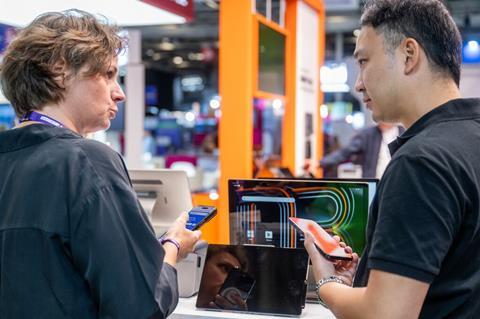
In the US, Walmart and Kroger are already generating hundreds of millions of dollars through their in-store media networks. Europe is catching up fast. Tesco, Carrefour, Ahold Delhaize and Lidl are committing significant capital to AI-driven digital screen infrastructure that adjusts content in real time, based on foot traffic, weather conditions and stock availability. Given that retail media carries structurally higher margins than core retail operations, it represents a decisive lever for long-term profitability.
4. Micro-influencers outperform as budgets shift
The creator market has matured. Nano and micro-influencers – creators with between 1,000 and 100,000 followers – consistently deliver stronger engagement and conversion rates than their macro counterparts. Zalando, ASOS and a growing cohort of independent European labels have restructured their marketing investment to reflect this reality. Machine learning-powered discovery platforms can now scan millions of creator profiles in seconds, a process that previously took weeks of manual work.
5. One to watch: licences and IP
The next major competitive advantage may not be operational, but legal. Retailers sitting on high-profile brand portfolios can license those assets to international manufacturers and operators, unlocking royalty income at margin levels that traditional retail simply cannot match. Authentic Brands Group has shown what this model can generate at scale. Across Europe, the opportunity remains vast and largely untapped.
Five trends, one operating system
What these five pillars share is their interdependence. A retailer that excels at demand forecasting already has the data infrastructure to optimise workforce scheduling. A retailer that deploys AI in customer service accumulates interaction data that strengthens its marketing personalisation. The retailers treating AI as a unified operating system rather than a patchwork of departmental tools are the ones building advantages that are genuinely hard to replicate.
The window of opportunity is open, but not indefinitely. The competitive distance between retailers acting now and those still in the pilot phase is widening every quarter, and the gap will be defined less by access to the technology than by the discipline of integrating it. The retailers who treat the next 12 months as a strategic window rather than a watching brief are the ones who will set the terms for the rest of the decade.