





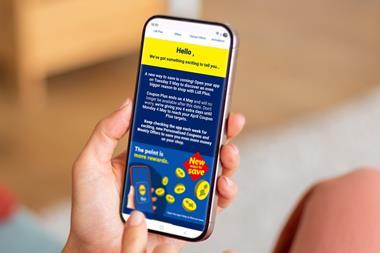
Lidl’s loyalty revamp has attracted some criticism from customers that the new points system is less generous. Aldi has made light of this, drawing attention to its pure low-price proposition and absence of any loyalty scheme.
It’s easy to see why Lidl’s old scheme was popular. Top members were getting more than 5% of their spend back through a monthly 10% off voucher, unlocked by spending just £250 – a very achievable, and meaningful reward.
And loyalty benefits clearly matter to consumers. A recent poll from The Grocer and Retail Week found that points and discounts for loyalty card members are the single most important in-store feature to shoppers, cited by 56%.
But in a category where margins are wafer-thin, Lidl’s previous offer was an unsustainable position for a grocer built on everyday low prices.
Why points beat discounts
In creating a points-based programme, Lidl is following a well-worn path in the grocery sector – and for good reason. Points are one of the most psychologically potent and financially efficient tools available to retailers. Customers value what they feel they’ve earned, and for the business, points are relatively cheap to issue. Tesco and Sainsbury’s have built two of the most successful loyalty programmes in UK grocery on exactly this foundation.
The reality is that most customers are more motivated by value than price. It’s a nuanced, but important distinction. A £5 discount feels like a transaction. A reward feels like recognition. That perception gap matters, especially after years of cost of living pressures that have trained shoppers to scrutinise every penny they spend. The opportunity is to make customers feel like they are getting something – not just paying less.
With points, Lidl is giving itself a far more flexible toolbox to drive behaviour change. It opens the door to a much wider range of creative and personalised promotional mechanics that deliver genuine value without eating into margin.
Look at what Tesco has done with Clubcard Challenges: personalised points challenges rolled out to millions of Clubcard holders, offering meaningful points rewards without a blanket discount. It is a targeted mechanic that drives specific behaviour for specific customers, without the margin exposure of across-the-board price cuts.
Two strategies, two lanes
The big supermarket chains have understood this for some time. Points-based models create room for precision: bonus-earning events, category multipliers, partner rewards that bring in third-party value without touching core margin. These are the mechanics that let grocers deliver real value to customers without defaulting to blanket price reductions. Lidl is now in a position to do the same.
Aldi has taken the opposite view, actively advertising its lack of a loyalty programme and positioning price and simplicity as the offer. It’s a legitimate strategy. Loyalty in grocery is a genuine balancing act: margins are thin and the everyday low price promise leaves little room to manoeuvre.
There are really two viable paths for a grocer: a points scheme with room for bonus earning, or a consistent everyday low price proposition. Given how differently Aldi and Lidl have positioned themselves, it makes sense to see them settle into different lanes. They’ll both thrive in them.
It is a painful moment for Lidl. But, while taking away a much-loved offer will rock the boat in the short term, the business has built genuine goodwill with its customers. It is now in a position to build a more engaged customer base while protecting its margins.
Lidl has decided to play the long game. The business its builds from here will be stronger for it.
Sam Panzer, director of GTM strategy at Talon.One








No comments yet