


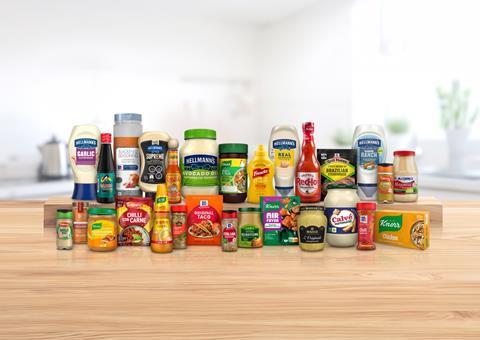
When McCormick and Unilever announced in March that they had agreed a deal to combine Unilever’s food business with McCormick in a $44.8bn transaction, the strategic logic was unambiguous: for McCormick, to create the pre‑eminent global flavour leader with $20bn in revenues; for Unilever, to complete its transformation into a focused pureplay home and personal care company.
Three weeks later, Associated British Foods announced it would split Primark from its food operations, creating the only pureplay food producer in the FTSE 100 and the largest pureplay apparel retailer in the FTSE100.
Two transactions, two different structures, one common thesis: focused pureplay businesses are more valuable separately than as part of a conglomerate.
These are not isolated examples. They are part of a broader structural shift away from the historic consumer conglomerate model.
Kellogg’s 2023 separation into Kellanova and WK Kellogg was an earlier example. Within two years, both successor companies had been acquired: Kellanova by Mars in a transaction valued at roughly $36bn and WK Kellogg by Ferrero for $3.1bn – approximately $10bn more than Kellogg’s enterprise value when the separation was announced. Neither suitor would likely have emerged without it.
More recently, Keurig Dr Pepper’s $25bn acquisition of JDE Peet’s came with a pre-announced plan to split into two pureplays.
Different categories, different deal mechanics. The same underlying logic.
The conglomerate conundrum
The conglomerate model has a long and distinguished history. A conglomerate company could rely on growth in one category to offset downturns in another, smoothing out cyclicality while increased scale commanded greater attention from both customers and investors. But the benefits were more fragile than they appeared. With different sales forces serving different buyers across different categories, the customer scale advantages were increasingly imagined rather than real.
Meanwhile, investors who once embraced complexity in exchange for scale now penalise it. The conglomerate discount has become a board-level problem. When a portfolio of strong individual assets trades at a meaningful discount to the sum of its parts, the question is no longer whether to act, but how.
The same logic that benefits shareholders benefits consumers – and in a period of stubborn food inflation, that is far from incidental. Better-invested brands are consumer-preferred brands: when innovation budgets are concentrated rather than spread thin, the products that reach the shelf are more differentiated and more responsive to changing consumer preferences.
Scale within a defined category also drives the efficiencies that ultimately help offset inflationary pressures: procurement scale, manufacturing scale, distribution scale and breadth. In an environment where input costs remain volatile, a more focused but also more scaled corporate structure helps absorb inflation rather than passing it through to the consumer.
The imperative to act
In a period of low cost of capital and modest inflation, lower growth could be tolerated. That period has passed. With materially higher cost of capital and higher inflation, growth is now a necessity to generate real returns – and pureplay businesses consistently deliver it.
McCormick is a clear example, having delivered 4% organic growth over the past 15 years, materially ahead of its US food peers. Froneri, as a pureplay global ice cream producer, has materially outperformed Magnum Ice Cream while the latter was under Unilever ownership. The Coca-Cola Company represents arguably the best example of this principle: its long-standing pureplay focus on non-alchoholic RTD beverages has translated into higher growth and a higher rating than more diversified peers.
Procter & Gamble is probably the pioneer of focus in the consumer space. Its deliberate pivot starting in the 1990s away from food towards a more focused home and personal care portfolio – built around leading global category positions – underpinned a sustained period of stronger organic growth, margin expansion and multiple re-rating, reinforcing the link between focus, superior performance and valuation. L’Oréal has followed the same path, always sticking to what it knows best. The relative share price performances of the six largest consumer businesses over the past 10 years bear out the benefits of doing that.
Focus is not simply a story about how investors prefer to read a balance sheet – it is a story about how businesses grow. A management team thinking about one category rather than five makes better decisions about that category. R&D budgets stop being divided between unrelated innovation pipelines and are instead concentrated on a focused and cohesive set of portfolios. Capital is allocated against a single set of priorities rather than rationed across divisions. The cumulative effect, over the long term, is materially higher growth – consistently the single most powerful driver of valuations.
Looking ahead
The boardrooms of P&G, The Coca-Cola Company, Unilever, McCormick, Associated British Foods, Greencore and many others have reached the same conclusion independently and, in many cases, simultaneously. This is not a coincidence. It is a response to an environment that has shown the consumer conglomerate to be a structure whose time has passed – and that rewards focus.
The pipeline of disclosed activity already underway points firmly in the same direction. Nestlé, under new leadership, has confirmed it intends to divest its Waters & Premium Beverages business as part of a broader strategic reset that concentrates the group around a narrower set of categories. General Mills is pursuing a comparable reshaping, having already completed the divestiture of its North American yoghurt businesses. Several other large food groups are understood to be conducting strategic reviews whose direction of travel will look familiar.
The returns from embracing focus cannot be judged from short-term share price reactions. They reveal themselves only after years of travelling this path – as L’Oréal, The Coca-Cola Company and P&G have already impressively demonstrated, and as Unilever, McCormick and Associated British Foods will no doubt show in the years to come.
Yet focus alone is not sufficient. The evidence increasingly suggests that the most successful transactions combine a renewed and coherent strategic focus on what the business does best with clear leadership and governance from the outset, and both businesses entering with strong standalone momentum, rather than seeking a deal as a remedy for operational challenges. Deals struck from a position of strength are more likely to deliver their full potential. On this basis, there is good reason to be optimistic about the McCormick/Unilever food combination.
Looking ahead, further non-core divestitures and wholesale portfolio realignments are likely. The McCormick-Unilever combination has reset the benchmark for what is achievable.
Akeel Sachak is global head of consumer at Rothschild & Co






No comments yet