




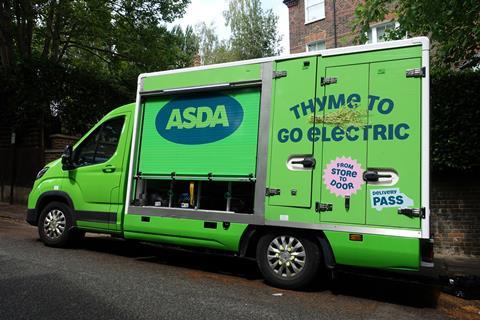
Asda’s online grocery sales dropped by 8.1% last year as the business suffered from disruption while it transitioned to a new website.
“The online customer journey from logging in, building a basket, to checking out, was disrupted initially,” Asda said in accounts for 2025, which were published on Sunday.
It has since made “significant improvements” following the new website’s launch, but acknowledged there was still “some optimisation required” in 2026. From next year Asda will use Ocado’s technology to upgrade its website and support its in-store picking and home delivery service.
George.com sales were also impacted by system changes and fell by 2.8% in 2025.
The filings confirmed that pre-tax losses climbed to £989m, while like-for-like sales dropped by 3.1% to £20.8bn and total reported revenues dropped from £26.9bn to £25.9bn, as the business was hit by the move away from Walmart’s to its own technology systems under its troubled Project Future.
Borrowing costs at the business rose by 19.2% to £728.9m due to higher interest rates following the refinancing of some of Asda’s debts.
Asda’s total debt burden reduced to £3.1bn from £3.8bn. But with EBITDA falling from £1.1bn to £763m, leverage has increased. On an adjusted basis, which excludes the costs of decoupling its systems from Walmart’s and other items, Asda reported its leverage stood at 4x EBITDA, an increase from 2.9x in 2024.
In November ratings agency Fitch downgraded the long-term default rating on Asda parent company Bellis Finco’s borrowings from ‘B+’ to ‘B’, with a negative outlook and forecast EBITDA for 2025 to reach £860m.
Asda also booked a £284m final one-off cost for Project Future, which brought the total spend on the transition to £1.2bn.
“Ex-fuel sales were particularly impacted in H2 by disruption following the substantial completion of Project Future affecting on-shelf availability and customer experience online through increased website friction. By mid-November availability had recovered to levels experienced in Q2 and our Online Customer Satisfaction Index had also increased back to its Q2 position,” Asda said.
“Having built our price gaps through the year, we maintained these through Q4 as we sustained our investment into ‘Rollback’ and ‘Asda Price’. This ensured that we have started 2026 with a strong value proposition to accelerate the recovery of sales lost to Project Future disruption through H2 2025.”






No comments yet