






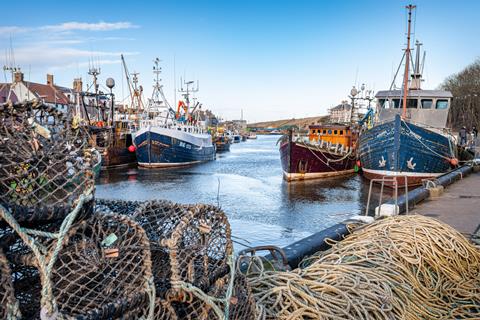
The British fishing industry is on a “knife edge”, sources have told The Grocer, due to soaring energy prices.
National Federation of Fishermen’s Organisations CEO Mike Cohen said rising red diesel prices were causing fishers to tie up their boats and lay off their crews.
With the price of the discounted fuel hitting 89.6ppl in March, according to AHDB, Cohen said fishers were “struggling more and more”.
“Some fishermen have had to tie up their vessels and lay off their crews.
“We are in a desperate position in some parts now,” Cohen told The Grocer, adding that government help had not been forthcoming.
“France, Spain, Ireland and the European Union … they’re subsidising their fishing boats whilst British boats have to watch,” Cohen said.
Previous reports from The Grocer that skyrocketing red diesel prices could threaten jobs and drive-up prices appear to be coming true as in the Cornish port of Mevagissey alone five trawlers “have tied up [and] their crews have been laid off”, Cohen said.
“I’m hearing similar things across the South Coast,” the NFFO chief said.
He added the scallop fleet had been particularly badly hit due to boats needing more fuel because of their heavy equipment. Those fishers who are faring relatively better, including those fishing cod and haddock, are still “making less money than they normally would”.
“If demand falls, those businesses will be in big trouble very quickly,” said Cohen.
A government source said the 5p fuel duty cut would be extended until September and asserted red diesel already benefited from an 80% tax discount - saving fishers around £300m a year. The reduced 10.18ppl duty rate has also been maintained.
“We are taking this issue very seriously and are carefully considering the implications and potential steps that can be taken to reduce the impact by the Iran war,” a Defra spokeswoman said.










No comments yet