




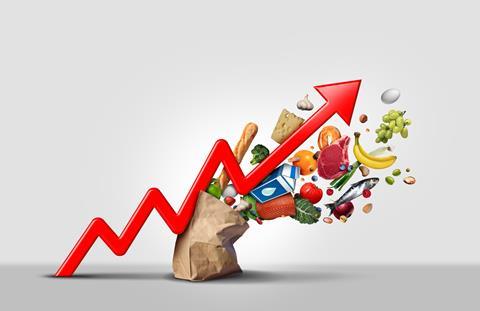
Food inflation has climbed past 5% for the first time in 18 months as rising employment costs and poor harvests drove up prices in retailers, according to official data released this morning.
It is the fifth month in a row that food prices have climbed, with increases for vegetables, cheese and fish, the Office for National Statistics reported.
Food inflation hit 5.1% in the year to August, up from 4.9% in July and the highest level since January 2024.
On a monthly basis, food and non-alcoholic beverages prices rose by 0.4% in August 2025, compared with a rise of 0.2% a year ago.
Despite the rising price in supermarkets, the UK’s headline rate of inflation held steady in August at 3.8% as the costs of air fares rose at a slower rate.
The average cost of petrol also shot up by 0.3p per litre from July to August, compared with a fall of 2.1p a year ago, while diesel prices rose 0.8%.
Karen Betts, chief executive of the Food & Drink Federation, said it was “concerning” to see food prices rise further last month given commodity and energy costs were “fairly stable”.
“There are still notable pressures on coffee, cocoa, olive oil and dairy prices, but otherwise the continued rise is explained by regulatory and tax costs,” she added. “This year’s increases to employer National Insurance contributions, the new packaging tax, business rates rises and the cost of border checks including to Northern Ireland are heaping costs on our sector.
“We need government to bring down the cost of regulation – so it’s better designed, easier to implement, and better sequenced so it doesn’t all land at once on companies struggling to cope.
“Manufacturers are looking to the Chancellor in the budget to ensure we have proper policies and incentives in place to drive productivity growth across food and drink, to offset regulatory and tax costs, and to boost the employment and prosperity that food and drink manufacturing provides in communities up and down the country. She must resist bringing in new costs to ensure the UK is an attractive place to invest.”
The FDF warned earlier this week that food inflation would reach almost 6% by Christmas.
Dr Kris Hamer, director of insight at the British Retail Consortium, said that with food inflation now outpacing wages, many families would struggle with the rising cost of living.
“Households across the country are noticing the increasing cost of their weekly shop,” he added.
“Retailers are doing everything they can to deliver great value for their customers, but are unable to absorb the £7bn in costs they have been landed with this year thanks to rising costs of National Insurance, higher NLW and a new packaging tax.
“The Chancellor can help turn the tide at the budget by delivering a meaningful business rates reduction, with no shop paying more as a result. If the government instead chooses to burden the industry with more costs, then it will be households who feel the pinch as they go about their weekly shop.”



No comments yet