



Key food sector concerns around the proposed sanitary and phytosanitary deal with the EU remain “unresolved”, despite Andy Burnham this week stating he hoped for negotiations to be concluded by the end of the year.
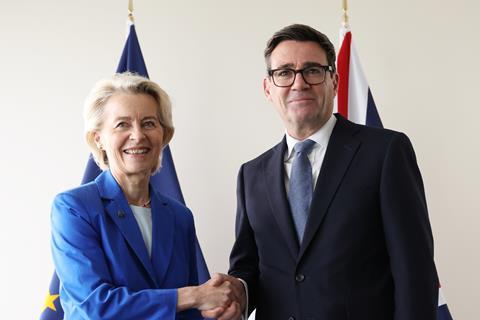
Ahead of talks with European Commission president Ursula von der Leyen at the UN on Tuesday, the PM told reporters discussions over several stumbling blocks to the wider reset deal – including a youth mobility agreement and the Made in Europe industrial policy – would be “constructive”.
“Our focus at the moment is on a UK/EU summit which we hope will take place later this year,” The Times reported Burnham as saying.
However, the lack of progress on the SPS agreement meant the government also had work to do to assuage the concerns of the food sector, said Nigel Jenney, CEO of the Fresh Produce Consortium.
“Our position and the government’s are totally opposed,” Jenney told The Grocer. “They are knowingly choosing to secure a preferential agreement with the EU [via dynamic alignment with EU rules] which fundamentally disadvantages rest of the world trade. This represents 54% of our seasonal imports of around four million tonnes.”
These imports, unlike those from the EU, would be subject to additional checks under the proposed SPS deal, with the FPC estimating additional costs to the food sector of as much as £300m a year – effectively defeating the government’s argument the agreement would cut red tape for the food sector and lower food prices.
“Ultimately industry and UK fresh produce consumers will pay a hefty price which will directly impact further food inflation,” Jenney argued. “Government is failing to listen and proactively secure a win-win solution promoting overall global trade and UK food security.”
Jenney said Defra had advised FPC members that had written to the PM about the issue that it “recognised this will represent a change from current arrangements and that it will lead to increased checks on imports for certain rest of world goods”.
That response, however, was “both ambiguous and unsatisfactory”, Jenney said. “It acknowledges change yet fails to address the scale of the consequences or the significant and avoidable burden these proposals would impose on the sector for many years to come.”
What was being presented as a technical adjustment was “in reality, a fundamental shift with far-reaching implications for businesses, supply chains and consumers alike”, he added.
Jenney’s concerns about the SPS deal uncertainty were shared by Joseph Goldsworthy, technical advisory manager at the Chartered Institute of Export & International Trade, who told The Grocer there remained a “real need for a clear roadmap to be announced by the government, so that businesses are not adversely affected by any changes to regulations”.
Given the last update on the regulations in scope of the SPS agreement were released in June, and the original summit to ratify the deal in July had been postponed following Keir Starmer’s resignation, Goldsworthy called for “greater dialogue with UK businesses” to give “consistency and predictably in the rules which govern trade”.
Further clarity on the state of play would need to “be fundamental ahead of any implementation of an SPS agreement”, he added.
The deal is due to come into force by the summer of 2027. But given the logjam in discussions around youth mobility and Made in Europe, one senior food sector source suggested to The Grocer the summit could even be “deferred to early next year”.
Such a turn of events could ultimately “push implementation back or truncate implementation time for industry, which would not be ideal”.
It comes as concerns over the impact of the SPS deal on the food sector have also been raised by the Conservative Party in recent days. Shadow environment secretary Victoria Atkins used a speech at thinktank Policy Exchange last week to claim the government was “conducting these SPS negotiations in secret, without a clear mandate or firm red lines”.
She added: “Even more concerning, they have barely consulted the businesses most affected. Instead, they seem intent on going full steam ahead, handing over control of our regulations and leaving British consumers and businesses dangerously exposed.”







No comments yet