

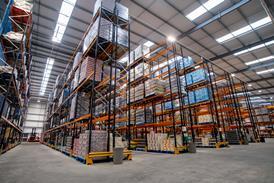


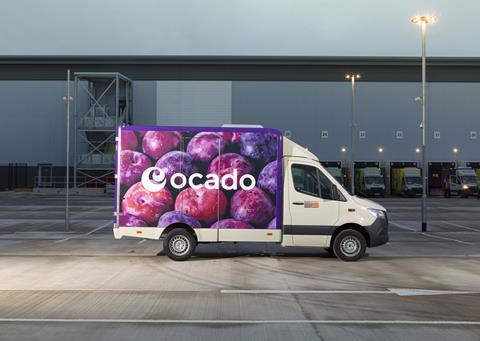
How do you serve the Manchester area? Manchester is one of seven CFCs in the UK. Alongside that we have a number of spokes, which allow us to serve larger geographies. The Manchester spoke opened in 2009 and handles about 15,000-20,000 deliveries a week. Currently we reach around 75% of the UK. And demand in the north is one of our fastest-growing areas. We think a big part of that is that Ocado is the only retailer to sell M&S online, and there is a big love of M&S in the north.
Ocado is regularly named as the UK’s fastest-growing grocer. Where is that growth coming from? All of our metrics are green. We are acquiring more customers than ever before. We’re acquiring them nationwide, and we are retaining a greater number than we have done in the past. Our existing customers are also shopping more often. Our delivery Smart Pass plays a role, but we’re also launching new delivery propositions like same day delivery, four-hour delivery slots and our Zoom proposition in London. We are also using AI to power our targeting more effectively to make sure that new customers are more likely to stay with us.
Online demand has been falling during the cost of living crisis as shoppers seek to manage costs. Is that a challenge? Online actually gives customers more control over their budget compared to in-store because you’ve got a live trolley total. Our basket volume is actually flat year on year, which is a surprise because inflation is generally causing volumes to decline, but Ocado customers are going into new ranges and trying new products. It could also be down to us over indexing in the ABC1, 40-plus customer demographic.
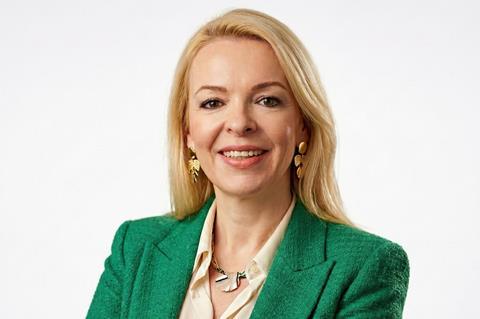
Our shopper enjoyed an “easy” shop. How are you working to improve user experience? We migrated to a new tech platform last year. It was a labour of love that took five years, but we wanted it to be better than our old platform. It’s worked and we didn’t see the temporary drop in customers we expected. It is allowing us to do much more. One of the areas we’re working to improve is the experience for new customers. Currently it takes at least an hour and a half to build their first basket. We need to make that easier and more joyful. Second is improving product discovery for existing customers, for example using AI to improve contextual searches.
It’s the Grocer’s Goodness Issue this week. How are you reducing food waste? All our supply chain systems moved on to the Ocado Smart platform last year. We now have much more information about what customers are putting in their trolley and it’s improved our forecasting. As a result, our level of potential purge has fallen. We’ve also updated our flash sales feed – our equivalent to yellow sticker reductions – so it better predicts items close to purging. It also refreshes more often so we are able to sell more throughout the day. We’ve not solved food waste completely but it’s made a massive difference.
You had to rename your newly launched ‘GLP-1 Friendly’ aisle. What happened there? The intention was positive – we want to help customers find the right products. We’re launching a new product catalogue this year which will allow us to gather and include much more data about individual products. We might be slower to launch new product discover aisles in the future, but we’ll be confident they’re right. As a trend, GLP-1 is definitely one that’s here to stay. We’re not seeing a decline in baskets overall, but we’re definitely seeing a decline in certain categories, with shoppers trending towards more premium, protein dense or fresh fruit lines.
What’s different working for a pureplay grocer, compared with a traditional bricks and mortar retailer? I joined Ocado a year-and-a-half ago after working at B&Q, Waitrose, Sainsbury’s and Woolworths in Australia. Although we’re online, I’ve never felt closer to the customer, because of the level of live data we can see in terms of how customers are reacting, what’s working and what’s not. It’s super valuable.


No comments yet