





Reports suggest Tesco is finally ready to sell its central Europe operations, closing the door on global ambitions to focus on winning at home
Tesco is to bring down the curtain on its overseas adventures, with bankers exploring the sale of its operations in central Europe.
So reported the Financial Times last week – the latest sign that, after a chequered history of expansion in Europe, Asia and the US, the UK’s biggest supermarket wants to concentrate on extending its domestic domination.
But what would a sale of Tesco’s remaining overseas assets mean for the fight for UK shoppers? And do experts think it’s the right move?
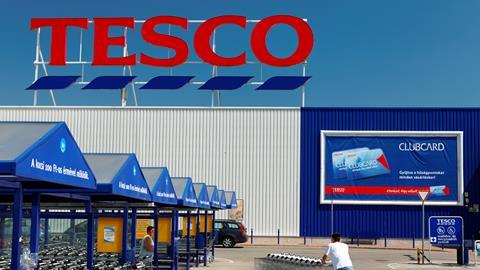
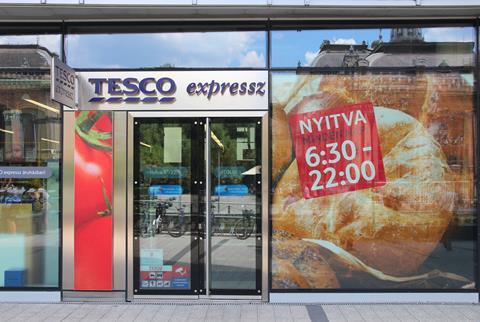
Tesco is believed to have hired advisers to run the rule over a sale of its chain of stores in Hungary, the Czech Republic and Slovakia – its remaining outposts outside the UK and Ireland – following a string of deals to exit the US, Asia and other areas of Europe over the past 13 years.
It is little more than a year since The Grocer revealed that Tesco UK CEO Ashwin Prasad was targeting a return to a market share of more than 30% – a level not seen in 12 years. Tesco is getting closer: its share hit its highest level in more than a decade at 29.4% last December. But the most recent figures suggest that momentum is cooling, with growth slowing as the business lapped last year’s strong comparatives – leaving its share at 28.5% in last month’s first-quarter results.
Sources familiar with Tesco’s foreign operations say it therefore makes sense to look to free up resources and simplify its strategy still further, with the only surprise being it has taken current group CEO Ken Murphy so long to pull the trigger.
“Tesco was reviewing selling its central Europe operations over a decade ago as part of a more general retreat as a global retailer, enabling it to focus resources on the UK,” says one leading source who is close to the operations.
“But while the timing was good in 2018-20, the value would have been poor. I suspect they are just finishing the job but now with slightly better returns.”
The source adds that the slow growth of Tesco’s Europe operations has become a hindrance for Tesco’s leadership, which has shown a ruthless pursuit of its proven strategy for success in its home market.
That reading is backed by the numbers. Alex Rowberry, senior insight analyst at IGD, notes that Tesco’s European stores contributed less than 4% of its adjusted operating profit of £3.15bn during the past financial year, and says it is simply not where the growth lies.
“The common theme is focus,” he says. “Growth opportunities are increasingly centred on food, Clubcard, retail media, Online grocery, Whoosh rapid delivery, and digital services rather than geographic expansion.”
Tesco’s global retreat
2013: Tesco announces exit from US, costing around £1bn including paying US billionaire Ron Burkle £80m to take on loss-making Fresh & Easy chain
2015: Tesco agrees to sell its South Korean retail arm Homeplus to a consortium led by MBK Partners for £4.24bn
2016: Tesco retreats from Turkey after selling its controlling stake in Turkish chain Kipa to rival Migros
2020: The supermarket finalises the sale of its Thailand and Malaysia business, marking the end of a new Asian expansion
2020: Tesco sells its 300 Polish stores to Danish retailer Salling Group
2020:£275m deal marked the final withdrawal of its Chinese operations, originally formed in a 2014 merger with China Resources
AJ Bell head of markets Dan Coatsworth says: “Tesco has put its heart and soul into defending its UK market-leading position and everything else plays second fiddle.
“Tesco’s mainland European arm has washed its face but isn’t strategically significant. Losing it from the group would be a simple cleaning-up exercise, rather than something that moves the needle.”
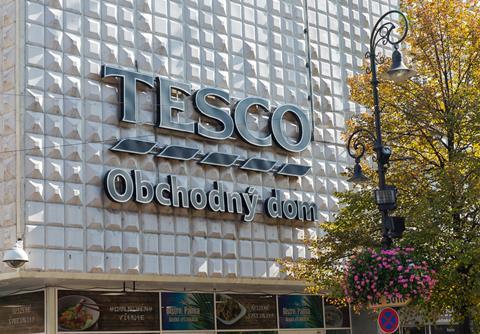
The source adds: “The CE business unit, while scaled, with 500 stores and circa 22,000 colleagues, makes a poor return in the Tesco world. Its low returns in a high-return UK business will have a drag on the overall business. If the latest data is showing core business slowing down in the UK, they can ill afford more drag.”
Not everyone agrees. One retail consultant source says Tesco’s move is unlikely to be too directly linked to its ambitions in the UK. “Tesco is not doing this because of slowdown. This is something Dave Lewis would have sold off if he could. There just wasn’t any appetite from potential buyers when he tried.
“Central Europe, of all of the geographies Tesco operated in, is actually a fine business, so there was no real need to get rid of it.”
The internal source takes a different view of the payoff. “A sale will ultimately mean it can invest back into UK and Ireland on innovation and digital platforms to drive much higher returns,” the source says.
“Tesco will be looking to drive Clubcard personalised prices and offers at scale, and exiting CE will ultimately help it fight on price but in a targeted and considered way.”
The source adds: “Investors like the progress on the UK model, with new income streams versus CE which is highly regulated, very price-sensitive and lacks the firepower of the UK both in resources and capabilities.
“The Tesco brand has strong brand equity amongst its peers globally, so even a low-multiple disposal can still be value-accretive if it’s dragging down the group’s overall rating.”
Where would the money go?
A City dealmaker estimates the central Europe business carries a price tag of between £750m and £1bn.
But Bernstein analyst William Woods notes Tesco would be unlikely to earmark any returns for investment in the UK stores.
“Tesco would likely plough the vast majority of anything from a sale into another share buyback for investors,” he says.
“The group doesn’t need to invest much more into the UK, mainly because it can do that using its own margin. Investors would want it to come back as a buyback, which is what happened when they sold the banking business to Barclays in 2024.”
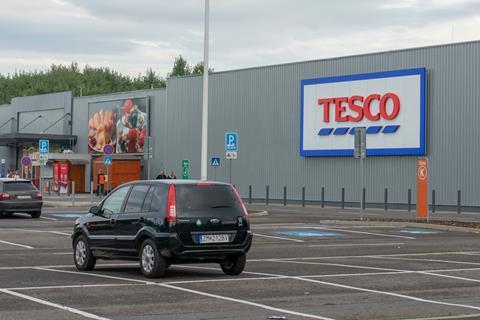
Tesco’s retreat from Europe comes as it had been adding to the business closer to home.
“The board have been quietly securing complementary businesses in the UK and Ireland,” says the source. “We’ve seen Tesco move for Joyce’s in Ireland, Best Food Logistics, Venus, Shoprite.
“All of which secures share within the core business, albeit small-scale acquisitions. This could give them some extra firepower – although I suspect a better return will be a further programme of share buybacks.
Ged Futter, founder of The Retail Mind, says despite the speculation, one thing is certain: Tesco will not be acting because of any short-term blip in its figures.
“This will have been part of a plan, not a knee-jerk reaction to slower sales growth. But it also fits with their relentless pursuit of growth in their strongest market, and if they want to win on that market share and get up to 30%, you have to have cash.
“Tesco knows it has its opposition on the ropes. They have got their fingers burnt in the past with global expansion, but now their battles are all about winning at home.”









No comments yet