




Quite a few industry eyebrows were raised last September, when the UK’s two biggest food redistribution charities, FareShare and The Felix Project, announced their plans to merge.
The biggest surprise? That the FareShare name – arguably the more established with both the public and the food industry – would disappear altogether.
But even before today’s official rebrand confirmed the newly merged body would operate simply as Felix, the direction of travel was becoming clear. The wind of change currently blowing through the redistribution sector could catapult the issue itself – and its new name – much further up the public consciousness.
With the government and industry bracing for what looks set to be a long and drawn out food inflation crisis, one thing is already clear: it will be the poorest families, those least equipped to handle the shock, that will suffer the most.
A fragile ecosystem
Against that backdrop, Felix today released a survey of more than 2,700 UK charities it supports, revealing the fragile ecosystem that underpins food redistribution. Without the rescued food it provides, nearly a third said they would have to shut down altogether, while more than half would be forced to scale back.
Such is the level of reliance frontline food banks now have on organisations like these.
The FareShare name, now consigned to history, dates back to 1994, when it was founded by Sainsbury’s and Crisis to supply surplus food to homeless shelters. It went on to forge deep relationships with many of the major supermarkets, including Asda and Tesco.
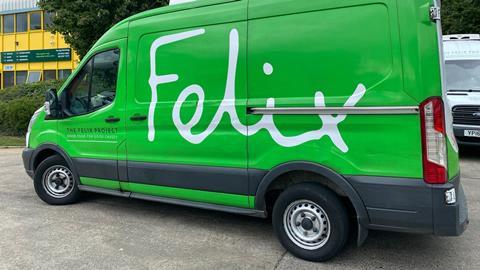
The Felix Project, meanwhile, began as a one-van operation in west London and was named after Felix, the son of Jane and Justin Byam Shaw, who died from meningitis at just 14 but had already shown a passion for tackling food poverty. Celebrating its 10th anniversary this year, the charity has reached the heart of government, with its indefatigable CEO Charlotte Hill among those at Downing Street earlier this year calling for a step-change in the redistribution network.
That now looks firmly on the agenda. Last month, prime minister Keir Starmer pledged to treble the amount of food redistributed in the UK, in a huge upscaling of the work currently done off the back of the King’s Coronation Food Project, launched in 2023, and its offshoot Alliance Food Sourcing.
But ambition is one thing, delivery quite another.
If that goal is to be achieved, the Felix name will need to cut through into the consciousness of the public beyond the sector, with a major consumer-facing push already planned. It will also demand systemic change from the food industry – no small ask at a time when businesses are battling mounting cost pressures and policy uncertainty.
Rescuing food
“Rescuing food for fuller lives“ is the new strapline unveiled today. But in reality the mission could be narrowed down to something simpler: rescuing food, and getting it where it is needed most.
That is going to involve much more than just upping awareness to the public and attracting the support of wealthy philanthropists. It will need the government and the industry to finally deliver the long-promised – but repeatedly delayed – policy of mandatory food waste reporting alongside more joined-up use of the industry data on food surplus.
It will also require careful management and strategic thinking to ensure that the hoped for step-change in food redistribution does not come at the cost of the industry taking the foot off the pedal of reducing food waste.
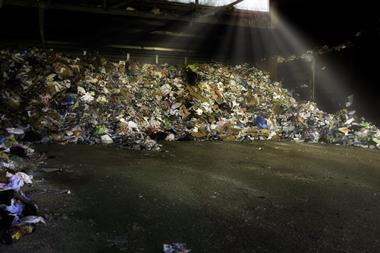
Because the potential is massive. In the UK just 1% of the surplus food that is available is redistributed, 10 times less than in some countries.
Call it what you like, but that is a waste on a tragic scale – and one that can no longer be ignored.


No comments yet