





GLP-1 appetite-suppressing drugs are no longer a hypothetical for grocery here in the UK: they’re already influencing the way consumers shop, eat, and spend. As a result, we’re seeing a wave of high-fibre, high-protein, small-portion options designed to support consumers using these types of medications.
These responses are inevitable, and if some shoppers are willing to pay a significant premium for ‘GLP-1 friendly’ products that promise greater satiety and nutrient density, then retailers would be remiss not to pay attention.
But it strikes me there’s a real risk that in responding to GLP-1s, the industry narrows the conversation too far. In focusing on products designed for this subset of shoppers, there’s a danger we overlook a much bigger, more fundamental issue. We all need to eat more fibre, regardless of whether we have pharmaceutical intervention.
Because if you hadn’t already got the memo: it’s fibre that naturally stimulates the body’s own GLP-1 hormone.
Defecit and diversity
The statistics are startling. The vast majority of the British public is in significant ‘fibre deficit’. On average, adults are falling short of the recommended daily intake by approximately 10g. This is a foundational flaw in our collective dietary habits. A gap that existed long before GLP-1s became part of the public conversation, and one that won’t be solved by repositioning fibre as a specialist solution for appetite suppression alone.
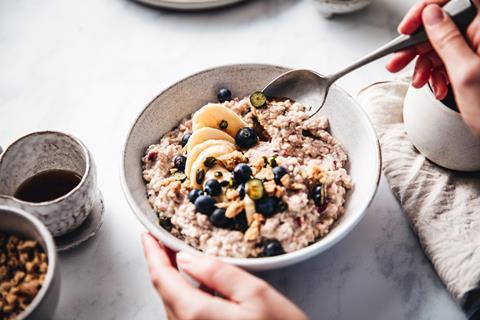
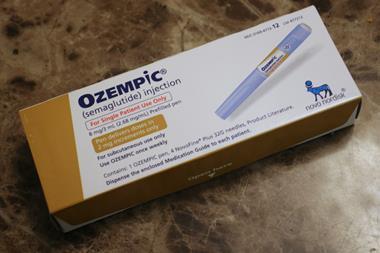
Leading scientists concur that feeding your gut microbes dietary fibre keeps you feeling fuller for longer, reducing the urge to snack afterwards. As our gut microbes break down the fibre, they stimulate production of the appetite-regulating hormone GLP-1 (which is targeted by weight-loss medications like Ozempic and Mounjaro) that signals fullness and also regulates blood sugar.
Crucially, this isn’t just about fibre quantity. The science increasingly points to the importance of fibre diversity, delivered through a wide range of whole plant foods. That diversity underpins gut health, which in turn plays a role in everything from digestion and immunity to long-term metabolic resilience. This is what I would encourage shoppers to look out for, and where some of these new ready meals fall short.
This philosophy should underpin health for everyone. If we focused on closing that 10g gap through ‘food first’ principles, we would be building a much more resilient nation, one that might not need to rely on pharmaceutical solutions to manage appetite and weight in the first place.
Fibre education
Another major opportunity lies in fibre education: reinforcing the importance of whole foods and the benefits of fibre diversity. This is an area where brands and retailers alike can do more, and that very much includes Bio&Me, as we’re going to be significantly increasing our focus on fibre education this year. Encouragingly, Sainsbury’s is planning a fibre-focused campaign, as recently reported in The Grocer, with other retailers rumoured to be following suit.
Beyond retail, fibre is also gaining wider attention. Programmes such as What Not to Eat with Tim Spector on Channel 4, alongside Hugh Fearnley-Whittingstall’s current fibre programme on Radio 4, are helping bring the role of high-fibre, diverse diets – and their benefits for gut health and beyond – into the mainstream. It’s a message long championed by my co-founder, Dr Megan Rossi.
These are exactly the kind of education pieces the nation needs. For too long, fibre has been a “dusty” category, often associated with functional blandness. It needs to be repositioned as the powerhouse of metabolic health that it truly is.
GLP-1 medications may change appetite for some, but they do not change the fundamental truth that we need to eat better. Fibre can no longer be a side conversation; it is central to the UK’s long-term health, whether shoppers are on medication or not. It’s time we treated it with the same prominence as the latest pharmaceutical breakthrough.
Jon Walsh is founder and CEO of Bio&Me








No comments yet