





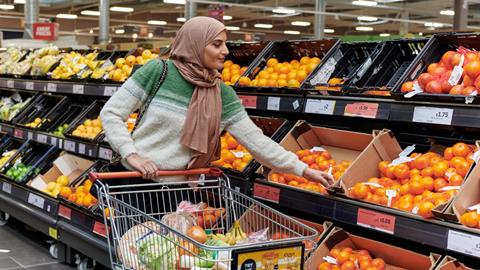
Those of us who haven’t successfully blocked the entire period from our minds might remember the Healthy Start Scheme scandal that unfolded during the Covid pandemic.
Fresh from the same school of incompetence that bought us the PPE contracts debacle and No 10’s creative interpretation of ‘friendship bubbles’, it was a classic case of good intentions being derailed by staggering ineptitude.
As a reminder to anyone who may have forgotten, the scandal meant more than 300,000 low-income UK families missed out on over £60m in food vouchers for essentials such as fruit, veg and milk. The cock-up – and that’s putting it politely – was down to a botched switchover to a digital system, made worse by a feeble marketing plan which meant thousands of families had no idea they were even entitled to help in the first place.
Lessons learned
Yet behind the chaos we also saw the grocery industry coming together to offer real help to those most in need, using its scale and buying power to support struggling families during a time of immense uncertainty. A raft of supermarkets stepped in to top up the government’s Healthy Start voucher for low-income parents of young children and pregnant women, with several retailers including Sainsbury’s, Lidl, and the Co-op taking part in the scheme.
Today, The Grocer has revealed talks are underway about bringing the idea back to life, but retailers are understandably insisting on assurances that the same mistakes won’t be repeated.
Tesco has confirmed it is in “active talks” over the idea, but has insisted a more effective marketing campaign must be in place. Sainsbury’s, meanwhile, believes supermarkets are in a good position to attract private investment and channel money into the scheme – provided the right ground rules were in place.
Supermarkets, understandably, want assurances that they will not be left to deal with families humiliated at the till because their vouchers don’t work, that the scheme will use a paper-based voucher system (ensuring benefits are spent on food for children as intended, rather than being swallowed by digital top-up cards with zero traceability), and that the initiative will finally receive the level of promotion needed to make sure families know it exists.
Pushing at an open door
Considering the cost of living crisis is supposedly the government’s number one priority, this is surely one of the biggest no-brainers of recent times. The technical barriers, one would hope, should not be beyond the wit of a government working with some of the the UK’s finest marketing minds.
If the same pitfalls can be avoided, with the benefit of hindsight, then the government has a real chance to use this intervention to help tackle food insecurity, drawing on both its upcoming Child Poverty Strategy and the Food Strategy. The latter, in particular, urgently needs examples of concrete policy measures to give it momentum and credibility.
Supermarket top-up schemes are not just for show, either – there is strong evidence to suggest they work.
In 2021, IGD ran research with Sainsbury’s and the University of Leeds on the impact of shoppers redeeming Healthy Start vouchers in Sainsbury’s, with an extra £2 per week to spend on fruit and vegetables. It successfully shifted behaviour, with more fruit and vegetables and fewer discretionary items purchased. And crucially, these benefits remained even after the financial incentives stopped.
Debates will no doubt continue to rage over the broader issues of who should and should not have access to Healthy Start vouchers and free school meals, but if ministers are sensible they will find they are pushing at an open door by bringing in retailers and other food businesses into the mix.
Only then can we actually start to see examples of the much-touted coalition between government and industry in action, without needing another pandemic to force the issue.







No comments yet