




A recent category report in The Grocer raised important points about ethical trading certification. We welcome the opportunity to clarify how credible, independent certification works, what it can deliver, and where its limits lie.
Certification is one essential sustainability tool among many. Robust, third-party verified programmes provide a shared framework for sustainability and signal a commitment to continuous improvement. They strengthen transparency and accountability and build market incentive for responsible practices. Done well, they support more stable farmer income, stronger livelihoods, and greater resilience to climate shocks.
At the same time, we are clear about certification’s limits. It is not a silver bullet and cannot single-handedly solve complex challenges such as climate change, inequality, or rural poverty.
But when designed and implemented rigorously, certification provides a foundation for meaningful progress. Without it, advancing sustainability across global agriculture becomes far more difficult.
Context is key
That context is important when considering points raised in the article. For more than 35 years, the Rainforest Alliance has worked alongside smallholder farmers, who are at the heart of our mission to support resilient livelihoods and healthier landscapes. In 2024 alone, we partnered with nearly eight million farmers and workers across 62 countries.
Some 99% of the farms certified against our Sustainable Agriculture Standard are smallholder farms. Through our certification programme, which is entirely voluntary, farmers receive practical training, tools to build climate resilience, and access to international markets. In 2024, Rainforest Alliance Certified farms achieved on average 31% higher yields, compared with country averages.
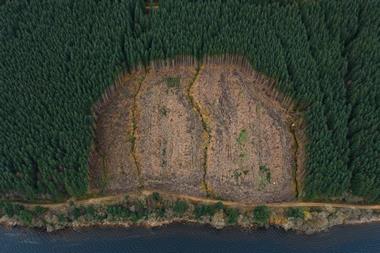
Simultaneously, our work continues to support the protection, restoration, and sustainable management of roughly 10.1 million hectares annually.
Farmers at the heart
Certification cannot operate in isolation. That’s why, through landscape programmes and advocacy, the Rainforest Alliance works with communities, governments and companies to transform how agriculture is practised, ensuring farmers’ voices are represented at every level.
This includes supporting sustainability legislation such as the EU Deforestation Regulation (EUDR) and the Corporate Sustainability Due Diligence Directive (CSDDD), while calling for smallholder farmers to be meaningfully included and supported.
While many certification schemes exist, quality, verification of implementation and accurate reporting are what truly matter.
The Rainforest Alliance Sustainable Agriculture Standard is ISEAL code-compliant, independently verified, credible and rigorous. A key objective in developing our standard has been to align core indicators with those collected by other credible certification schemes, helping reduce duplication and administrative efforts for farmers. Our new Regenerative Agriculture Standard is built on years of research and pilots, with context-specific requirements helping farmers adopt regenerative practices in ways that strengthen both their land and livelihoods.
With farmers at the centre, the Rainforest Alliance remains committed to working across supply chains to create a resilient and sustainable future for agriculture.
Santiago Gowland is CEO at the Rainforest Alliance





No comments yet