






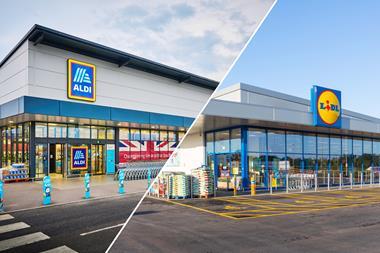
It’s a watershed moment. As we’ve reported this week, Lidl has finally overtaken Morrisons on market share. It’s been neck and neck for two months, but this month’s Worldpanel data shows the discounter’s share (up from 8.4% to 8.6%) has fairly flown past Morrisons (down from 8.4% to 8.3%). And the question everyone is asking now is whether (and how quickly) it can catch Aldi.
But there’s a question no one was really asking: what next for Morrisons? As Lidl has come up on the rails, Morrisons has insisted its sluggish 1.3% growth does not reflect its success in convenience, as Worldpanel does not capture food to go from its 1,600-plus Morrisons Daily stores. (An argument The Co-op has also made.) But Tesco and Sainsbury’s don’t complain about any shortfall from their Express and Local shops.
Meanwhile, Morrisons last week announced the closure of 100 company-owned, company-operated convenience stores (or COCOs, as it calls them) and is pinning its hopes on franchise-owned, franchise-operated stores (or FOFOs).
But lots of convenience operators are struggling, including Spar’s AF Blakemore and Appleby Westward and Southern Co-op, as well as the aforementioned Co-op Group.
So success in convenience is far from guaranteed, and it’s not surprising that, while continuing its turnaround of the core supermarket business, Morrisons has reportedly entered talks with representatives from rival supermarkets, including Sainsbury’s, to sell more goods from its Myton manufacturing arm.
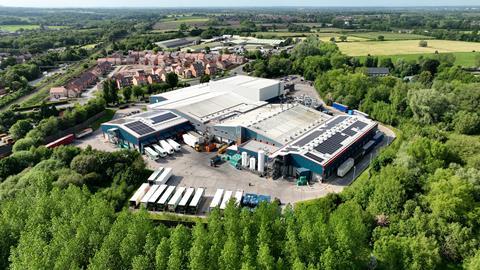
The vertically integrated supply chain on which Morrisons has always prided itself was invaluable during the Horsegate crisis. It was the only retailer to escape unscathed. And with 16 sites – supplying fish, flowers, chilled foods, fresh produce, and meat, among others – it’s one of the UK’s largest food manufacturers.
But as we’ve seen with the sale of its Rathbones Bakery (to Warburtons), these manufacturing sites don’t run themselves.
And when the core business isn’t growing, or in periods with high inflation where it admits it has been at a disadvantage, it places a major strain on the manufacturing businesses. And rumours have circulated since the autumn that Morrisons plans to sell Myton Foods to lower its debt, though CEO Rami Baitiéh has insisted Myton is not for sale.
That being the case it makes sense to work these assets harder. It already supplies Amazon, as well as foodservice wholesalers (including Booker in the past) as well as other food manufacturers.
But could this be part of an altogether bigger exploration for Morrisons – and Sainsbury’s for that matter?




No comments yet