After a year of tough trading, Blakemore’s move for AWG gives it significant scale and a major presence in south west England

It’s over a year since Appleby Westward Group was put up for sale, but from the get-go there was only one name in the frame for the south west England Spar licence: AF Blakemore.

In a shrinking convenience market AFB has been determined to keep growing and to further consolidate the Spar UK symbol operation. And after protracted talks, last week’s confirmation of the £7m deal achieves this.

So what is AFB buying exactly? And why does the deal make sense?

Blakemore spar

After a year of tough trading, Blakemore’s move for AWG gives it significant scale and a major presence in south west England

As well as the distribution and logistics operations, located in Saltash, Cornwall, AFB gets the 71 company-owned stores it wants, and will also take on the supply of 144 independent Spar retailers. AWG’s remaining 63 company-owned stores are being sold to other operators.

AFB has been the largest Spar symbol operator since acquiring fellow Spar wholesaler Capper & Co in 2011, which extended its reach into South Wales, Sussex, Gloucester, Oxfordshire, Kent and south London.

The acquisition raises the stakes. Upon completion, expected in stages from June to September, AFB will supply almost 1,100 stores, including 317 company-owned stores, making it almost double the size of James Hall, its nearest Spar RDC ‘rival’ with 160 company-owned stores and 450 independents. (CJ Lang in Scotland has 115 company-owned stores and 227 independents on its books; Northern-Ireland based Henderson has 118 company-owned stores and serves 392 independents.)

Andrew Hall, chairman and CEO of James Hall, has welcomed the acquisition: “We are better together and I believe the agreement reached between AF Blakemore and Appleby Westward is a positive development for Spar’s position in the UK convenience retail market.

“The deal means that extensive experience and knowledge of convenience retail and wholesaling will be retained within the Spar family. This will provide a strong platform for the growth of independent retail under the Spar symbol in the south west of England.” 

Having a foothold in the south west not only extends its reach; it means AFG can “build the strength of the Spar brand and invest into proposition and value with an improved supply chain network that delivers scale, service and efficiency”, says CEO Carol Welch.

Appleby  spar

The deal will see Blakemore take over 71 company-owned stores, plus supply to 130 indies

That was always the intention for AWG’s South-Africa-based parent company Spar Group, which was looking for a new owner to take the business forward and continue to invest in it.

For AWG, the deal has come at a crucial time. In the year to 30 September 2024, sales fell by 7.6% to £181.8m, thanks to poor weather, an increase in people holidaying abroad, and a shift in consumer spending patterns.

‘Massively down’

At AWG’s 2025 Tradeshow & Conference in Torquay last summer, MD Mike Boardman explained: “The main cause is the environment. The economy is struggling, and consumers are finding it tough. Spar overtrades in tobacco, alcohol, newspapers, and that’s been our traditional heartland. And all those categories are massively down, and it’s taken footfall with it.”

(Having said that, AWG insists the true sales figure across its various operations is in excess of £200m and it blamed the £16m loss on adjustments and exceptional items in preparation for the sale.)

Neither has AFB been immune to the prevailing conditions. For the year ending 27 April 2025, sales fell 8.1% to £1.09bn as it announced a £15.8m loss. AFB chairman Peter Blakemore said bluntly in the results: “The last year has been one of the tougher trading environments of my 60 years in retail.”

AFB and AW: the key facts

AF Blakemore

Established: 1917
Channels: Retail, wholesale, foodservice
Own food brands: County Bridge, Harriet’s Bakery, Philpotts
Key partners: Marston’s, Welcome Break, Moto, BP, Park Garages, EG On The Move, M&S Food
Stores: 609 independent, 246 company owned
Depots: Six
Regions: Midlands, south east, and Wales
Results (y/e 27 April 2025): Sales down 8.1% to £1.1bn, pre-tax loss £15.8m
Acquisitions:
Capper & Co (2011), Philpotts (2019), Vegan Store (2020), Hockmeyer Motors Limited (2023)

Appleby Westward

Established: 1984
Channels: Retail, wholesale
Stores: 144 independent, 71 company owned
Depots: One (plus chilled/fresh depot operated by 3PL in Cullompton)
Regions: South west
Result (y/e 30 September 2024): Sales down 7.6% to £181.8m, pre-tax loss £16.1m
Acquisitions:
Denovo Retail (2019), Gillett’s Callington (2016)

 Ahead of the acquisition, AFB has taken a series of measures to “position the business on the right trajectory for future growth”, including reducing headcount in its support centre and retail store teams, closing its James Bridge foodservice depot, transferring operations to its Wakefield depot, and exiting most standalone Philpotts sandwich stores while integrating the offer into Spar stores. It also secured key contracts including winning supply of branded goods into M&S Food from Booker and launched Blakemore PartnerPlus for independent retailers last summer, with new terms and “market-beating” rebates.

But the AWG deal brings new scale to its turnaround strategy. As Welch says: “AF Blakemore has a history of successful acquisition, and this is another step in creating more Spar stores that customers love. It strengthens our ability as a family‑owned business to invest for the long term in stores, people, technology and in communities.”

Spar A F Blakemore depot

Modernising the estate

SG Retail senior consultant Tim Fairs, formerly brand and digital controller at Spar UK, says modernising the AWG estate is essential. “The AWG stores are quite dated because they’re reliant on confectionery, tobacco and news missions, which are in decline,” he says. “But AFB can now change the stores’ range, size, and focus on fresh, which could really make a difference to AFB’s balance sheet.”

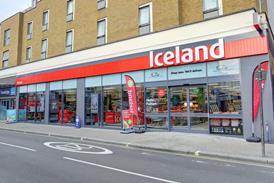
Welch sees scope to enhance fresh, chilled and frozen, including through its recent partnership with Iceland, as well as its own food brands Harriet’s Bakery and Philpotts. She adds, however, that AFB is keen to get feedback from the south west Spar retailers to understand “what needs retaining and improving” as it enters a new region.

“AWG have been a huge supporter of local retailers for many years, and this is something we are keen to continue,” says Welch. “AWG also has a well‑respected logistics operation in the south west, with strong local knowledge and long‑standing relationships. We’re looking forward to combining that local expertise with AFB’s scale, systems and investment capability. It’s about continuity plus enhancement, not change for its own sake.”

There will also be investment in AWG’s 77,600 sq ft ambient depot in Plymouth to support expansion.

And retailers will have access to AFB’s enhanced buying capabilities. While the RDCs can leverage the buying power, strategic insight and promotional planning of Spar UK’s national operation, they still work directly with suppliers on regional ranging decisions and local promotions.

“The customer will benefit from better value for money because they are consolidating the buyers from the brands,” says Fairs.

Welch says the increased scale will give AFB more data, better insight and stronger supplier collaboration, while making it geographically simpler for suppliers to work across Spar and AFB.

AFB is also committed to maintaining AWG’s local edge. “The Spar difference is anchored in offering regional differentiated ranges,” says Welch. “Customers in the south west will continue to see ranges and promotions that reflect their communities, while benefiting from the additional value and choice that comes with a larger network.”

A more coherent proposition

She expects to align campaigns across the RDCs where appropriate, highlighting a key opportunity, according to Fairs, in creating a more consistent Spar proposition for shoppers.

“It is very challenging for Spar to achieve true customer centricity underpinned by one coherent proposition given the complexity of the business and each RDC having their own agenda,” he says. “You have the same fascia across all the shops up and down the country but the business operates with five RDCs that have their own separate P&Ls.

“The challenge is that the RDCs can source their own product, look after their own prices and ranges, and therefore the customer sees a different proposition, which creates a lack of consistency across the entire Spar store network.”

AF Blakemore Food Study Tour

Fairs also notes that each RDC has its own marketing resource to run its own campaigns, promotions, and social media advertising, which “leads to fragmentation and duplication of effort without leveraging economies of scale”.

“Spar UK can try and influence the other RDCs but ultimately they are accountable for their own financial performance,” says Fairs. “Spar could run a promotion but the RDC makes their own decision if they want to run with that.”

But by bringing another RDC into the AFB fold, he says, it creates an opportunity to provide a more consistent customer offer and a modernised store estate with lower operating costs.

“It makes a lot of sense for AFB to acquire AWG.”

The only question is: how will the other RDCs respond?