






Diageo’s push into smaller spirits bottles is a break from category norms.
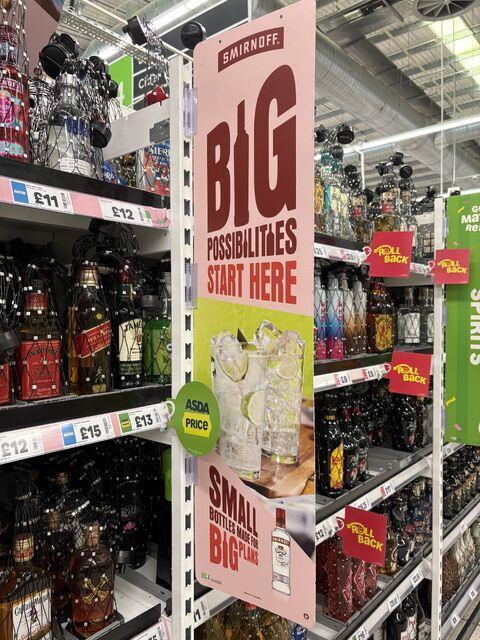
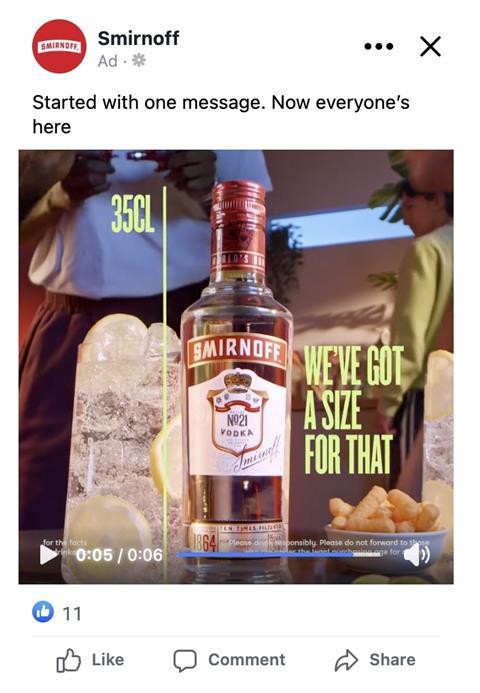
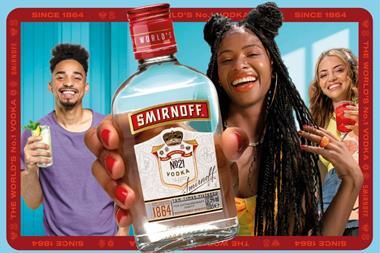
Historically, 35cl and 20cl spirits bottles – colloquially known as ‘fractionals’ – have been the preserve of smaller local convenience stores and independents. But by partnering with Asda to launch dedicated bays to smaller formats in over 230 supermarkets, Diageo believes it can “unlock incremental opportunities across the category”.
So is this smart, outside-the-box thinking to drive growth, or the response of a category in structural decline and running out of options?
Spirits sales slump
Spirits have undoubtedly borne the brunt of post-Covid shifts in drinking habits, as consumers’ have become less willing to splash out on at-home consumption, alongside broader moderation and health trends. In the UK, the sector has also had to contend with an EPR regime that disproportionately penalises glass bottles, as well as three successive duty rises since 2023.
It’s no surprise that sales are in a funk. Last year, value sales of spirits declined by £128.8m on volumes down 4.3%, despite average prices climbing by 2.1% per litre [NIQ 52 w/e 6 September 2025].
By shrinking pack sizes and offering consumers an affordable way to continue to buy their favourite brands, Diageo is hoping it can prevent shoppers leaving the category entirely.
That belief is backed up by NIQ research from 2025, in which nearly half of consumers said affordability was a key reason for buying small bottles. Where £25 a bottle may seem out of reach, £15 can feel like an affordable luxury.
Fractionals can also be a smart way of getting shoppers to try products they may have otherwise not considered. With tequila still in its infancy in the UK, rolling out 35cl bottles of Don Julio or Casamigos could be an effective way for Diageo to recruit new shoppers to the segment without committing to a full-size bottle.
Diageo’s trade-off
From a commercial perspective, pushing smaller pack formats means sacrificing volume – and potentially topline sales – in exchange for better margin per unit sold. But Diageo clearly feels that is a trade-off worth making in the current environment.
Plus, as the company points out, the choice of bottle size may not be driven entirely by affordability. Its own research showed smaller bottles were seen as “particularly suited to spontaneous social occasions”, and “typically purchased for same-day consumption”. Larger formats, meanwhile, were “more commonly chosen during stock-up shopping missions for future use”.
Having both sizes stocked across a single retailer – as is the case for many of the Diageo brands in Asda – increases the chance of meeting both these shopping missions and securing a sale. With Diageo also rolling out activity with retailers including Tesco and Sainsbury’s, as well as across quick-commerce channels, fractional spirits bottles look set to become a more common sight in the months ahead.
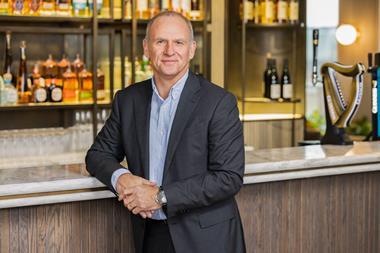
The initiative also provides an early glimpse at the kind of strategy Diageo is likely to pursue under new CEO Dave Lewis.
After joining the drinks giant in January, the former Tesco boss wasted little time in slamming the deterioration in relationships between the supplier and its retail partners, describing off-trade service levels as “really very poor”. This tie-up with Asda is further evidence that Lewis’ Diageo is looking to get closer to its retail customers and uncover fresh opportunities for growth.
Price pack architecture
Lewis also intends to sharpen Diageo’s format proposition. That much was clear in February, when he told analysts the business needed to “sharpen our price pack architecture and particularly address the opportunity … in the growth of small packs”.
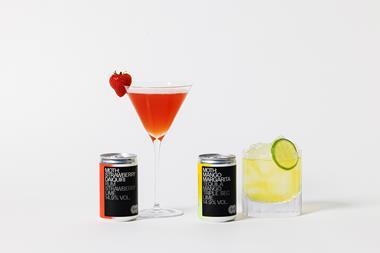
RTD’s are certain be a major focus, with canned cocktails having so far managed to evade the malaise engulfing the wider category. Value sales climbed 17% in 2025, thanks to increased retailer focus and the standout growth of new brands like BuzzBallz, Au Vodka and Moth [NIQ 52 w/e 27 December 2025].
Lewis is clearly irked that Diageo has lost its market dominance in RTDs– where it once held a market share of over 25% – at precisely the time that the segment has increased its contribution to wider spirits growth.
“Diageo created this category with the launch of Smirnoff Ice 26 years ago and drove a very significant [market] share,” he said. “But a loss of focus on RTDs since around 2008 means that we now have a share of RTDs that is below 10%.”
Higher abv RTDs
Diageo relaunched Smirnoff Ice in the UK last year, but knows it must do more to capitalise on the surge of higher-abv cocktails. According to IWSR, products with an abv of over 6% drove half of all retail sales value growth in RTDs from 2021 to 2024.
“Young people are choosing RTDs but they are choosing RTDs with higher abv,” said Lewis. “We believe there is a very significant and profitable opportunity for Diageo in RTDs but there is work to do.”
That suggests we are likely to see a swathe of stronger RTDs from the likes of Gordon’s, Johnnie Walker and Casamigos landing in the UK in the next 12 months.
To riff on the moniker given by Diageo for its new initiative… small formats, big possibilities.






No comments yet