





I’m standing inside a gigantic pint glass holding what may be the world’s tiniest glass of stout.
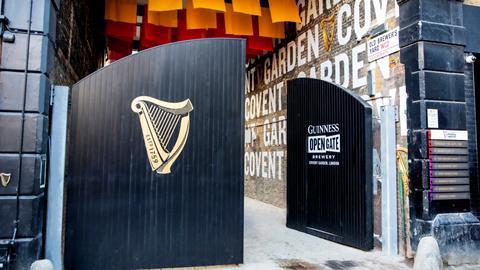
Contrary to what you might be thinking, I haven’t got lost on the way to the JD Wetherspoon toilets and accidentally stepped inside Professor Wayne Szalinski’s matter-shrinking machine. Instead, I’m at the start of the tour of Guinness’ new Open Gate Brewery in Covent Garden, which finally flings open its doors to the public today (11 December).
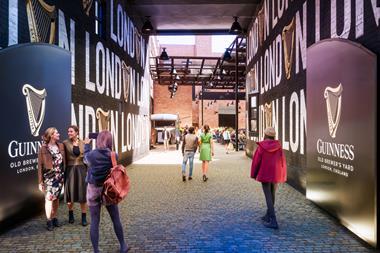
The 54,000 sq ft site spans five buildings and features an on-site microbrewery, two restaurants with dishes created by chef Pip Lacey, two retail stores, a private event space and an open-plan courtyard where visitors can guzzle pints of the black stuff (£7.20 a pop, since you asked) – alongside limited-edition craft beers and non-alcoholic options.
But why has arguably Ireland’s most famous export chosen London as the location for its fifth brand home? And – after several well-publicised setbacks and delays – is the shiny new £73m site worth the wait?
London brewing heritage
Shortly after sinking back our tiddly ‘pints’ of Guinness, my fellow tour attendees and I are shown some grainy black-and-white footage of ‘porters’ working in Covent Garden’s Old Brewers Yard. On their heads, they balance containers of the beer that was said to have inspired Sir Arthur Guinness to brew the dark beer that eventually became Guinness.
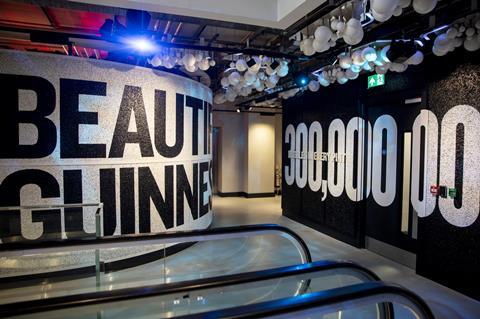
It’s a nice nod to London’s brewing past, and helps explain why – according to Diageo’s category director for beer, vodka and liqueurs Gráinne Wafer – the former Combe & Co brewery site “very quickly became top of the list” once the supplier decided it wanted to open a brand home for Guinness in the city.
“Guinness was a natural choice for Covent Garden,” she says. “The fact that this brings brewing back to Covent Garden after 300 years – on such a rich storied site – has perfect synergy with the brand.”
The Devonshire effect
However, the decision to pick London was based on more than just dewy-eyed romanticism. Unless you’ve been living under a rock for the past few years, you may have heard a thing or two about Guinness’ resurgence in the UK.
The stout – thanks to some canny marketing by Diageo – has successfully shed its rugby lad image to appeal to female drinkers, football fans and even celebrities. It now accounts for more than one in every eight pints sold in the on-trade [CGA], while Guinness Draught and Guinness 0.0 continue to dominate supermarket ale & stout sales.
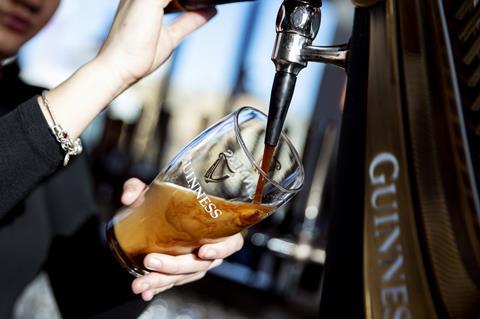
London remains at the forefront of this Guinness revival, according to GB marketing director Deb Ralls.
“In some of our London pubs there is more Guinness drunk than in some towns in the rest of the UK,” she says. “There’s a thriving hospitality industry in London and a dynamism to the city that I think is reflective of the [Guinness] brand.”
With yuppie city types prepared to stand around outside Soho’s The Devonshire while supping on Guinness day and night, the brand’s desire to plant roots down the road is understandable.
Recruiting the next generation
The success of existing Guinness brand homes in Dublin, Baltimore and Chicago – as well as the Johnnie Walker experience in Edinburgh – will have also helped persuade Diageo the (quite considerable) £73m investment in London was worth making.
Since it opened 25 years ago, the Guinness Storehouse in Dublin has welcomed over 28 million visitors. A remarkable one in four international visitors to Ireland pay it a visit, with one in five visitors tasting Guinness for the first time there, according to Diageo.
“The storehouse has contributed 10% of our global growth in new Guinness drinkers,” says Wafer. “If it was a country, it would be one of the top five countries for Guinness revenues globally.”
While ambitions for the Open Gate Brewery in London are more modest – the site expects to welcome less than half of the annual visitor numbers of St James’ Gate (around 500,000 a year) – Diageo will be well aware of the role it can play in welcoming a new generation of Guinness loyalists.
What’s brewing?
Arguably the main draw – aside from the possibility of spotting Kim K splitting the G – at Guinness’ new London outpost is an on-site microbrewery in the basement. Run by master brewer Hollie Stephenson, the brewery will produce four permanent beers (Brewer’s Lager, Covent Classic IPA, Piazza Pale ale, and Old Brewer’s Yard Porter), alongside a rotating selection of seasonal brews.
There will be no return to the days of London-brewed Guinness, however, with the stout continuing to be shipped over from Dublin (St James’ Gate can make more beer in a half a day than Covent Garden can in a year).
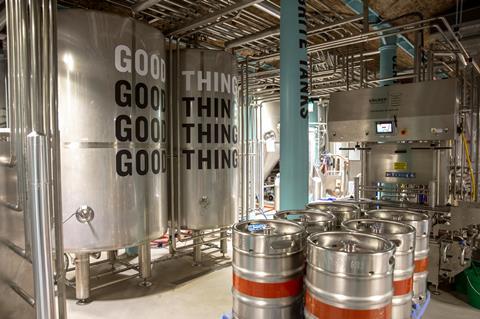
“We didn’t consider brewing Guinness here,” Wafer says. “We have amazing, unique beers that are created by Holly that you can only get here, and that’s part of the very special, unique experience we’re giving.”
The core beers are well-made crowd pleasers but are unlikely to win over any die-hard craft beer enthusiasts. Of the four, the Old Brewer’s Yard Porter is the standout, offering a toasty roast malt character and fruity notes.
Specials, meanwhile, currently include a tart apricot sour and a spiced ‘winter warmer’. Neither taste anything like as good as the pint of Guinness Draught served at The 232 Bar following the conclusion of the tour.
The new local?
On the subject of tours, prices start at £30 and range up to £95 for a “Guinness masterclass”. On the £30 ticket, attendees can expect around two pints worth of beer alongside a 90-minute tour and tasting.
While Diageo is clearly banking on a large number of visitors booking in for the full experience (and spending a shedload on Guinness swag in the shop after), it also hopes to woo returning custom via its free-to-enter Old Brewer’s Yard and two bookable on-site restaurants – The Porter’s Table and Gilroy’s Loft.
“We’re anticipating a lot of domestic visitors and also people from within the London area,” says Ralls. “We’ve opened up the space for people to be able to access it, regardless of whether you work round the corner and you might want to pop in, or whether it is your 50th birthday in London and you want to spend it with Guinness.”
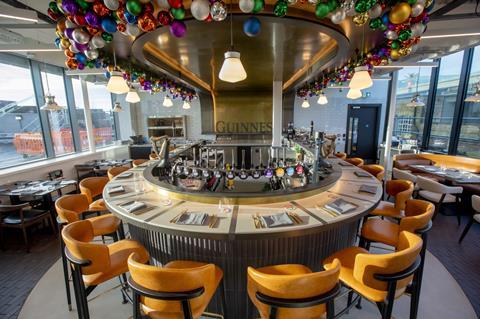
It’s a view shared by Jason Thorndycraft, the MD of the Open Gate Brewery. “Our secret, or our real charm, is that you can come and spend the whole day here, or you can pop in to do the restaurant, or just pop in to buy a t-shirt and have a pint with colleagues afterwards,” he says. “I’m hoping we’ll become really embedded in the community and that people see us very much as a local, or part of their day out.”
Having never actually been to St James’ Gate or the Open Gate Brewery in Dublin, it’s hard for me to say how the London Guinness experience compares to those available in its homeland. But this is undoubtedly a slick operation that more tangibly roots the brand in one of its biggest markets, and is a welcome addition to London’s hospitality scene.
And yes, they do sell the dinky glasses in the gift shop.














No comments yet