





The past week’s discussions between government and food industry leaders show just how hotly contested the future of the UK food strategy has become. Retailers and manufacturers are rightly concerned about cost pressures, regulatory burdens and the need to support British production, while NGOs continue to push on health and sustainability. Both perspectives matter.
But there is a quieter, missing voice in these debates: the people who are already living with the consequences of these food policy decisions.
Much of the food strategy debate still assumes that if we get the supply side right it will mean more production, more efficiency and better labelling – and as a result healthier outcomes will follow. For low-income households, that assumption does not hold.
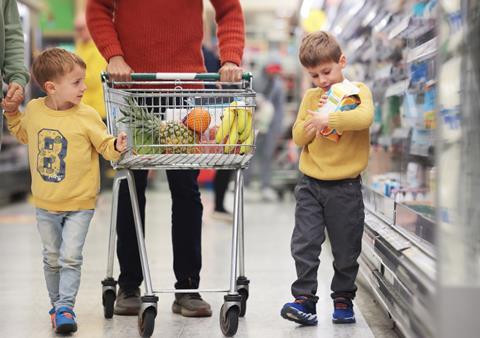
At The Bread & Butter Thing, a network of mobile food clubs operating in communities across the UK, we work with over 100,000 households trying to feed their families on very low incomes. When we asked nearly 4,000 of them what actually stops them eating well, the answer was strikingly consistent. It wasn’t education, time or motivation. It was affordability and access.
Healthy food costs
More than half of respondents told us they spend roughly a third of their household income on food. Around two-thirds said healthy food is simply too expensive. In contrast, only 4% cited lack of time as a barrier, and more than 70% said they would be confident eating a balanced diet if money were no object.
When budgets tighten, families don’t abandon healthy eating intentionally. They cut quantity, quality and variety because they are making compromises. And they know it’s bad for their health, but it is unavoidable in the moment.
Affordability is also not just about shelf price. Access is part of the cost. Many of the communities we serve have no nearby supermarkets offering good-value fresh food, and public transport is patchy or expensive. The result is a poverty premium: higher prices at convenience stores, extra travel costs, or meals missed altogether. This is particularly acute in rural and semi-rural areas, where deprivation is often invisible in official statistics but very real in daily life.
None of this is an attack on retailers. Many are already operating on tight margins, facing rising costs from energy, labour and compliance. Nor is it an argument against growth, sustainability or health ambitions. It is a reminder that if the food strategy focuses only on production and regulation, and doesn’t address affordability and access, it will fail the people most exposed to diet-related ill health.
The consequences are not abstract. When people can’t afford fresh food, they rely on cheaper, calorie-dense alternatives. The NHS then picks up the bill. Obesity-related illness already costs around £18bn a year, with the greatest burden falling on the poorest communities. This is not a failure of personal responsibility; it is a predictable outcome of prices, access and income not lining up.
The food strategy we need
So what would a more grounded food strategy look like?
It would treat affordable food access as an economic and health pillar, not a charitable add-on. It would back community-led models that already provide access to affordable, nutritious food. It would look seriously at how tax, subsidies and business rates can reward healthy food provision in low-income areas, rather than inadvertently penalising it.
And it would listen, genuinely, to the people who are experts in stretching £20 across a week.
Retailers, government and communities are not on opposite sides of this debate. Everyone loses when affordability is ignored. A food strategy that puts access and price at its centre would not undermine growth or sustainability – it would make them meaningful to the millions of working families who currently feel priced out of eating well.
Families already know what good food looks like. The challenge is making it affordable, nearby and routine. Until policy catches up with that reality, no amount of reform elsewhere will close the gap.
Mark Game is founder of The Bread & Butter Thing




No comments yet