



Price cuts and refreshed branding have helped PepsiCo stage a recovery in its US snacks business.
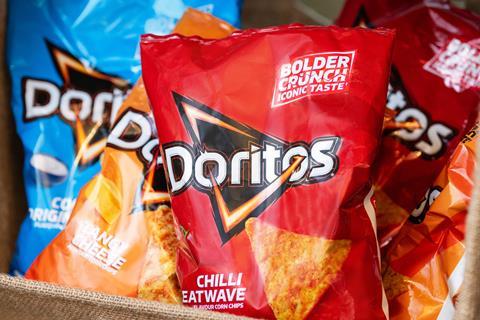
Volumes at PepsiCo Foods North America (PFNA) beat expectations to rise 2% in the first quarter, marking the division’s best result in nearly three years and an early win for PepsiCo’s plan to revitalise group growth.
Reformulation and lower pricing helped power the division’s recovery, driving a 1% boost to organic sales that caught analysts by surprise.
PepsiCo’s net revenues shot up 8.5%, significantly ahead of analysts’ consensus of 5.3%, to reach $19.4bn in the 12 weeks to 21 March 2026. Revenues were up 2.6% on an organic basis.
PepsiCo’s operating profit accordingly jumped 24% to $3.2bn in the quarter, with a 210bp jump in margin to 16.5%. The group confirmed its guidance for the year ahead, alongside a 4% bump in dividends paid to shareholders. Shares remained steady in pre-market trading.
The early success of PepsiCo’s efforts to turn around PFNA has come cheaper than expected, according to Barclays analyst Lauren Lieberman, who said some investors had anticipated a deeper cut to price/mix than the 1% seen in the division’s Q1 results.
The drinks and snacks behemoth’s turnaround strategy – made more urgent by the high-profile intervention of activist investor Elliott Investment Management in September 2025 – is dependent on a recovery in PFNA, which had seen stalling volumes amid a cost of living squeeze, concerns over UPFs, and GLP-1 adoption in the US.
Read more: Can activist shareholder plan turn around PepsiCo?
“PepsiCo very much delivered what it needed to this quarter,” said Lieberman.
Yet the success has not been shared evenly across the group. While PepsiCo Beverages North America achieved 2% organic sales growth, it fell shy of expectations thanks to a 4% drop in volumes.
“The beverage business continues to disappoint, and we expect PepsiCo will continue to be a source of share to both Coca-Cola and Keurig Dr Pepper,” said RBC’s Nik Modi.
“Ultimately, we believe PepsiCo will have to fully refranchise its beverage business or they will continue to lose share.”
PepsiCo’s refranchisement of its bottling operations was a key demand from Elliott last September, which argued that the “operationally intensive” plants would be better off run by external partners – leaving PepsiCo management free to focus on more strategic concerns.
Coca-Cola refranchised its bottling operations in the mid 2010s, after both companies took bottling in-house at the start of the decade.


No comments yet