




The Iran war has left consumer confidence in the state of the economy and their ability to spend “in the doldrums”, according to a well-followed sentiment tracker.
With shoppers growing increasing anxious about their own economic wellbeing amid rising fuel and grocery prices, the British Retail Consortium called on the government to take “decisive action” in order to protect consumers.
The BRC’s-Opinium monthly sentiment tracker measures consumer confidence looking ahead over the next three months.
Optimism over the state of the economy remained unchanged in April at -53, the “lowest on record”. Consumers were equally dour over their own personal financial situation in April with sentiment worsening to -21, down from -17 in March – also the lowest on record.
Shoppers however are expecting to spend more. Anticipated personal spending on retail rose to +5 in April, up from +2 the previous month. Sentiment on spending overall rose to +15 up from +13.
This was almost entirely driven by anticipated rises in food inflation, which was pushed up to 3.7% this week due to increases in fuel and input costs, according to the latest ONS figures.
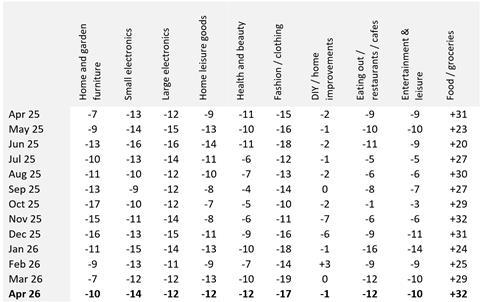
Food was the only catgeory on which shoppers said they expected to spend more, with sentiment rising to +32, up from +29 in March (see table).
“The Middle East conflict continues to stoke consumer anxiety around inflation and the cost of living,” said BRC chief executive Helen Dickinson.
“Amid a volatile geopolitical situation, households are expecting to see their pay packets squeezed by rising petrol, domestic energy, and food prices. Expected retail spending rose, but this was driven entirely by grocery spend, with most consumers expecting to rein in spending in other areas.”
Uncertainty would grow within the economy the “longer volatility drags on”, Dickinson warned.
“Businesses are battered by higher energy costs while also grappling with the growing burden of domestic policy pressures. From new Packaging taxes to incoming employment and health regulations, the government has levers it can pull to limit the inflationary fallout.
“Taking early, decisive action would help shield consumers from a spike in the cost of living they simply can’t afford,” Dickinson added.
The sentiment tracker is based on the opinion of 2,000 UK adults, polled by Opinium for their views on the economy and their own personal spending across different categories.
Earlier this week, retail leaders called on MPs to intervene now in order to help the food industry tackle the cost pressures of the Iran War, as well as the burden of addition packaging and employment taxes.
Chancellor Rachel Reeves has announced plans to include certain quarters of food manufacturing in an extension of the British Industrial Competitiveness Scheme, protecting them from higher energy costs.
However, retail leaders slammed the proposals as “nowhere near” enough to protect consumers from price increases at the checkout.
The FDF this week reiterated its forecast that food inflation could reach nearly 10% by December if the economic uncertainty continues.





No comments yet