



Unilever has agreed a merger of its food business with US spice and sauce giant McCormick in a $66bn (£49.8bn) deal signed this afternoon.
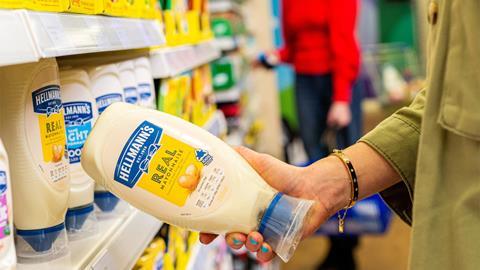
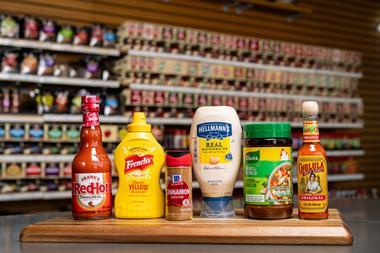
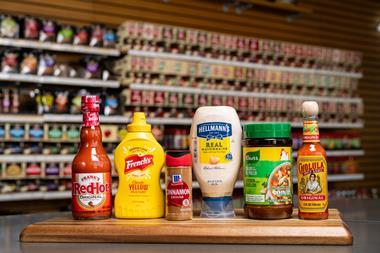
Creating a $20bn-revenue “global flavour powerhouse” led by McCormick’s CEO and CFO, the deal will combine Unilever brands including Hellmann’s and Knorr with McCormick’s self-branded spices alongside Cholula and Frank’s hot sauces.
Under the agreement, McCormick will pay $15.7bn in cash and transfer 65% of its post-acquisition equity to Unilever and its shareholders. Unilever will take only 9.9% of the merged entity’s shares, which it will sell down in an orderly fashion a year after completion, it told investors.
McCormick’s offer valued Unilever Foods at $44.8bn. The division’s revenues were €10.8bn ($12.4bn/£9.4bn) in the year to 31 December 2025, with €2.4bn operating profits.
The transaction will mark McCormick’s largest acquisition to date by some distance, dwarfing the company’s $4.2bn acquisition of Reckitt Benckiser’s food division in 2017.
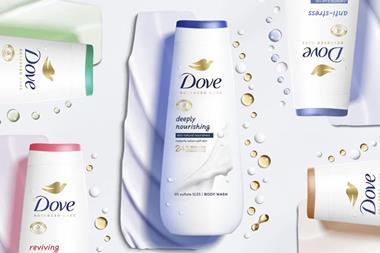
Marking the end of more than 100 years in the food industry for Unilever, the deal will leave the fmcg giant with €39bn (£33.9bn) of annual revenues across beauty, wellbeing, personal and homecare, with a “structurally more premium portfolio” as it repositions itself behind its leading ‘power brands’.
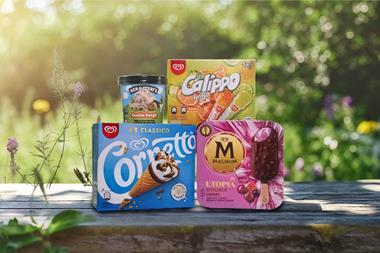
The move followed Unilever’s spin-out of its ice cream business under Magnum in an €8bn IPO in December 2025.
Read more: Would McCormick be a good fit for Unilever food brands?
“For Unilever, this transaction is another decisive step in sharpening our portfolio and accelerating our strategy towards high-growth categories as a €39bn pureplay HPC company with a proven sector-leading growth profile,” said Unilever CEO Fernando Fernandez.
“We are unlocking trapped value through a growth-led separation of Foods, creating a scaled, global flavour powerhouse. By combining Unilever Foods’ iconic leading brands and global reach with McCormick’s exceptional portfolio, category expertise and capabilities, we are establishing a focused, high-quality business with significant topline growth and value creation potential.
“This is a combination built on strong strategic and cultural alignment, providing exciting opportunities for our people and ensuring our Foods brands continue to thrive as part of a global flavour leader. Our retained ownership stake reflects our conviction in the strength of the combined company and its future prospects.”
McCormick CEO Brendan Foley added that his company had “long admired” Unilever’s food business.
“Together, we will be better positioned to accelerate growth in attractive categories. This combination will create a diversified flavour leader with a robust growth profile that remains differentiated by its focus on flavouring calories while others compete for them,” he said.
Adding that the acquisition would drive “significant growth”, Foley also advised it would require “disciplined execution”.
“We are confident that our detailed integration roadmap, experienced teams from McCormick and Unilever, external advisors and our strong partnership will enable us to capture the full value of this opportunity. McCormick is the right partner for Unilever Foods’ brands and employees, and our shared culture and values will empower our combination.”
McCormick will retain its name, headquarters and NYSE listing following the transaction, but will also establish a Netherlands headquarters and float a secondary listing on the European stock market. Foley and McCormick CFO Marcos Gabriel will be joined on the merged entity’s board by Unilever Foods senior management.
Unilever estimated the transaction would enjoy $600m of run-rate cost synergies, accounting for growth reinvestments. It will theoretically be tax-free in the US for Unilever, thanks to the ‘Reverse Morris Trust’ transaction mechanism.
The merger is expected to close in mid-2027, subject to approval by McCormick shareholders and regulators.
Shares in Unilever fell 4.7% in the afternoon following the deal’s announcement; McCormick’s share price was down 3.2%, having recovered from an initial 8.7% plunge.
”The combined entity is likely to be highly levered (nearly 4x, we estimate) and the primary US listing will likely cause significant selling pressure from domestic European holders of Unilever,” said Bernstein analyst Callum Elliott.
“As we saw with the Magnum spin-off last year, these technical pressures risk meaningfully weighing on shareholder sentiment over the next 12 or more months, as Unilever shareholders debate whether they really want to be holders of this new combined food entity.”
No comments yet