



Investors in Unilever and McCormick rushed for the exit after news of its $66bn (£49.8bn) food merger broke on Tuesday lunchtime.
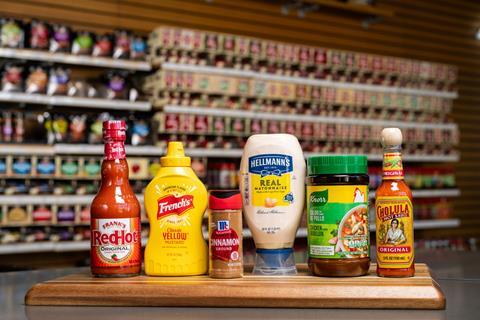
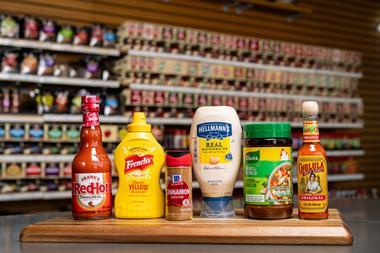
US-headquartered McCormick has agreed terms to buy the Unilever food division in a cash-and-shares deal worth $44.8bn (£33.7bn).
The move unsettled markets in London and New York, causing some shareholders to bail on their investment.
Shares sank by almost 7% at Unilever and by close to 6% at McCormick.
Unilever is down 23% over the past month due to investor fears over the impact of the Iran war and the uncertainty over a potential rumoured separation of its food empire, wiping £25bn off its market cap.
McCormick, on the other hand, has suffered a 39% fall in its share price over the past year as major US food groups continue to fight battles on many fronts.
Read more: Would McCormick be a good fit for Unilever food brands?
Despite the benefits of scale and estimated annual synergies of £600m from the combination, investors struggled to get on board with the deal for a number of reasons.
Warren Ackerman of Barclays said a lack of clarity in separation costs, the complexity of the deal structure, the long wait for predicted completion in mid-2027 and investor concerns about exposure to a highly-leverage US food asset likely weighed on Unilever investor sentiment yesterday. He added spiralling input costs for all fmcg companies in the wake of conflict in the Middle East also led to natural concerns about margins.
Callum Elliott of Bernstein added a primary listing for the new combined McCormick group in New York also caused significant selling pressure from domestic European holders of Unilever. “As we saw with the Magnum spin-off last year, these technical pressures risk meaningfully weighing on shareholder sentiment over the next 12+ months, as Unilever shareholders debate whether they really want to be holders of this new combined food entity,” he said.
James Edwardes Jones of RBC remained “unimpressed” by the deal.
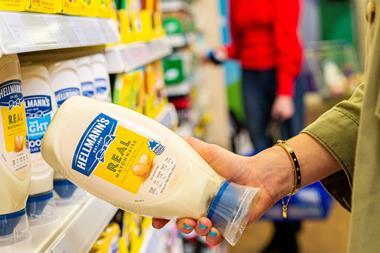
“What we really can’t get our heads round is why is Unilever disposing of a business dominated by two brands, of which it owned 100%, for a minimal control premium and leaving its shareholders with a 55% shareholding in a sprawling food business.
“We’re also dubious about the cultural justification for combining a brand-oriented business in Unilever with McCormick’s spices and flavours business, which is less brand-oriented. It’s true it will leave Unilever as a pure-play HPC business, but this does not strike us as a smooth way of bringing it about.”
However, Ackerman said the share price reaction was overdone and the current valuation of Unilever was below food peers even though it is on a path to becoming a pure play home and personal care company.
“McCormick was among the most natural buyers for the asset,” he added. “Unilever extracted a much better multiple than expected with a higher cash component. We don’t subscribe to the ‘desperation’ narrative and think the move is an elegant solution and a part of Unilever’s long-term strategy pivot.”
No comments yet