



McCormick’s approach has been described as ‘extraordinarily ambitious’. But experts believe it could benefit both parties
For a slow-moving juggernaut, events at Unilever shifted at racing car speed last week.
In short order, it emerged Unilever was exploring a complete separation of its €12.9bn (£11.2bn) food business, rather than just non-core brands such as Marmite and Colman’s. It had held and ended discussions over a merger of the division with the condiments portfolio of Kraft Heinz. Then on Friday morning, Unilever confirmed it was locked in talks with McCormick after receiving an inbound approach from the Maryland-headquartered spices giant.
A deal is by no means certain and, beyond both groups confirming the negotiations, details are scant. But analysts think an agreement could be reached within weeks.
It would represent a seismic shake-up for both Unilever, which would become a focused household and personal care supplier, and the entire packaged food industry. A combination of McCormick and Unilever Foods is estimated by Barclays to be worth in excess of $70bn (£52bn) at an enterprise value.
In the case of Unilever, the planned selloff is “perhaps the clearest signal yet that the era of the fmcg conglomerate is drawing to a close, and the model of owning everything from mayonnaise to moisturiser may no longer command the confidence of management or markets”, argues Iwan Thomas, associate at law firm Charles Russell Speechlys. Meanwhile, it is “extraordinarily ambitious” for McCormick, with its market cap of $14.5bn.
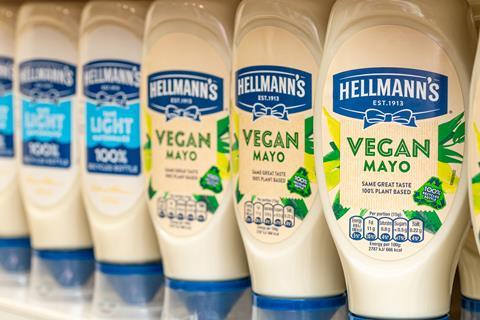
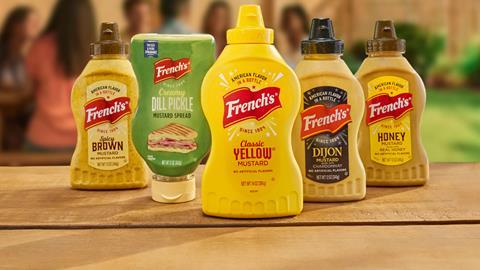
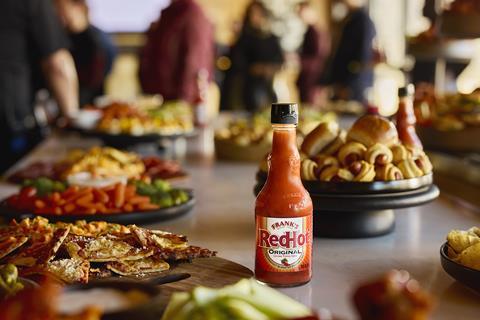
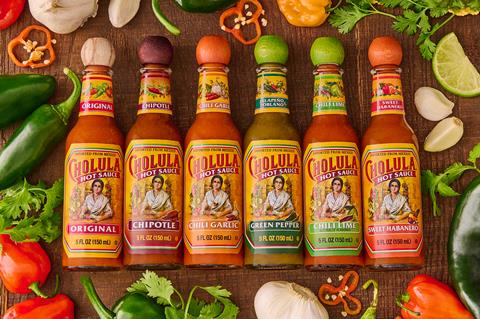
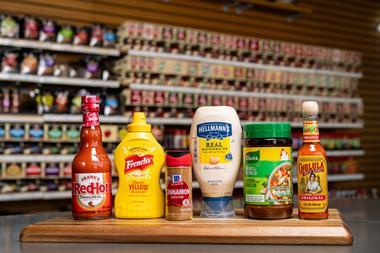
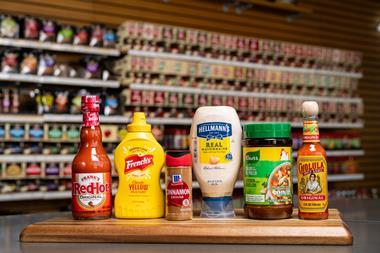
Still, New York Stock Exchange-listed McCormick is in good shape. It is a major player in herbs, spices, seasonings, sauces and flavours, employing 14,000 staff worldwide, including 1,000 in the UK. Revenues nudged up 2% to $6.8bn (£5.1bn) in 2025 and volumes were also in growth – a rarity for a global consumer goods group – last year. Almost two-thirds of sales come from consumer brands, including Frank’s RedHot, Cholula, French’s, Schwartz and Old Bay, while the remainder is in flavours and ingredients.
Crucially, more than half its business is in North America, with 20% in other developed markets and 25% in emerging countries. Unilever’s much more globalised food business is clearly a big attraction.
Dealmaking is “part of McCormick’s DNA”, says Jeff Robards, head of consumer foods in North America for investment bank Alantra. He thinks McCormick is a better fit for Unilever than a merger with Kraft Heinz or a protracted spin-off process along the lines of The Magnum Ice Cream Co.
But he acknowledges that, compared with McCormick’s $4.2bn acquisition of Reckitt Benckiser’s food division in 2017 (see box, below), Unilever would be “a very big bite”.
Just how big exactly is yet to be revealed. There is speculation over how the acquisition will be structured and whether it will be an all-stock offer or a mix of shares and cash.
McCormick’s M&A landmarks
- 1947: Acquires San Francisco’s A Schilling & Co, a coffee, spice and flavour business, to enable coast-to-coast distribution
- 1959: Picks up Canada’s largest spice company, Gorman Eckert & Co, to expand North American footprint
- 1984: Enters UK with takeover of Paterson Jenks, bringing spice and seasonings brand Schwartz to the portfolio
- 2000: Marks a significant expansion in Europe with deal for French spice company Ducros
- 2015: Buys Stubb’s brand for $100m to build presence in barbecue sauce and marinades market
- 2016: Walks away from £500m pursuit of Premier Foods after Bisto and Oxo supplier rejects three offers. It later buys Italian flavourings business Enrico Giotti instead for €120m
- 2017: A $4.2bn cash deal for Reckitt Benckiser’s non-core food division lands McCormick with two major brands, French’s and Frank’s RedHot. It marks the biggest acquisition in the group’s history
- 2020: Doubles down in hot sauce with $800m deal for Cholula from PE firm L Catterton and adds US flavours manufacturer Fona for $710m.
An ‘RMT’ deal
Warren Ackerman of Barclays assumes a 30% cash to 70% stock ratio at a 12x multiple, implying a transaction value of around £35bn, or $46bn (making it an order of magnitude bigger than the $36bn Mars Kellanova merger).
Given McCormick, as the buyer, is significantly smaller than Unilever Foods, analysts expect the deal to shake out as a Reverse Morris Trust (RMT) transaction, a type of merger designed to be tax-free. If that sounds complicated, it’s because it is.
Essentially, it would involve Unilever first spinning off its food division to its existing shareholders and then merging the business with McCormick. To qualify for the tax-free status, Unilever shareholders must hold a 50.1% ownership stake in the new combined group. There is a chance Unilever plc takes a minority stake, but it would no longer be involved post-deal.
“An RMT gives McCormick a path to scale up dramatically, capture efficiencies, and still keep the deal – whilst very sizeable – financially manageable, while giving Unilever a clean, value‑preserving exit from foods,” Ackerman says.
Bernstein analyst Alexia Howard says it would likely also include the assumption of some of Unilever’s debt and the possibility of a one-time special dividend payment to shareholders to sweeten the deal.
From a strategic point of view, Ackerman says there are likely no other deals that would be quite as transformational for McCormick. “If Unilever and McCormick can pull this off, we would view it as an elegant solution to complex problems both companies have. Unilever Foods would thrive more as a pureplay food company, where it would get the resources and prioritisation it needs to unlock the full potential of what we see as having one of the best combinations of growth and margins in the industry.
“McCormick would have a generational opportunity to create a condiments powerhouse with potential for significant synergies, and a much bigger footprint in emerging markets. McCormick operates in a category where scale and distribution matter, and a tie-up with Unilever would give it both.”
Both groups also boast a sizeable foodservice element, which would account for about 20% of combined sales. “A lot of companies have a hard time tackling foodservice. The critical mass of McCormick and Unilever together means it would be a really interesting channel for growth,” Robards says.
Read more:
-
Unilever in talks with McCormick over food business mega-merger
-
Unilever wants out of food. But it’s a tricky road ahead
-
Unilever food division would be worth €31bn
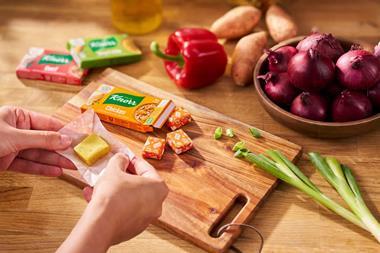
Not every brand will fit. Hellmann’s and Knorr – and Colman’s, to a lesser extent – are highly complementary to the McCormick portfolio. It’s less clear where Marmite, Bovril and Pot Noodle sit. So, those brands could be sold off after completion.
There is also the question of the cultural fit. McCormick is closer to being almost a publicly listed family business rather than a big corporate, more similar to Campbell’s Soup and Hershey than Kraft Heinz or General Mills, says Robards.
“Culturally it’s evolved quite a bit over the past few years, but it has a very strong family history,” he says.
“Unilever Foods would have a much more corporate and bureaucratic culture than one dedicated to a specific category. And that may be very beneficial for the Unilever Foods management. On the flip side, as a smaller company buying a much bigger one, what sort of cultural legacies of Unilever Foods will be hard for McCormick to manage?”
From a people perspective, McCormick is known for being agile, lean and growth-oriented, says Nick Maughan, partner at executive recruitment firm Drayton Partners. That could ignite positive change.
“Unilever teams may well see an upside from joining a food-focused and entrepreneurial but also large-scale business,” he says. “Done well, the integration could bring the best of both worlds: McCormick’s innovation and agility paired with Unilever’s trusted brands and global reach, creating a very strong business, well positioned for long-term growth.”
However, the two boards first need to come to an agreement that is palatable to both before thoughts of integration can be considered. There are shareholders to consider. Investors haven’t exactly been jumping for joy since the news emerged, with McCormick’s share down 6.5% and Unilever also in negative territory.
Anti-trust scrutiny is unpredictable, even if there seems little overlap in terms of direct competition. The financial and execution risks for McCormick are also not to be sniffed at.
And fresh volatility on the back of the war in the Middle East hasn’t exactly created the perfect conditions to negotiate the tricky tightrope walk of completing a deal of this size.
Ackerman remains bullish, however. “With the current geopolitical earthquake, the going for the fmcg industry will only get tougher, so it makes sense [for Unilever] to get going with the portfolio end game.”
Howard also raises the prospect a successful transaction could accelerate further consolidation moves across the US food space. She speculates a combined McCormick and Unilever Foods could have sufficient financial firepower to buy the Heinz brand and Kraft Heinz’s international business further down the road.
“As GLP-1 drugs, the MAHA [Make America Healthy Again] agenda and health & wellness trends more broadly continue to pressure volumes and margins across the US food space, now would seem the time for further merger activity to occur as potential cost synergies become ever more significant relative to underlying EBITDA trajectories.”

No comments yet