




Every link in the food chain faces growing pressure to decarbonise. So how can manufacturers and farmers work together to slash emissions and achieve greater sustainability?
The carbon footprint of food begins long before products reach shelves, factories or reporting systems. It starts with choices at the source and with how crops are grown, including crop nutrition. This is why Tesco UK CEO Ashwin Prasad recently called on farmers to adopt lower carbon fertilisers at scale, emphasising the role they could play in reducing emissions, as well as withstanding supply chain shocks and strengthening food security.
Yara, a global crop nutrition leader, is already working closely with food manufacturers and farmers to help decarbonise the food value chain with lower carbon fertiliser. Below, Mark Tucker, Yara’s partnership and value chain manager, outlines six considerations for manufacturers working towards their upstream Scope 3 reduction targets.
1. Decarbonising food goes beyond the factory
Improving energy efficiency, switching to renewable electricity and electrifying fleets all help reduce operational emissions. Alongside these efforts, manufacturers can address emissions with actions at the source – through selecting the right fertilisers to grow their ingredients. Using lower-carbon fertilisers can help reduce the carbon footprint of crops and food and contribute to food chain decarbonisation and lower Scope 3 upstream emissions.
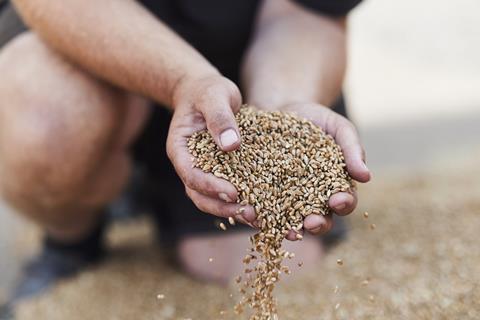
2. Fertiliser can make a difference to food’s carbon footprint
At the farm gate, fertiliser accounts for 70%-80% of a crop’s carbon footprint, diluting to roughly 10%-30% of a finished product’s total footprint once it’s processed and manufactured. That figure is as high as 44% for bread, 20% for pasta and 22% for milk – numbers too big to ignore. One food business recently revealed to Yara that changes in farming practices alone (like reduced tillage and cover cropping) would only deliver single-digit percentage reductions in its carbon footprint. Double-digit reductions, it said, could only come from lower-carbon fertilisers.
For dairy processors, the numbers look different again. Because methane dominates dairy’s footprint, a switch to lower-carbon fertiliser might only shift the final product’s footprint by 1%-2%. But against a forecast 2%-3% shortfall in hitting 2030 targets, even when every other planned technology is accounted for, that small percentage could be the difference between meeting the target and missing it.
3. Look at both fertiliser production and use
Fertiliser creates two carbon ‘hot spots’. The first is the carbon footprint of the fertiliser product itself – how it’s manufactured, where and from what.
Here, two very recent advances have emerged. Firstly, switching to a lower-carbon product, produced using carbon capture and storage technology (CCS) can reduce emmissions by around 40% compared to today’s best-in-class fertilisers. Secondly, new ammonia manufacturing – that replaces fossil fuels with water and is powered by renewable energy – can be used. Again, compared to today’s best-in-class fertilisers, this brings about a reduction of up to 90%. Yara now has both these categories available at scale to help decarbonise food value chains.
The second ‘hot spot’ emanates from the emissions produced when fertiliser is applied in the field. This can be managed using nitrification inhibitors, which affect how the applied nitrogen behaves in the soil. In 2010, scientists established a recognised emissions factor that can be used by farmers in platforms such as The Cool Farm Tool to lower nitrous oxide emissions and reduce the carbon footprint by a further 38%.
4. Cutting nitrogen isn’t the easy win it seems
It’s tempting to see an obvious shortcut: simply asking growers to apply less nitrogen and reporting the resulting cut in field emissions as a straightforward win. But the maths only work if the yield stays the same. And it often doesn’t.
That’s not all. Because most manufacturers report emissions per unit of production, a lower application rate that also drags down yield can quietly cancel out the apparent saving, since the emissions figure is being divided by a smaller harvest. There’s a quality risk, too: in crops like milling wheat, reduced nitrogen can lower grain protein below the specification needed, making it unusable for its intended purpose and pushing it into a lower value use entirely.
5. Full tracebility is not the only solution available
Full farm-to-factory traceability is ideal, but can be difficult. Yara is exploring activity pools as another way for manufacturers to fund decarbonisation.
Under this approach, a manufacturer funds the decarbonisation of an equivalent volume of fertiliser, calculated from the volume of crop sources, without tracing every tonne to a specific field. This model is already being used in sustainable aviation fuel, and Yara is piloting the approach with PepsiCo across France, the UK and Spain.
6. A carbon claim is only as good as its verification
Anyone can claim a carbon reduction. The real question is: will that claim stand up to scrutiny without the right independent verification behind it? Independent verification by an established third-party assurance provider is essential to give food businesses confidence that the carbon reductions behind lower-carbon fertiliser are robust, measurable and credible. Yara has independently verified the carbon footprint of its fertiliser grades since 2009, with more than 1,300 grades verified this year alone.
This is where verified Scope 3 crop emission reductions start
Alongside improvements in your factory, there are practical opportunities to reduce the carbon footprint of the ingredients you source. The right crop nutrition is a practical place to start. Yara combines lower-carbon fertilisers with agronomic expertise to help farmers use nutrients efficiently and support lower-carbon food production. Backed by third-party verified product carbon footprint data, these products offer a practical step to reduce upstream Scope 3 emissions.