





Can cider really shine online? Discover how choosing the right digital sales channel helped a renowned UK brand tap into a new wave of e-commerce success.
Herefordshire-based Westons Cider has spent the last few years gearing its range towards a younger, more contemporary drinker.
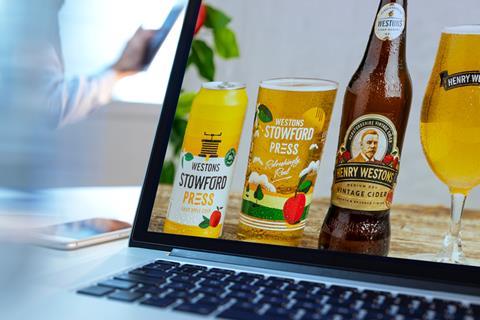
In 2025, the company unveiled a modern rebrand to its Stowford Press range, focused on engaging a new, younger consumer, with new-look packaging that emphasised the craft positioning and local provenance of its ciders, all supported by a social campaign that used influencers to spread the word.
Later that year, it credited new Henry Westons variants, such as 1880 Vintage and Vintage Pear alongside new pack formats, for exciting younger cider drinkers and driving category growth.
But despite all this behind-the-scenes activity, Westons was still struggling to make its mark on the channel most heavily frequented by younger shoppers: online.
In May 2025, the business identified a significant growth opportunity on Amazon, its biggest online store, where year-on-year sales had yet to reflect the momentum building behind the scenes, says Jake Brooks, key account manager for off-trade customers and e-commerce.
E-commerce has not been a priority for the family run, fifth-generation cider company, he says, with the bulk of attention and resources channelled toward bricks-and-mortar – despite the fact that online alcohol sales had seen strong growth ever since the pandemic, particularly among Gen Zs and millennials. In fact, while 64% of people over 45 say they always purchase alcohol in stores, that plummets to just 36% of younger buyers, according to a survey commissioned by AI platform DRINKS last year.
Brooks and his team set about correcting that oversight, creating a plan to “strip back and understand where we could maximise the opportunity” online. And, just seven months after its disappointing May performance, Westons ended 2025 with year-on-year revenue growth of +21% on Amazon, its biggest year to date on the online store and a rise of 43% versus 2023.
Crafting a turnaround plan
So how did the team at Westons effect such a rapid turnaround?
The comprehensive plan began with a new look-and-feel for how products were displayed online to improve their discoverability, combing through data to tailor its promotional strategy and harnessing greater agility to turbocharge its NPD.
E-commerce doesn’t allow a customer to physically pick up a product. Instead, digital assets – the imagery and the copy – need to work hard enough that they deliver the same experience for a shopper as picking up a bottle in-store, says Brooks. “That can be difficult.”
To achieve that, the team overhauled its existing e-commerce assets, using improved imagery, more detailed product descriptions, including tasting notes and further background on both the brand and products. On its dedicated Amazon Brand Store, for example, shoppers can quickly scroll through text mapping out the heritage of the cider-maker, its Soil Association-certified organic orchards and its slew of awards.
However, some changes were even more subtle, says Brooks, such as making sure that those purchasing a 12-pack of cider weren’t greeted with a shot of a single bottle. “It’s a minor tweak but it means a customer is able to quickly identify exactly what they’re looking at.”
“I’m not waiting two or three days later to see what I’ve sold; I can see it on the spot.”
Jake Brooks, key account manager for off-trade at Westons
With the new assets up-and-running, the team also made ample use of real-time data to justify ongoing marketing investment and promotional strategies, he adds. “I’m not waiting until two or three days later to see what I’ve sold; I can see it on the spot – I can see what I’ve sold in the last two hours.” Brooks reveals he also made use of Amazon’s self-serve forecasting tool to predict peaks and troughs – information he could share with his supply chain team to ensure they were ready to adapt and meet changing demand.
The brand took the opportunity to attend an Amazon Vendor Day in February to gain further insight into the size and scale of the Amazon business and how best it could work with them to serve its consumers. “Getting the team from Amazon together in the same room as suppliers provides great opportunity to learn and share ideas across the board in a collaborative way, and understand how Amazon works,” says Brooks. “This ultimately benefits the consumer shopping experience, making them more likely to return.”
Meanwhile, the pace of e-commerce allowed the cider maker to expedite the availability of NPD online, with six new products launched in the last year, all with very short turnarounds and all in a fraction of the time compared with bricks-and-mortar retailers.
And the brand’s consumers are also offered Amazon’s Subscribe and Save option at checkout, a feature that has substantially boosted frequency of spend among loyal consumers. “Our Subscribe and Save revenue in Q1 2026 is up 127% versus Q1 2025 so it shows just how important it is to consumers and how much they align to the offering,” says Brooks.
Optimising online shopping events
Perhaps the biggest driver of online growth at Westons, though, has been the way in which it has leaned into the opportunity presented by online seasonal shopping events, such as Black Friday and Amazon’s Prime Day. Last year, for example, the cider maker ranked eighth overall in the total beer, wines & spirits (BWS) category for brand value share during July’s Prime Day, while the later Prime event in October delivered 183% growth on the previous week. And even that was eclipsed by Black Friday, when Westons sold a case every two minutes, according to the company.
“Whether it’s Black Friday or Prime Day, these events offer a great shop window for people that don’t necessarily purchase our brands by giving them an opportunity to do so,” says Brooks. “During the 19 days of Black Friday we took 14% of our total revenue [on Amazon].”
To meet those expectations, Westons aimed to offer “the best possible deal” to consumers during the period, but also ensured it was visible throughout, with promotional material geared up to appear on Black Friday landing pages or tagging products around the key shopping events.
How grocery brands are winning big through online shopping events
Events like Black Friday and Prime Day have become defining moments in the UK food and drink calendar – delivering reach and commercial impact at a scale that rivals any traditional retail event, says Peter Masters, director of EU grocery & everyday essentials at Amazon.
“We’re seeing more and more grocery brands recognise that events like Black Friday and Prime Day aren’t just for electronics and big-ticket items – they’re moments when millions of customers are actively browsing and open to discovering new products, including food and drink, or to saving/stocking up on groceries and household essentials,” he says. “With grocery now one of the fastest-growing categories on Amazon in the UK, these peak trading events give brands a real opportunity to reach new customers at scale.”
Though often seen as primarily an opportunity for bigger-ticket items, such as electronics, online events are often an untapped opportunity for food and drink brands, he believes. “I don’t think brands in the food and drink category take them that seriously although they’re starting to do so. But when consumers are already going to Amazon to buy the cheapest TV, then you’re able to target them with food and drink. For us specifically, it’s attracting them with our best range of ciders. So, you’re piggybacking off those customers who are going to Amazon to purchase something anyway, for whatever reason.”
Planning those next steps
The change in its approach to e-commerce has had a halo effect across Westons’ other channels – including getting its range of authentic and premium brands in front of those all-important new demographics.
”We’re up 85% versus where we were last year – and we wouldn’t have been able to do that without attracting new customers,” says Brooks. “Amazon almost acts as a shop window for somebody who might be making an everyday purchase. But by being on the website, shoppers can also see they can buy cider on there – whether they’re purchasing for themselves, or events or gifting. And it even gets noticed by people who don’t normally buy cider at all.”

Using e-commerce as the gateway to the next generation of shoppers
Grocery e-commerce is no longer an emerging channel – it’s where the future of UK food and drink retail is being built, says Peter Masters, director of EU grocery & everyday essentials at Amazon. “Millions of shoppers already buy all or part of their weekly shop online, and that base is expected to grow significantly in the years ahead,” he notes.
One 2026 survey of 2,000 UK shoppers by IGD found that almost half (49%) of Gen Z shoppers (18 - 24 years old) had used e-commerce apps for grocery/food delivery in the last month, with many habitually using the same platforms. That’s versus just 5% of over-65s.“For suppliers, the question is no longer whether to invest in e-commerce, but how quickly they can build a presence in what will be a critical route to the UK shopper.”
In fact, “Amazon reaches a broad variety of demographics that many brands will struggle to access through a traditional grocery retailer,” adds Masters.
That includes “younger customers – digitally astute native shoppers, who may never or very infrequently set foot in a supermarket for their weekly shop”. But it also expands to those customers living in areas traditionally underserved by existing grocery infrastructure. Consumers with young families are another key demographic over-indexing online.
“For brands that means they can access customers and a customer base that potentially they simply couldn’t reach through bricks-and-mortar distribution alone.”
Next on the cards are plans to explore how platforms like Amazon could be a way to test-and-learn, trialling and gathering early feedback on new formats and formulations. “[E-commerce] offers a lot of flexibility and adaptability, so you can list new products almost instantaneously and get feedback,” says Brooks. “That’s part of our strategy moving forward.”
Building out its international export network is another area of focus, he says, working with the team at Amazon to support further global growth.
In short, having already achieved a huge step-change in less than a year – and having had a taste of what e-commerce has to offer – Westons isn’t about to call last orders on its online masterplan.
Find out how Amazon can transform your e-commerce strategy.