



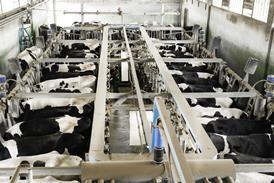



The grocery industry is spending billions responding to changing attitudes towards ultra-processed food: reformulating recipes, simplifying ingredient lists and expanding ranges that align with the growing demand for fresher, healthier and less processed products. A similar tension is beginning to emerge elsewhere in the industry: insight.
The ultra-processed food debate is really a debate about quality versus convenience. Food manufacturers discovered that by optimising for efficiency, products could become cheaper, longer-lasting and more accessible. But in doing so, something important was often lost.
At a time when grocery businesses are becoming more demanding about what goes into their products, they may be becoming less demanding about what goes into the insights used to make commercial decisions.
In the race for faster and cheaper answers, we are seeing the rise of what might be called ultra-processed insights: rigidly templated approaches, black-box metrics, DIY dashboards, synthetic data and AI-generated summaries that create the appearance of understanding without always delivering genuine insight. Put another way, these insights are often very effective at solving puzzles – challenges with a single correct answer. But many of the decisions facing the grocery industry are not puzzles, they’re problems: complex situations where multiple answers may be possible and judgement determines which is best.
The danger of poor decision-making
For grocery businesses, the danger is poor decision-making. Whether deciding to reformulate a product, accept a cost-price increase, review the price-pack architecture, launch a new variant, invest in a packaging redesign or expand a growing category, the challenge is rarely a lack of data. The challenge is understanding what the data means and having confidence in the decision that follows. These are questions that require interpretation, context and judgement.
Research has never been valuable simply because it produces data. It is valuable because it improves decisions. Good research helps organisations understand not only what shoppers are doing, but why. It creates perspective, challenge and clarity. It provides confidence in decisions that often involve millions of pounds of investment. The best research does not remove uncertainty altogether, but it helps organisations frame the decisions to begin to manage the risks uncertainties they face.
Ultra-processed insights tend to do the opposite. They provide a false confidence while stripping away the nuance needed to understand behaviour: when the voice of the shopper or the complexity of the situation is reduced to a handful of black and white scores on a dashboard. In reality, the truth is often in the grey.
The danger is all the more heightened when shopper behaviour is becoming more complex. Health, affordability, sustainability, convenience, indulgence and value increasingly interact in ways that are difficult to reduce to a single number. Add to this rising raw material costs, cost-of-living pressures, and media fragmentation and the complexity of decision making is rarely black and white.
AI and technology have a value role in making research faster, more efficient and more accessible by automating routine tasks and accelerating data processing. But technology should remove friction, not judgement. The greatest caution is required when moving from analysis to interpretation; from data to meaning; from information to recommendation.
Just as consumers have learned to look beyond front-of-pack claims and ask what’s really inside their food, brands may need to develop a similar instinct for insight.
Patrick Young is UK MD at PRS In Vivo





No comments yet