




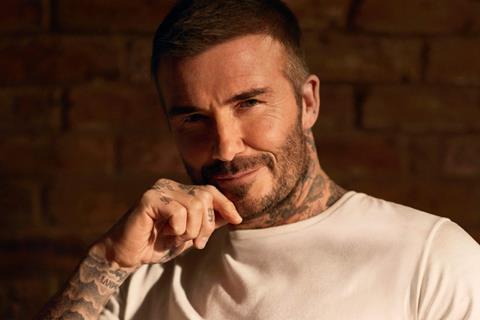
The recent controversy surrounding the Beckham family offers an unexpected reminder of how fragile even the most carefully managed personal brands can be. For years, David Beckham has represented the gold standard of celebrity endorsement: globally recognised, broadly liked and meticulously controlled.
About a week ago, thanks to Brooklyn Beckham, that perfectly curated image faltered.
It’s easy to see why brands often default to David Beckham. In the past 30 days alone, ads featuring Beckham aired over 27,000 times across categories and channels. While these campaigns work hard for ’Brand Beckham’, a more important question remains: are they actually doing enough for the brands behind them?
Across advertising, we’re seeing the same pattern repeat. When brands feel pressure to stand out, they default to celebrities as a shortcut to gain attention, particularly in the food and beverage industry. Beckham is often chosen not because he’s the right strategic fit, but because it feels safe; he’s recognisable with mass appeal, he’s good looking, familiar and therefore, in many ways, low risk.
His fee might be astronomical, but brands are clearly convinced that his allure will pay back two-fold.
Expensive and lazy
However, my plea to brand owners and creatives alike is simple: stop doing this. It’s expensive, it’s lazy and it’s not how food brands build long-term value in an increasingly competitive grocery landscape.
In ads everywhere, from TV to social to out-of-home, the celebrity has increasingly become ‘the idea’ in food and drink advertising. Rented fame replaces brand differentiation. And when that happens, brands don’t just risk forgettable advertising, they risk eroding their own raison d’être: the product. At the end of the day, a celebrity can’t replace the importance of your product. That’s the thing that will be in all your ads, forever.
To make sure it’s always clearly identified as your product, you must define a strategy for your food depiction based on your positioning – a culinary identity. After that’s been developed, a celebrity can be a great tool to amplify that culinary identity. But it can’t replace it.
This is where the branding power behind Beckham becomes instructive. Beckham doesn’t just bring fame; he brings a set of carefully cultivated values: control, luxury, longevity, family and reliability. When a brand genuinely aligns with those values, a partnership can make sense. But too often in food and drink, celebrities are parachuted into ads, substituting a focus on the product. The result is attention without relevance, and relevance is what drives repeat purchase.
Food brands don’t often win in culture first. They win in product distinction. They win because they occupy a clear culinary identity, built through distinctive cues. The lime wedge in a Corona. The orange dust on a Cheetos finger. The sound of a Pringles can popping open. These are assets that live far beyond a 30-second spot with a famous ex-footballer. When brands skip this work and jump straight to celebrity endorsement, they hollow out the very thing that makes them distinctive and competitive.
Renting fame doesn’t work
For grocery brands, mental availability is everything. You don’t win because consumers remember your Super Bowl ad – you win because they remember you when they’re standing in front of a shelf, tired, distracted and price-comparing.
System1 data shows that while around 60% of Super Bowl ads over the past six years featured celebrities, those ads don’t consistently outperform non-celebrity work. In other words, paying for a famous face doesn’t guarantee effectiveness. It just guarantees visibility. But visibility without a strong culinary identity to accompany it rarely translates into long-term growth.
There’s also a commercial risk brands rarely acknowledge. Celebrities move on. They endorse competitors. Or they become part of a narrative you didn’t plan for, as we’re seeing play out now with the recent events around the Beckham name. It’s a useful reminder that when your brand meaning lives outside your product, you inherit volatility you can’t control.
Unless a brand is intrinsically linked to a person’s character, as Nespresso has done with George Clooney, celebrity advertising is a short-term play. So here’s the challenge to food brands planning their year: stop renting fame and start building identifiability. Begin with your product. What role does it play in real meals? What cue makes it unmistakably yours? What moment does it own in the kitchen? Build those assets first.
Only once that foundation is in place should you consider adding a celebrity. Because when the brand has a clear culinary identity, the right celebrity can certainly amplify it. But when it doesn’t, no amount of Beckham will save you.
Robert Volten is managing partner of Chuck Studios







No comments yet