





Fuel has shot up at the pumps since the Middle East conflict, and prices can vary hugely. So how are they set? And to what extent are forecourts profiteering?
This country runs on petrol and diesel: around 90% of UK passenger journeys are made by road, a similar proportion of our freight is transported by trucks and vans, and 95% of British cars have internal combustion engines.
Yet as with the Ukraine conflict, the Iran war has thrown our exposure to global energy markets into sharp relief. The cost of oil has doubled since the start of March, while a litre of unleaded has risen by an average of 19p, and diesel, which we refine less and import more of, is up by 39p (RAC).
These trajectories are only part of the story, though, with huge variation between forecourts.
As reported by The Grocer last month, fuel Finder Scheme data showed the UK’s most expensive forecourt – a BP-branded service station in Exeter – was 22.3% above average for diesel and 27.1% above average for petrol – and was also respectively 36% and 38% more than at the cheapest BP forecourt. There are similar price variances across all the fascias (see the full breakdown for petrol and diesel in the tables below).
So, what’s going on? How does fuel pricing work? And with all the wild variations is the market profiteering or ‘price gouging’ as the chancellor suggested last week?
Who owns petrol stations?
There are about 8,300 petrol stations in the UK, around 5,300 of which are ‘independent’ sites, so named because they are independent from oil companies or major multiples. Owners range from big players like MFG (1,200-plus sites), Rontec (267) and EG On The Move (161), to single-site family businesses, and everything in between.
Independents sign up to buy minimum fuel volumes from oil firms typically over a five-year contract, adorning their sites with the branding of their suppliers in exchange.
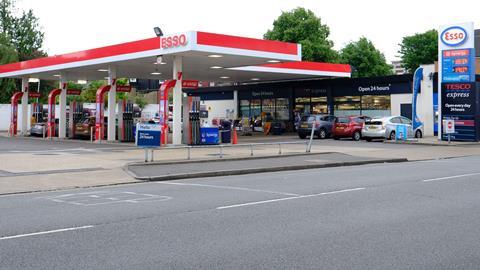
Of the remaining 3,000 sites four supermarkets operate 1,600 forecourts. But they operate in different ways. Sainsbury’s staffs and fuels its own sites, while Tesco’s ‘alliance’ with Esso sees the oil giant manage fuel supply and pricing while Tesco handles the shop side.
Morrisons’ 340 or so forecourts are part of MFG’s portfolio. Both are owned by US PE firm Clayton Dubilier & Rice but the sales and profits are channeled through MFG’s accounts. Asda is also majority owned by TDR Capital, another PE player.
Finally there’s the oil firms (Shell, Esso, BP etc) which own 1,300 or so forecourts, running the retail and fuel operations, employing their own staff and selling their own fuel. These are known as ‘co-cos’ (company-owned, company-operated).
How petrol stations buy fuel
At a site level, the store manager will assess the tanks before ordering a tanker that will typically deliver 40,000 litres of fuel the next day.
Small firms with one to perhaps 10 sites buy fuel on a daily ‘spot’ basis, with the wholesale price determined when the tanker arrives. Spots are susceptible to oil markets, with wholesale-spot diesel jumping 20ppl overnight recently.
Bigger firms can negotiate lower wholesale prices due to the volumes they order.
The larger operators can also buy on a two or three-week ‘lag’, fixing per-litre costs for a fortnight or more, allowing them to trickle in current or expected rises.
This accounts for much of the variation drivers see: a site with expensive fuel may be run by a small independent hit with a steep rise at their latest delivery; a cheaper station may be owned by a big firm selling fuel bought at a price set two weeks prior.
In addition, remote forecourts and those far from refineries pay more for delivery, while small-volume sites need higher margins as an assistant will be paid similarly whether they sell 2,000 or 20,000 litres of fuel a day. Motorway services, meanwhile, have high staff and rent costs and captive audiences.
There is also the matter of price matching. For example, supermarket site surrounded by small independents will be buying fuel for less than its rivals, but if nearby garages are selling unleaded at, say, 155ppl, there is a commercial case for the supermarket to sell at 153ppl rather than the 150p they could charge while still making normal margins.
Are supermarkets cheaper?
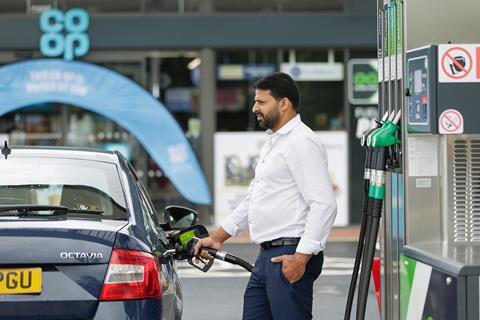
Generally, yes. Supermarkets can make less profit on fuel than other retailers, both because they make margin on groceries and because their fuel volumes mean they can negotiate favourable wholesale prices.
However it’s worth noting that the private equity acquisition of key supermarkets means the disparity is not always as pronounced as it has been. As The Times recently highlighted, PE-owned Asda forecourts, which were once among the cheapest, now sell the most expensive supermarket fuel (including Asda Express stores). Asda’s reduced price leadership has allowed rival supermarkets to take their foot off the gas when it comes to competing.
Are forecourts profiteering?
Fuel is often said to be subject to the ‘rocket and feather’ effect: prices rise quickly when wholesale costs increase, yet fall slowly when they drop.
This isn’t necessarily profiteering. Retail prices rise with wholesale costs, but firms don’t tend to pass these on to consumers at once, taking a smaller margin than normal initially to avoid ‘price shocking’ drivers, then reducing prices more slowly when wholesale rates fall, thus maintaining average profits.
Drivers also tend to fill up ahead of expected increases then buy less fuel when prices are high, leading to reduced volumes as prices rise, and profits that must be made up later.
What price comparison apps are available?
PetrolPrices: Available online and as an app, PetrolPrices predates Fuel Finder by years. It used to draw on fuel card and user-submitted prices, and now also uses government data. It has been downloaded 2.4 million times from Apple’s App Store alone.
Fuel-Finder.uk: The government doesn’t publish Fuel Finder prices itself, but a canny developer bagged the ‘Fuel Finder’ url and shares the database in an easy-to use map format – though the one-man-band nature of the site means if forecourt operators mis-key a price these errors can make it through to drivers.
Waze: Google’s own Maps rival Waze has shared fuel prices for years, helping drivers who are on the road find cheaper fuel, but the service relies on user-submitted prices and has yet to integrate with Fuel Finder.
RAC: As with Waze, the MyRAC app is yet to integrate with Fuel Finder. The RAC buys in data from fuel-card companies and the app can point drivers towards cheaper fuel by using their phone’s current location.
The apps that integrate with Fuel Finder:
- Confused.com
- DriveScore
- Fuel Finder UK
- Fuel Spy
- MotorMouth
- PetrolPrices.com
- RAC Fuel Watch
Back when fuel was nudging £2 a litre early in the Ukraine war, one or two big firms are understood to have taken advantage of the rocket and feather effect, but market forces and CMA focus put paid to that.
In 2025, a Competition & Markets Authority inquiry found average margins were 11.1ppl, up from 10.8ppl in 2024, but industry body the Petrol Retailers Association attributed this to rising staff, tax and energy bills.

Instead of profiteering, the Iranian conflict has actually seen margins fall, according to the RAC. It estimates retailers are currently making an average margin of just 5%, while RAC Foundation data shows wholesale unleaded and diesel prices are up by 27% and 46% respectively since early January. Meanwhile, Fuel Finder data shows retail unleaded and diesel have risen by an average 13% and 25% respectively since the Middle East conflict started.
The other challenge for forecourts on busy roads is that they often sell lots of diesel via fuel cards, which enable commercial firms to commit to buying large amounts at reduced rates (perhaps 5ppl less). Forecourts only make 1ppl on these transactions, which is not enough to keep the lights on, so increase pole-sign prices to cover their costs.
The truth is the sector generally deals fairly, and with such disparate business models a monopoly would be impossible to enact, as canny operators would make a killing undercutting any attempts at price fixing.
What can the government do to keep fuel prices down?
The chancellor summoned supermarket bosses this week to explain the rapid increase in fuel prices, but it’s likely the government that has been the biggest beneficiary. The Treasury takes about 50% of every penny at the pump via fuel duty of 52.95ppl, and VAT, with the latter enabling the Treasury to make an extra £3m a day thanks to recent price rises.
The government is under pressure not to cancel the forthcoming end to the 5ppl fuel duty discount, introduced in 2022 to offset rising costs linked to the Ukraine-Russia war, or reduce VAT on fuel as seen in Ireland. There’s also a 15ppl increase that will come into effect in the Autumn.
But for now the government’s best hope of keeping prices down is to hope that its new Fuel Finder system encourages greater competition.
Since February, every forecourt must share pump prices with the government’s Fuel Finder system within 30 minutes of introducing price changes, with data fed to consumers via third-party outfits. Ministers claim the scheme will save households £40 a year, and though it is too new to assess its efficacy, early indications from app downloads (see boxout) and independent research suggest strong initial engagement.
What about a profit cap?
With fuel prices determined by global markets, ministers’ options are limited. Labour’s cost-of-living champion, Lord Walker, recently suggested a profit cap for forecourt firms, but this is economically illiterate.
With the government unable to control oil prices and forecourt firms taking a 5% margin (much less would not cover operating costs), the only way to bring prices down is to reduce taxes.
Such measures would require finding tax revenue elsewhere, hence the possibility of reopening North Sea oil fields. Ending the ban on new exploration licences there would not bring fuel prices down as oil firms sell on the global market, but allowing new licences would save £10bn in lost tax revenue over the next five years, according to investment bank Stifel.
Offshore Energies UK, meanwhile, estimates that replacing the Energy Profits Levy with the oil and gas price mechanism – which ministers previously consulted on and would see firms pay more tax when oil prices are high and less when they are low – could unlock £12bn in tax receipts and add £137bn to the economy in investment by 2050.
Given the government’s position on energy, such actions are unlikely. So aside from checking for cheap fuel locally, this looks like one that motorists will have to ride out.
Hugo Griffiths is senior reporter at The Grocer’s sister title Forecourt Trader








No comments yet