



AI is turning supermarket loyalty schemes from a ‘blunt instrument’ into a one-to-one marketing tool. But can retailers get the balance right?
Member prices have become table stakes in UK grocery. Nearly every major supermarket offers them to the 97% of shoppers who are signed up to at least one loyalty scheme. The arms race on discounting is, in effect, over.
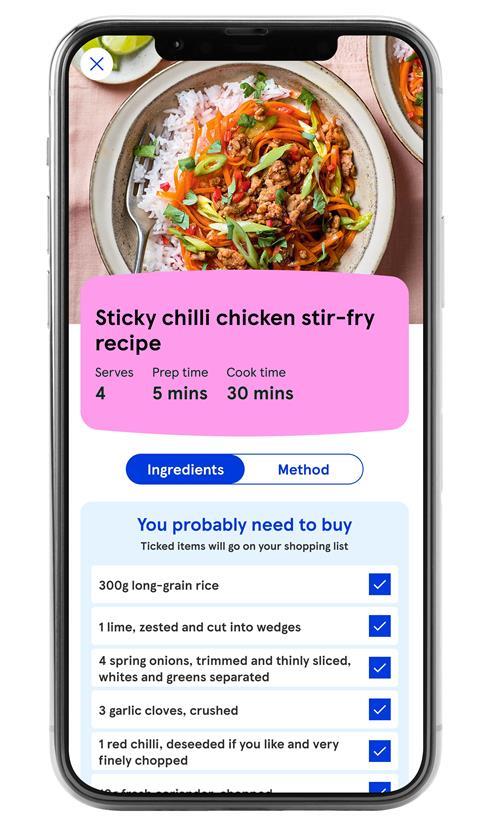
That means retailers have had to look for a new edge – and they’re finding it in personalisation. With AI now capable of generating hundreds of thousands of offers at scale, it looks like the days of the mass promotion are numbered. Instead, the loyalty scheme is getting personal.
“At its simplest, loyalty is about rewarding customers for shopping with us,” Becky Brock, Tesco group customer director, tells The Grocer. “But the real opportunity is making those rewards genuinely useful, convenient and relevant to each individual customer.”
The problem with mass promotion
The commercial case for change is clear. Broad loyalty pricing comes at a high cost, but increased personalisation “flips the economics”, says Peter Denby, co-founder and CEO of HyperFinity, which works with Asda, Costa and Hotel Chocolat on data-led decision-making.
“Mass promotions are blunt instruments,” he says. “Drop the price on a product across the whole base and a meaningful chunk of that discount goes to customers who would’ve bought it full price anyway.”
Denby describes this as “auto rewarding”, and calls it“the single biggest commercial leak” in UK loyalty. “Multiplied across millions of transactions, it turns a loyalty programme into an expensive subsidy on existing behaviour,” he adds.
M&S
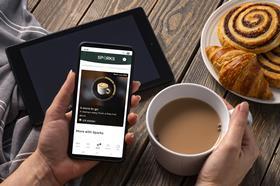
Since its launch in April, nearly five million customers have visited the new Sparks hub. The revamped loyalty scheme uses a suite of AI and data capabilities, including machine learning and advanced generative AI models “coming soon”, to deliver more personalised offers and rewards for every Sparks customers.
“And the more customers shop with Sparks, the better and more personalised the experience,” the retailer says. “As a result, customers will receive a more timely, bespoke and seamless experience with the ability to maintain greater control over how Sparks works for them.”
More than a fifth of total grocery revenues for supermarkets offering member prices came from loyalty discounted products, according to a 2024 investigation by the CMA. For consumers, it has become a near extravagance to do a big shop without being signed up to a loyalty scheme. That’s why the average shopper is signed up to three, according to CMA data.
But for retailers it’s a big cost. The answer, then, is to spend only against customers and behaviours where that spend “earns its keep”.
[“Hyper-personalisation] means rewarding top-loyal customers to protect them, stretching a mid-loyal’s basket, or deliberately not rewarding a low-loyal customer who’ll churn regardless,” Denby say. “The reason it works is simple: relevance drives response and targeted spend protects margin. Mass promotions optimise for footfall; personalisation optimises for profit.”
Customers also want more targeted discounts. While value is still the main driver of loyalty, according to the Retail Loyalty Index, which measures loyalty schemes across 51 retailers, the next three all relate to personalisation: ‘feeling valued’, ‘appealing rewards’; and ‘personal and relevant benefits’.
“Customers want them, and are frustrated when they don’t receive them”, says Sarah Jarvis, communications and propositions director at Eagle Eye Solutions, which has worked with Tesco, Asda, Carrefour, and the Woolworths Group on their loyalty programmes.
Retailers are well attuned to this desire-turned-expectation among shoppers. Unveiling the revamped Sparks loyalty scheme at M&S in April, CEO Stuart Machin said: “Customers told us they want Sparks to be simple, rewarding and personalised. New Sparks is built around a much more personalised experience, no tricksy pricing and real money rewards to thank our customers for shopping with us.”
The real meaning of personalisation
True personalisation, though, is more than smarter segmentation. “It’s genuinely one-to-one,” Jarvis says. “The individual offer, message or reward is created just for you, not curated from existing offers and matched to your segment. No two customers, even those within the same segments, receive the same offers in this model: they’re unique.”
While members’ EDLP and price-matching might drive footfall generally, customers pursuing better value are less concerned with average basket savings, but rather savings on their own basket. According to American Express research, 80% of UK consumers are more likely to redeem personalised offers than generic ones, which many say they ignore.
Co-op
In March, the convenience retailer allowed members to use their weekly personalised offers to save money when ordering their shop online.
Co‑op said last year it had increased the number of personalised member offers by 67%, to more than 700.
“Loyalty schemes have the opportunity to not only present offers to consumers that they’ll like, based on their shopping data or what comparable customers are buying, but prove to the consumer the brand is working hard to keep their key item prices down,” says Linda Ellett, head of consumer and retail for KPMG UK.
This is where AI changes the equation. “[AI] changes what’s mechanically possible”, says Denby. “Most offer engines can only handle a few dozen variants because each one is configured manually. AI removes that ceiling. Hundreds of thousands of variants of product, offer, price and timing can now be generated and served consistently.”
The technology allows retailers to “better understand customer needs and preferences at a much greater scale and speed than previously possible”, Brock explains.
“It allows us to move towards much more dynamic and responsive experiences, understanding patterns in shopping behaviour, predicting what might be useful to a customer next and adapting communications in near-real time,” she adds.
Sainsbury’s first trialled personalised Nectar offers based on past purchases as far back as 2016 on a separate ‘SmartOffers’ app. But the approach has been supercharged more recently, with supermarkets striking deals that promise to significantly boost their efforts (see box).
“A well-designed personalised programme, like Clubcard, does more than discount regular purchases,” Brock says. “It can help customers discover products they may genuinely like, support them with value at the moments that matter most to them, and make shopping feel easier and more tailored to their lifestyle.”
The commercial upside
While consumers appreciate it, personalised offers deliver significant advantages to supermarkets, too. With personalisation, supermarkets can better nail the proportions of offers that keep a customer loyal – and those that convince them to spend a little more.
“Put bluntly, you want a combination of ‘thank and reward’ and ‘stretch’ offers in the mix,” says Jarvis. The former covers “products we know the customer loves and is highly likely to buy again”. Offering them shows a shopper the supermarket understands them and is “investing in their continued patronage”.
‘Stretch’ offers are where most of the incremental value sits for the retailer. “They target behaviour change worth paying for: getting a shopper to come back sooner, try a premium alternative, basket-build into a new category, switch from a competitor, or increase their frequency of shop. The offer is the lever; the behaviour change is the prize,” Jarvis says.
Morrisons
In February, the retailer partnered with retail engagement company Ecrebo to enhance its ability to generate immediate personalised coupons, offers and messages to customers in-store at the till and via its app.
Eagle Eye provides the loyalty data and orchestration that powers the personalised experience behind the scenes. “This partnership will help us build deeper connections with shoppers by providing more relevant, timely offers that reward their loyalty,” said CCO Matt McLellan.
There’s an art to getting the mix just right, though. Too much stretch and “the shopper feels like every interaction is the supermarket asking for something”, Jarvis explains. But too much thank and reward and “the ROI will slowly evaporate”.
There’s also “always a balance to strike between relevance and over-personalisation,” says Brock. “Customers want convenience and useful recommendations, but they don’t want to feel overly targeted.”
There are other advantages too. Personalisation means supermarkets can offer discounts away from the prying eyes of their rivals. While promoting a product as price-matched to a rival can be bested almost immediately, individualised offers “can’t be copied by the competition”, explains Jarvis. Plus, as Brock points out, “if someone’s shopping habits change, we can adapt quickly”.
AI is “helping drive more and more businesses to a one-to-one model”, says Jarvis. It is also driving the inputs of personalisation beyond past purchases and into data gleaned from customer conversations with chatbots, encompassing health goals, allergies, ethical and sustainability views, and more.
Sainsbury’s
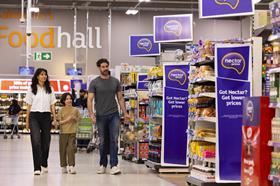
After it signed a five-year deal with Microsoft in 2024, the supermarket set out its ambition to “become the UK’s leading AI-enabled grocer”.
As part of that strategy, Sainsbury’s said it was “combining advanced technology with our colleagues’ expertise to create more personalised Your Nectar Prices”.
But there are still major challenges. “There’s no point having the smartest AI in the world if you can’t use it to deliver the right message to the right customer at the right moment,” says Jarvis. “Real-time, omnichannel execution requires, for many retailers, new infrastructure to enable them to execute [on personalisation].”
It’s clear personalisation is now crucial in supermarkets’ efforts to retain and delight customers. “If we get [it] right, personalisation will help us constantly meet expectations on convenience, relevance and value — helping customers save time, manage budgets and discover products that genuinely fit their needs,” Brock says. “And that will only help us improve customer satisfaction and loyalty in the long term.”
The prize, for those that get it right, is loyalty that really earns its name.
Tesco
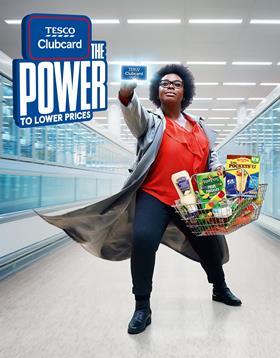
Last month, the supermarket signed an AI deal with software company Adobe focused on personalising the content and offers Tesco serves to its Clubcard members.
That followed a three-year deal, announced in December, with the French tech company Mistral AI to develop AI solutions and to overhaul its personalised Clubcard offers. It has also worked with Eagle Eye on gamified and personalised Clubcard Challenges.




No comments yet