




With a ‘tsunami’ of higher food prices on the horizon, the Chancellor has announced support measures – but the industry is not placated
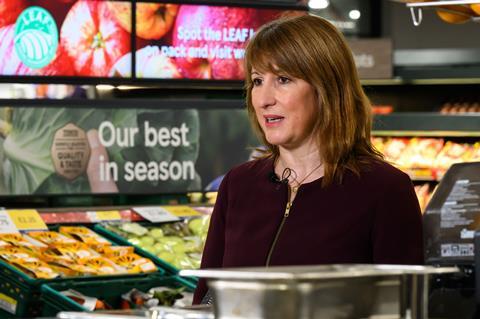
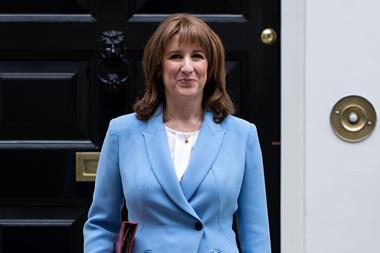
After crisis talks with supermarket bosses, Chancellor Rachel Reeves has announced a series of measures to safeguard against inflation caused by the supply chain shock from the war in Iran.
So, what do the measures so far amount to? Why does the industry view them as insufficient? And what else is it asking for?
What is the threat to inflation?
The latest grim forecast, from the Energy & Climate Intelligence Unit, suggests food prices are on track to be 50% higher by November 2026 compared with the start of the cost of living crisis in mid-2021.
And the FDF last month estimated food prices will soar 10% year on year in time for Christmas, with the duration and scale of the cost rises also depending on when the Strait of Hormuz reopens.
While the FDF figure was “not recognised” by Tesco CEO Ken Murphy in April, the BRC has also warned that shoppers face a year of “historically high” food prices, and the NFU warns growers face the “double whammy” of rising fuel, fertiliser and energy prices, alongside a steep hike in electricity.
The government admits inflation is here for the long haul. Darren Jones, chief secretary to the prime minister, who is heading up talks on the economic impact of the war, has predicted at least eight months of higher food prices, even after a solution is found to open the strait.
What does industry want?
On 1 April, Reeves met with bosses of supermarkets including Tesco, Sainsbury’s and Morrisons to discuss the threat.
Initial relief that she avoided lecturing them over profiteering has since turned to dismay over a lack of action.
Help with energy costs are the number one ask. Retailers say by removing so-called ‘non-commodity’ energy costs from retailers – levies that go towards areas such as network maintenance – Reeves could slash bills by up to 65%.
The FDF wants a package modelled on the Energy Bill Relief Scheme that ran from 2022 to 2023 following Russia’s invasion of Ukraine, focused on energy-intensive sectors.
Hauliers say they need an “urgent package of support”, with the cost of filling HGVs having jumped by about a third as fuel prices rocketed.
Growers warn the increase in energy prices has created an “immediate and unsustainable financial burden”, while the British Poultry Council says supply disruptions are leading to increased cost pressures that are inevitably going to push up food prices.
Yet calls on the government run much wider than intervention on energy. Retailers and suppliers have urged ministers to shelve plans for an updated nutrient profiling model, which they say would blitz the industry with huge reformulation costs just as inflation hits.
The BRC has demanded a review of the extended producer responsibility (EPR) packaging tax, alongside the plastic packaging tax and Packaging Recovery Notes system, which it argues together cost retailers more than £2bn a year.
No other country across Europe is facing such a combination of new costs alongside those arising from the conflict, it warns.

So what measures has the government announced?
Two weeks after the meeting with supermarket bosses, Reeves announced “bold” action to reduce energy costs.
At International Monetary Fund meetings in Washington on 15 April, the Chancellor unveiled an extension of the British Industrial Competitiveness Scheme (BICS) from so-called ‘frontier’ industries (such as defence, financial services and advanced manufacturing) to 3,000 additional ‘foundational’ companies, a move which, she said, would help slash electricity bills by up to 25% from April 2027.
Notwithstanding the fact that manufacturers and producers of edible food – such as growers, meat & poultry suppliers and bakeries – were not considered sufficiently ‘advanced’, the FDF initially offered a cautious welcome to the prospect of additional help for hundreds of so-called ‘foundational’ food ingredients suppliers, including manufacturers of oils and fats, manufacturers of starches, starch products and the manufacture of sugar.
But this week director of growth and sustainability, Balwinder Dhoot, admitted that “on closer inspection it’s not clear it will even apply to these [foundational] sectors.”
The FDF says clear guidance has not been forthcoming, adding any support won’t in any case come until next year.
“We’ve asked DBT and Defra to clarify and are still awaiting a response,” says Dhoot.
And there is no relief for food retailers, either.
Last week Reeves made a further announcement, albeit only via a story in The Mirror, that the UK would remove tariffs from a raft of food imports. Targeted to avoid foods with major production in the UK, the beneficiaries would include pasta, juices, tuna, oranges, peaches and other staples.
Tariffs from 2% to 50% have been reduced to 0% until the end of 2028, with the Treasury claiming the measure will cover £2bn worth of imports to the UK, securing lower prices.
“Whether it be through suspending tariffs to make food cheaper, taking £117 off household energy bills… I will support those who need it most,” declared Reeves.
A Defra spokesperson said: “We are acting to protect people from any potential increases in food prices. We have already suspended select food tariffs and continue to work closely with the sector to keep households bills down.”
These moves follow an earlier announcement of a £100m bailout for chemical giant Ensus, allowing it to restart production of CO2 gas seen as crucial for the food sector.
Ensus’ Teesside plant – which until last year had produced about a third of the UK’s CO2 gas supplies – was mothballed last autumn, due to the impact of the UK’s trade agreement with the US in May.

What has industry reaction been?
FDF CEO Karen Betts says the government has lacked “urgency” in its response to the coming financial shock.
As the FDF awaits guidance on BICS, it needs “rapid and targeted” cuts in energy costs.
But the FDF’s main ask of government is the cutting or pausing of regulation. It understands this is being considered – but that’s all.
BRC director of food & sustainability Andrew Opie warns ministers must act “immediately” to provide more substantial help, or the consequences will be felt in consumers’ pockets for months to come.
Privately, food industry sources are much more scathing. “There have been lots of discussions about the potential impact and strength of supply chains, but no response at all on the key issue of energy prices, or the other concessions the industry has asked for like reducing the plastic packaging tax,” says one leading source.
Another adds: “Whilst there has been some positive engagement, for example engaging with industry through forums on oil prices and the like, and the moves to protect CO2 supplies, the response otherwise completely underestimates the threat to the economy that is posed by the war.
“The move on tariffs is pointless and a drop in the ocean,” adds the source. For the food industry, “the tide has been sucked out and we can see the big tsunami wave coming at us”.
Meanwhile, a complacent government is “admiring it from the empty beach”.







No comments yet