




The Magnum Ice Cream Company is charged with driving growth in what its UK&I GM calls an ‘enormous, cool, fun, expandable market’. Here’s how
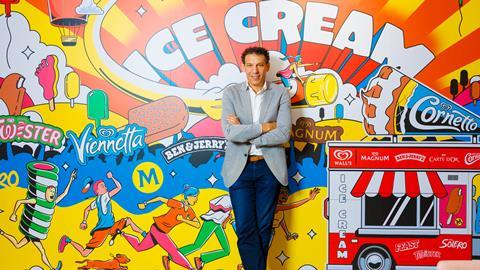
Not everyone has worked out where the mugs are yet at Magnum UK’s new office, but general manager Jamie Farrell is already loving the brand’s newfound independence. “We’ve moved into our new home and it’s fantastic,” he says.
The space in Kingston, south west London, is full of enormous branded freezers that lie empty at the beginning of our interview but are filled to the brim by the end. It’s a minor but potent signal of the speed at which The Magnum Ice Cream Company (TMICC) is setting out its stall as a freshly independent entity.
Farrell was brought in from Unilever’s beauty and wellbeing division to run the UK&I ice cream business in January 2025. He has since helped oversee its split from Unilever, from the internal separation in July 2025, through its 8 December IPO, to its current, singular mission.
TMICC’s ambition is to win 3% to 5% of organic sales growth every year at higher profit margins. “When Peter ter Kulve, our CEO, came on board, he was clear to investors: we want to be a growth stock,” Farrell says.
It’s a big job. From the whims of a capricious City to changing consumer tastes and the threat of GLP-1s in an impulse-driven category, Magnum faces plenty of challenges. But Farrell is adamant this is already a “very different” company where “the shackles are off”.
“In any kind of carve-out, the goal is to retain the good but also bring lots of new ideas,” he says. “We’re now a single-category organisation: just ice cream. We live or die based on whether the category grows, and whether we do well within that category. We don’t have three, four, five other businesses to absorb the shocks or balance the books.”
Surviving – and thriving – in fmcg’s second-most impulse-driven category will come from moving quickly, Farrell believes. “The main cultural shift is one of entrepreneurship and speed. It’s an enormous, cool, fun, expandable market, and the opportunities are almost infinite. But it requires a certain mindset – the type of person who’s going to hunt [opportunities] down rather than be a cog in a corporate wheel.”
Name: Jamie Farrell
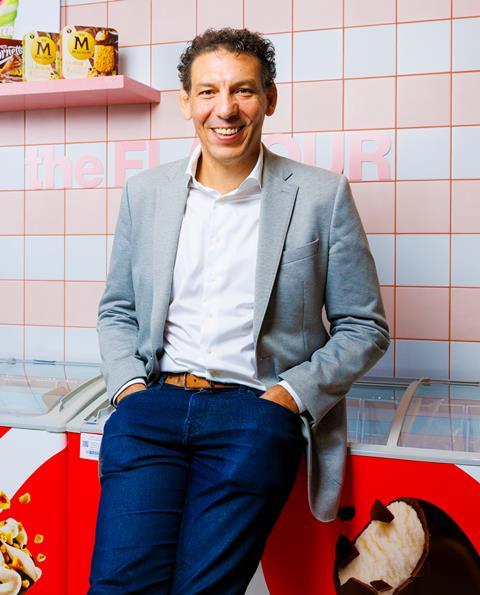
Lives: Thamesden
Age: 51
Family: Two daughters, Amber and Mia (14 and 17), and partner Natalie
Potted CV: First job was on Asda’s graduate scheme; then various account management roles at Mars, Diageo; UK sales director at L’Oréal; started a drinks company, Suso; joined Unilever in 2017; then this opportunity came up
Career highlight: This role, genuinely
Best advice received: Put things into context. When you’re having a hard time, try and put things into a global context, and you’ll suddenly realise how lucky you are
Book currently reading: The Righteous Mind by Jonathan Haidt. It’s about how people think, and why we think we’re right compared to other people. It’s brilliant
Hobbies: Running, swimming, cycling, squash and pickleball
Favourite TMICC product: Unashamedly, the Magnum bon bons. If we have friends around for dinner, we never make a pudding any more, we just get the bon bons out
Farrell speaks excitedly of a flattening of hierarchy, of leaders available for calls at any time and of ideas finding their way from packed brainstorming sessions to freezer bays. It’s as if the new company is caught in a huge spring clean, sweeping away the cobwebs of “process-driven” thinking typical of larger corporates.
“One of the first things Peter and the global exec team said was: ‘We’re going to make this feel like a small company. It may turn over €8bn (£6.8bn) but we’re going to make it feel small.’”
As part of this new, more entrepreneurial mindset, Magnum has elevated its branding and marketing function as “first among equals”, to encourage each employee to think about the consumer first.
“We’ve got just over 40% market share, and it’s incumbent on us to drive the category and behave as a leader. If we’re going to keep the category growing, we really need to have our finger on the pulse of what consumers want,” he says.
Fluctuating fortunes
Another consequence of independence from Unilever is far greater scrutiny of Magnum’s performance. After a lacklustre IPO, the City has oscillated wildly between enthusiasm and scepticism over whether Magnum will back up its growth ambitions.
The company’s first independent set of annual results in February wiped 13% off its share price, as investors were spooked by an unexpected drop in volumes. Sharp questions were asked about the company’s exposure to risk from GLP-1 drugs, and grandfathered-in Unilever investors sold up.

“If we’re going to keep the category growing, we really need to have our finger on the pulse of what consumers want”
But just three months later, volumes swung the other way, smashing feeble expectations for its first quarter. The share price leapt from its sub-1,000p nadir, climbing steadily since to more than 1,300p.
The new company’s fluctuating fortunes were not over, though. By early June, Magnum was Continental Europe’s most-shorted stock. Investors appear to be on a knife-edge, waiting for any sign of a flaw in the fledgling plc’s performance.
While he acknowledges the pressure wrought by direct exposure to the market, Farrell is adamant such share price volatility is “par for the course” in a new company. “Give us three years, and then we’ll know whether we’ve made this company into the one we said we would,” he says. “We just focus on consumers, on our brands launching great products and on executing well. If we do that, the share price will follow.”
The City’s edginess is understandable given the challenges facing fmcg companies today. Farrell says Magnum faces a rapidly evolving ice cream market, split between those with time and/or cash and those without. Magnum’s products skew towards the more expensive end of the market, leaving it weaker at lower price points. This is a product of its past under Unilever, when budget was directed towards the largest brands.
“For ice cream, that meant more and more money going into Magnum and Ben & Jerry’s, perhaps at the expense of some of our other brands,” Farrell admits. “Since we’ve become independent, a clear but simple mantra came down from the board: going forward, we’re an ice cream company, not a premium ice cream company. We want to be leaders in every channel, in every format, at every price point.”
That doesn’t mean playing with prices – it means developing new products to suit different demands. He cites the decline of the family dinner as an example, which has stifled growth in traditional scooping and sharing formats. There’s still plenty of “white space” to go after, though, Farrell says. “All the growth,” he adds, is in snacking and refreshment – the “bullseye” for ice cream. Magnum will move “aggressively” to capture it.
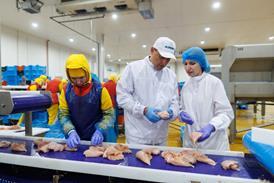
Luckily for Farrell, he has “all the tools I could ever hope for”. Alongside this new office in Kingston, he has Magnum’s second-largest European factory in Gloucester – currently in the midst of a £50m upgrade programme that will boost production to 750 million units a year – and “the world’s leading R&D facility for ice cream” in Colworth, Bedfordshire.
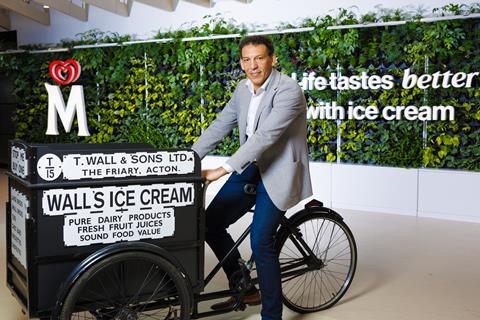
This year, that facility will pursue more than 100 NPD projects, about 11% more than in 2025. Farrell is keen to highlight recent NPD success stories such as Magnum and Solero bon bons – bite-sized portions developed to fit growing demand for permissible snacking in a GLP-1 world. In just over a year since the first bon bon SKUs hit shelves, they’ve racked up £10m in sales.
Meeting changing consumer needs is just one of the difficulties Farrell expects to face in the coming months and years, alongside spiking energy costs, new HFSS regulations and more. But he appears relaxed.
“They’re all challenges, but if you can be the company that adapts faster and more effectively, then you’ll be the one that beats the market. And that’s our job. If it works, I’ll be sitting here this time next year,” Farrell grins. “If not, somebody else will.”


No comments yet